When choosing a door, what’s inside matters just as much as how it looks. A door’s core material affects its soundproofing, insulation, and durability. Here’s what you need to know:
- Hollow Core Doors: Lightweight (under 30 lbs), affordable ($50–$150), but less durable and poor at soundproofing. Best for low-traffic areas like closets.
- Solid Core Doors: Heavier (60–80 lbs), costlier ($375–$800), but excellent for soundproofing and lasting 30–40 years. Ideal for bedrooms and high-traffic spaces.
- Engineered Wood Core: A middle ground offering durability and soundproofing without warping. Costs $200–$600.
- Exterior Options: Polyurethane cores provide superior insulation and moisture resistance, perfect for entry doors.
For high-use or private areas, invest in solid-core or engineered wood. Hollow-core doors suit less demanding spaces. Always match the door type to your needs and ensure proper installation to avoid issues like sagging or warping.
Common Door Core Materials
Door cores generally fall into four main types, each offering different levels of durability, insulation, and soundproofing. Choosing the right material can significantly impact how a door performs in your home.
Hollow Core Doors
Hollow core doors feature a lightweight design with a cardboard honeycomb or air-filled interior, enclosed by thin wood or fiberboard skins. These doors weigh less than 30 lbs and are an economical option, priced between $50 and $150. However, their thin surfaces are prone to dents, punctures, and warping, especially in humid spaces like bathrooms or laundry rooms. They also provide minimal soundproofing and insulation.
"Hollow-core doors are best for spaces where cost, light weight, and easy installation matter more than soundproofing."
– Ivan Petrushin, Modern Door Expert
Hollow core doors are ideal for low-traffic areas such as closets, pantries, or mudrooms. However, it’s important to inspect hinges regularly since their lightweight build can lead to faster wear in high-use locations.
For spaces requiring more durability and soundproofing, solid core doors are a better choice.
Solid Core Doors
Solid core doors are made from dense wood particles – like chipboard or particleboard – bonded with heat, resins, and pressure. A solid wood perimeter, often made of fir, reinforces the edges for a premium look. These doors are significantly heavier, weighing 60–80 lbs, which means they require stronger hinges and often two people for installation.
The added weight translates to several advantages: better soundproofing, improved thermal insulation, and resistance to everyday wear and tear. With proper care, these doors can last 30–40 years, outliving hollow core doors by about a decade. They can also meet fire safety standards, offering fire ratings of up to one hour under NFPA 252 testing. Prices range from $375 to $800 per door. Solid core doors are particularly suited for rooms where privacy and quiet are important, such as bedrooms, bathrooms, or home offices.
Engineered Wood Core Doors
Engineered wood core doors use materials like medium-density fiberboard (MDF), particleboard, or composites. These cores are designed to resist warping, even in humid conditions, and can be finished with paint or wood veneers. They offer a practical middle ground, avoiding the natural expansion and contraction issues of solid wood.
Particleboard and MDF Core Doors
Particleboard and MDF cores are crafted from wood byproducts compressed with heat and resins. The result is a smooth, uniform surface that works well for painting or applying wood veneers. These cores are dense, offering better soundproofing and insulation compared to hollow core doors. Weighing 60–80 lbs, they use about 70% more material than hollow core designs, which adds to their strength and longevity. However, when upgrading from a hollow core door, make sure the existing frame and hinges can handle the added weight.
If you’re customizing these doors with routed designs, it’s best to use enamel paint on exposed areas to cover the core material instead of staining.
"Solid-core doors are worth the extra cost if you want better soundproofing, durability, and long-term value. They contain up to 70 percent more material than hollow-core doors, increasing strength and longevity."
– Ivan Petrushin, Modern Door Expert
These doors are a solid pick for interior spaces where durability and sound privacy are key. To protect against moisture, ensure they are properly sealed with paint or veneer.
sbb-itb-cdbcc3e
What Affects Door Core Durability
When it comes to door core longevity, understanding the factors that influence durability is essential. By knowing what to look for, you can choose options that not only suit your needs but also save you from frequent replacements. Three key factors play a role: the materials used, resistance to moisture, and the level of care the door receives.
Material Composition
The material at the heart of a door greatly impacts how long it will last. Solid cores – made from MDF, particleboard, or composites – stand up better to dents, cracks, and hardware loosening compared to the fragile honeycomb structure of hollow-core doors. This difference can extend a door’s lifespan from 20–30 years to 30–40 years. For environments that demand extra durability, steel-stiffened cores with internal steel ribs provide unmatched structural support.
Polyurethane foam cores, known for their high density, chemically bond to door skins, creating a tight, rigid seal. This design offers up to six times the insulation of traditional wood doors. For exterior doors, polyurethane is a better choice than polystyrene, as it prevents moisture-trapping gaps.
While material strength is crucial, environmental challenges like humidity can also take a toll on door cores.
Moisture and Humidity Resistance
Moisture is a major test of a door core’s durability, especially in humid regions like South Carolina. Hollow-core doors are particularly vulnerable, as their cardboard interiors easily absorb moisture, leading to swelling and warping in damp areas such as bathrooms and laundry rooms. On the other hand, solid-core doors, with their dense construction, fare much better in humid conditions.
"Solid-core doors handle humidity better than hollow-core doors. Their dense core is less likely to warp or separate in rooms with moisture and humidity."
– Ivan Petrushin, Modern Door Expert
For exterior doors, polyurethane core steel doors are the top choice for resisting moisture while also providing excellent thermal performance. The tightly packed foam prevents air gaps, reducing the risk of mold or mildew forming inside the door.
Maintenance and Care
Even the best materials and moisture resistance won’t matter without proper upkeep. Regular maintenance plays a critical role in extending a door’s lifespan.
Simple steps like checking door alignment and lubricating hinges can make a big difference. If you’re upgrading from a lightweight hollow-core door (under 30 lbs) to a heavier solid-core option (60–80 lbs), ensure you install stronger hinges to prevent sagging over time.
Door Core Material Comparison
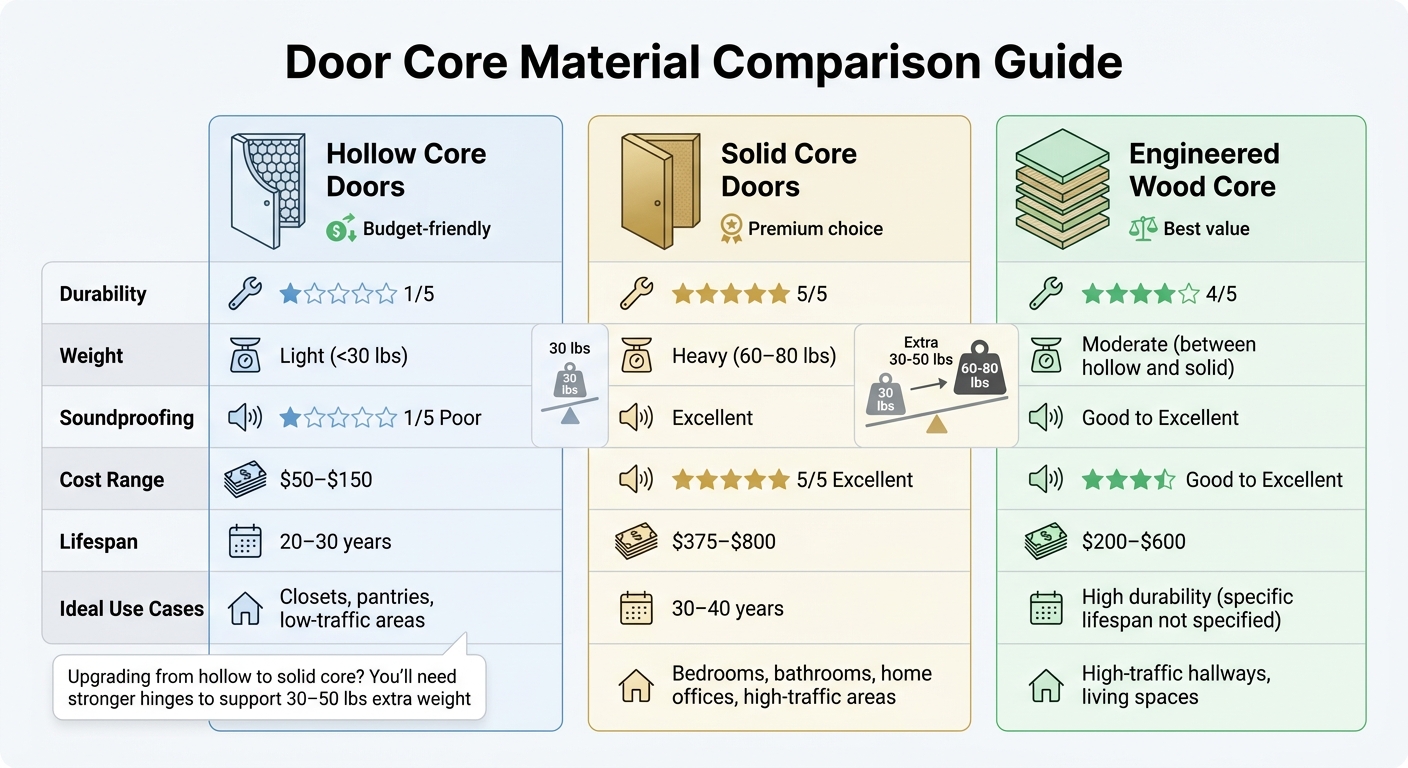
Door Core Materials Comparison: Durability, Weight, Cost and Best Uses
Now that you know what influences durability, let’s compare core materials side by side to see how they stack up in practical use.
Comparison Table
Picking the right door core becomes simpler when you can see the key differences at a glance. Below is a breakdown of how each material performs in terms of durability, weight, soundproofing, cost, and best applications.
| Material | Durability | Weight | Soundproofing | Cost Range ($) | Ideal Use Cases |
|---|---|---|---|---|---|
| Hollow Core | Low | Light (<30 lbs) | Poor | $50–$150 | Closets, pantries, low-traffic areas |
| Solid Core Doors | High | Heavy (60–80 lbs) | Excellent | $375–$800 | Bedrooms, bathrooms, home offices, high-traffic areas |
| Engineered Wood | High | Moderate | Good to Excellent | $200–$600 | High-traffic hallways, living spaces |
Switching from a hollow-core to a solid-core door adds 30–50 lbs, so you’ll need stronger hinges to prevent sagging and keep the door functioning smoothly for years. For high-traffic areas like bedrooms or bathrooms, solid-core or engineered wood doors are a smart choice. Meanwhile, hollow-core doors work well in less demanding spaces like closets or pantries.
This side-by-side comparison makes it easier to decide which door core material suits your specific needs.
How to Choose the Right Door Core
Identify Your Requirements
Start by outlining the specific needs for each door in your home. For example, a bedroom door might need to block noise effectively, while a utility room door might prioritize fire resistance. Your main entrance will need to withstand weather and wear, whereas a closet door only needs basic functionality.
For spaces like hallways or children’s rooms that see a lot of activity, solid wood or solid-core doors are ideal because they’re more resistant to dents and impacts. If you plan to use heavy hardware, solid wood cores are a better option since they hold screws more securely than hollow-core or particleboard alternatives. In colder regions, exterior doors with thermal-insulating cores – like polystyrene or polyurethane – can help keep energy costs down.
Fire safety is another critical factor. Areas such as stairwells or the door connecting a garage to a living space may require fire-rated cores like mineral cores, which slow heat transfer and help contain fires. Always check local building codes to ensure you’re meeting safety standards.
Once you’ve defined your requirements, compare options based on their long-term performance and cost-effectiveness.
Balance Cost and Long-Term Value
After identifying your needs, it’s time to weigh the upfront costs against long-term benefits. While hollow-core doors are budget-friendly, they may not offer the durability or performance you need in the long run. For instance, hollow-core doors typically cost between $50 and $150 and last around 20–30 years, whereas solid-core doors, which range from $375 to $800, can last 30–40 years.
Consider using a mix of door types to balance your budget and performance needs. For rooms like bedrooms, bathrooms, and home offices – where sound control and durability matter – solid-core doors are the better choice. Meanwhile, hollow-core doors work well in less demanding spaces like closets or pantries.
"Mixing door types helps owners balance cost and performance. Use solid-core doors in high-privacy or high-traffic areas and hollow-core doors in low-use, secondary areas to optimize both budget and functionality."
Keep in mind that heavier doors often need stronger hardware, so plan for proper installation to ensure long-term functionality.
Get Professional Advice
Even after narrowing down your options, consulting a professional is a smart move. Door cores are hidden, so an expert can verify that the advertised specifications will deliver the performance you expect. This is especially important for specialized needs, like ensuring fire-rated doors meet NFPA 252 standards.
"Choosing the wrong core can cause premature damage, reduced performance, or failure to meet safety regulations."
For homeowners in South Carolina, Icon Window & Door (https://iconwindowanddoor.com) offers tailored advice on selecting door cores that align with local building codes and design preferences.
Expert guidance can help you avoid costly mistakes – like installing a hollow-core door in a high-humidity bathroom, which can lead to warping and premature failure.
Conclusion
Choosing the right door core material plays a crucial role in improving your home’s functionality. The core impacts everything from structural stability to soundproofing, moisture resistance, and fire protection. Solid-core doors, for instance, can last up to a decade longer than hollow-core alternatives, making durability and cost key factors to weigh in your decision-making process.
Each material comes with its own strengths and weaknesses. Hollow-core doors are great for closets and pantries but fall short in soundproofing and durability. On the other hand, solid-core doors excel in noise reduction and resilience, making them ideal for spaces like bedrooms, bathrooms, and home offices. For exterior doors, especially in colder regions, high-density polyurethane cores offer exceptional insulation – up to six times better than standard wood doors. By understanding these differences, you can align your door choices with your home’s specific needs.
"Conversely, the right door core ensures lasting reliability, safety, and value."
- Simfy Doors
Thoughtful planning makes all the difference. Invest in solid-core or specialized cores for high-performance areas, and save budget-friendly options for spaces with lighter use. And if you’re unsure, consulting a professional can ensure your doors meet local codes and your home’s unique requirements.
If you’re in South Carolina, Icon Window & Door offers expert advice and premium door options to keep your home both secure and stylish.
FAQs
How do I tell if my existing door is hollow core or solid core?
To figure out if your door is hollow or solid core, try tapping it with your knuckles. A hollow core door will have an empty, echo-like sound, while a solid core door will produce a heavier, denser sound. Another simple test is to press a thumbtack into the door. If it goes in with little effort, the door is likely hollow core. If it’s difficult to push in, the door is probably solid core. Both methods are quick, easy, and cause minimal damage.
Will my current door frame and hinges support a heavier solid-core door?
Your existing door frame and hinges might handle the added weight of a solid-core door, but key elements like the hinge type and frame strength play a big role. Solid-core doors can weigh anywhere from 50 to 90 pounds or more, so it’s best to use heavy-duty hinges – ball bearing hinges are a solid choice. Also, make sure the frame is strong and securely anchored. If you’re uncertain, it’s wise to consult a professional to determine if any upgrades are necessary for a safe and secure installation.
What door core is best for humid rooms or exterior entry doors?
Polyurethane door cores work well for spaces with high humidity or as exterior entry doors. Their standout features include strong insulation and excellent moisture resistance. These qualities make them especially useful in cold or damp climates, ensuring long-lasting durability and reliable performance.