Installing doors in Charleston can be tricky due to the coastal climate. Mistakes like incorrect measurements, using unsuitable hardware, poor sealing, misalignment, or skipping weatherproofing can lead to costly repairs, drafts, or structural damage. Here’s what you need to know:
- Incorrect Measurements: Even small errors can cause misfits, air leaks, or water intrusion.
- Wrong Hardware: Standard materials corrode quickly in salt air; use stainless steel or bronze.
- Poor Sealing: Without proper flashing and seals, water can damage walls and floors.
- Misalignment: Uneven frames or hinges lead to sticking, swinging, or hardware strain.
- Skipping Weatherproofing: Gaps invite moisture, drafts, and pests, reducing efficiency.
Professional installation is often required for warranties and ensures precision. Experts like Icon Window & Door specialize in Charleston’s unique conditions, offering durable materials and expert craftsmanship to protect your home.
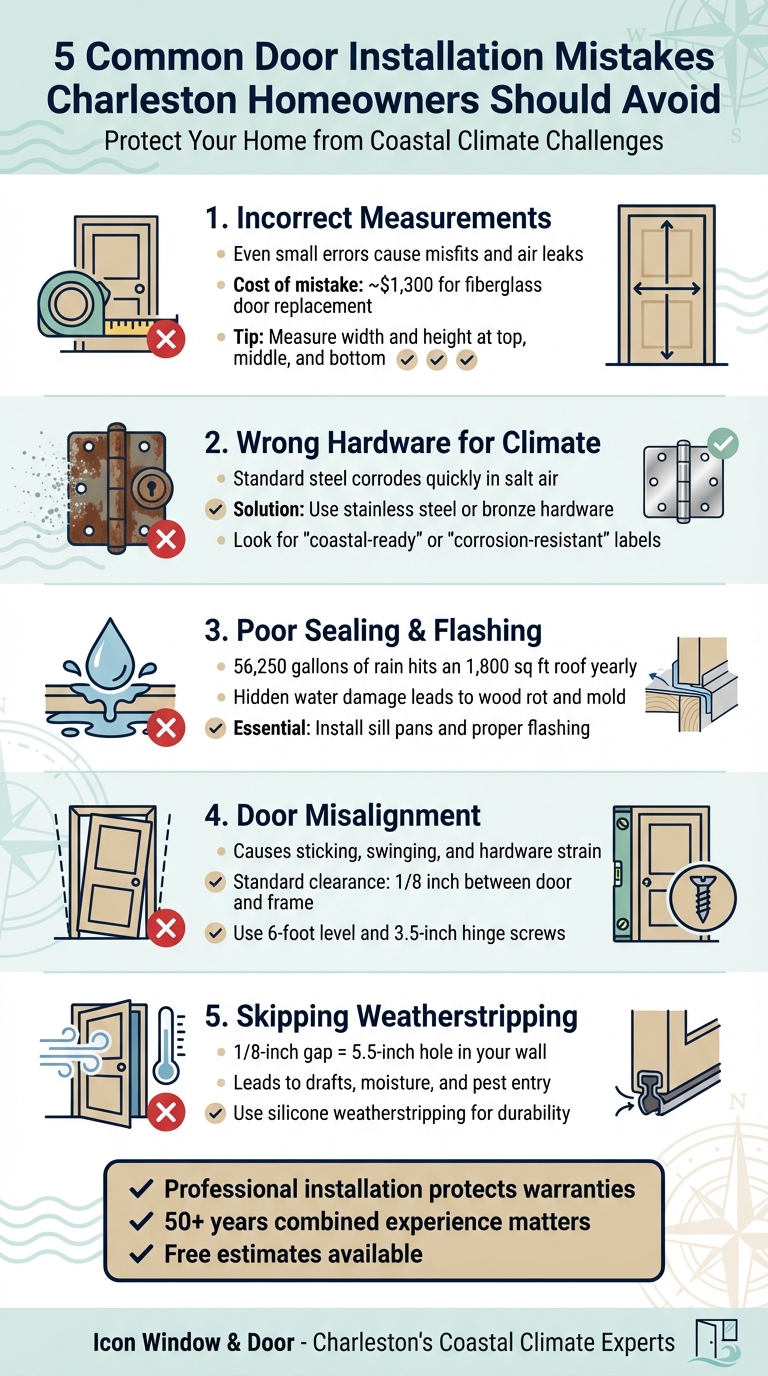
5 Common Door Installation Mistakes Charleston Homeowners Should Avoid
Mistake 1: Taking Incorrect Measurements
Measuring a door might sound straightforward – just grab a tape measure and go, right? Unfortunately, many homeowners in Charleston discover it’s not that simple. Relying on a single measurement or assuming a "standard" size of 36 inches by 80 inches often leads to problems. As Jouviane Alexandre from Angi explains, "A small mistake could mean reordering parts, delaying installation, or realizing your perfect-fit door doesn’t fit". This makes it clear why getting precise measurements is absolutely essential.
Why Getting Measurements Right Matters
Even a small measuring error can cause big headaches. A door that’s slightly off-size might stick, misalign, or let in humid air. In coastal areas, shifting soils can make door frames lose their alignment, so you’ll need to check that the corners are square and the sill is level. If the door isn’t properly aligned, it can strain hinges and hardware, leading to early wear and even security risks. Considering that a new fiberglass door with a sidelight unit can cost around $1,300, mistakes can quickly become expensive. Beyond that, poor fitting can allow moisture to seep in, causing wood rot or mold – issues no homeowner wants to deal with. And don’t forget, custom orders are often nonreturnable, so accuracy is non-negotiable.
Tips to Avoid Measurement Mistakes
To get it right, measure the width and height at the top, middle, and bottom using a stiff metal tape measure for precision. Use a carpenter’s square to check if the corners are truly square, and a 4-foot level to ensure the sill is perfectly level. If you’re replacing the entire door, measure the rough opening instead of the existing frame. For custom or high-cost doors, it’s worth hiring a professional to double-check your measurements. At $40 to $90 per hour, this step can save you from costly errors. Accurate measurements are the foundation for a smooth and durable door installation.
Mistake 2: Selecting the Wrong Hardware for Charleston’s Climate
Charleston’s coastal climate brings unique challenges for door hardware, with its mix of heat, humidity, salt air, and frequent storms. Standard steel hardware simply isn’t up to the task in such harsh conditions. As Icon Window & Door puts it: "The right products should complement your home’s style while standing up to heat, humidity, storms, and salt air. That means weatherproof seals, impact-resistant glass, and corrosion-resistant hardware are non-negotiables". Let’s dive into the specific hardware problems and solutions for this environment.
Hardware Problems in Coastal Areas
In coastal settings like Charleston, low-quality locks, hinges, and screws tend to fail quickly. Salt air accelerates rust on standard steel hardware, weakening the metal over time. When hinges corrode, doors can start to sag, stick, or scrape against the floor or frame. Lock mechanisms may also fail or become misaligned, making it difficult – or even impossible – for the door to latch securely.
Signs of hardware failure include creaking, stiff handles, or visible corrosion. Dusan Kovljen from Doorbuyer highlights this issue, stating, "Regular usage and weather conditions may wear the hinges prematurely, which is why material is crucial as well, as it can extend its usability".
Choosing Hardware That Withstands Charleston’s Weather
To combat these issues, you need hardware specifically designed for coastal environments. Corrosion-resistant materials like stainless steel, bronze, and architectural bronze are built to endure salt air and high humidity without breaking down. Pay attention to every component, including screws and strike plates, and make sure they are rated for outdoor or marine use.
For heavy exterior doors, opt for heavy-duty hinges made to handle the demands of coastal weather. Look for labels such as "coastal-ready" or "corrosion-resistant" to ensure the hardware can withstand Charleston’s tough conditions. And don’t overlook regular maintenance – apply lithium grease to hinges and locks to keep them working smoothly. Avoid using WD-40, though; it attracts dirt and can make problems worse over time.
Mistake 3: Poor Sealing and Flashing Around Doors
Door openings interrupt the drainage plane, making proper flashing a must to prevent water intrusion. In Charleston, where an average of 56,250 gallons of rainwater can pour onto an 1,800-square-foot roof each year – that’s more than three standard swimming pools – effective sealing is critical. The U.S. Department of Energy highlights the risk: “Often, water intrusion around doors and windows is not discovered until damage has already occurred inside the wall”. This makes it essential to adopt strong sealing practices, as outlined below.
How Poor Sealing Affects Door Longevity
When door seals fail, water can seep behind the siding and into wall cavities, often going unnoticed until significant damage has occurred. Mr. Handyman of Charleston and Summerville explains: “An entryway that has deteriorated over the years, suffered some major damage or just wasn’t installed correctly in the first place will let in air drafts and moisture that make your home less comfortable and livable for your family”. Over time, trapped moisture can cause wood rot, compromising the structural integrity of your home. Be on the lookout for warning signs like sudden increases in heating or cooling bills, noticeable drafts, or damp areas near the threshold after heavy rain.
Proper Sealing and Flashing Techniques
To avoid hidden damage, proper sealing and flashing are essential. Start by installing a sill pan at the base of the door opening. This can be a prefabricated metal or plastic pan, or one made from a flexible self-adhesive flashing membrane. The sill pan’s job is to catch and redirect any water that sneaks under the threshold. The Federal Alliance for Safe Homes points out a common oversight: “The threshold is the bottom of the door frame and provides the transition from outside to inside and can be particularly vulnerable to wind-driven water. Sealing the bottom of the threshold to the door frame is essential and is often overlooked during installation”.
Flashing should always follow the “above overlaps below” principle to ensure water is directed away from the framing. This means overlapping the side flashing over the sill pan and the head flashing over the side flashing. Additionally, use butyl-based sealants with bituminous membranes for durability. In coastal areas within 3,000 feet of the ocean, stainless steel fasteners are recommended to resist salt-air corrosion. Seal the gap between the door frame and the rough opening with backer rod or non-expanding foam, followed by caulking. This not only prevents drafts but also improves energy efficiency.
Mistake 4: Misaligning Doors During Installation
If your door sticks, swings open on its own, or binds when closing, chances are it’s misaligned. Misalignment not only affects how the door functions but also puts extra strain on the hardware and compromises security. Proper alignment requires the door frame to be vertically straight (plumb), the header and sill to be horizontally level, and all corners to form perfect 90-degree angles. Even minor deviations can lead to long-term issues. Let’s break down what causes misalignment and how to avoid it.
What Causes Door Misalignment
Several factors can throw a door out of alignment:
- Unlevel floors or sills: Uneven surfaces can cause the frame to tilt or twist.
- Frames that aren’t plumb: If the frame isn’t perfectly vertical, the door won’t hang correctly.
- Improper hinge installation: Mortising hinges too deeply or using screws shorter than 3.5 inches can allow the door leaf to shift over time.
- Poor shimming techniques: Shims placed with their narrow edges together create a tapered gap, which can distort the frame.
- Foundation settling: As a house settles, the frame may shift, causing the latch to miss the strike plate.
Kate Allen, Founder and CEO of Rustica, highlights: "One of the biggest mistakes facing your door installation is having an uneven door, particularly at the top. This is typically caused by one of two things: the door hinge side is probably out of plumb or is misaligned".
Common warning signs include uneven gaps between the door and frame, a door that swings open or shuts on its own (often called "ghosting"), or needing extra force to close the door. For example, standard steel doors are designed to have a nominal clearance of 1/8 inch between the door and frame – anything outside this range signals trouble.
How to Ensure Proper Door Alignment
To avoid misalignment, careful measurements and adjustments are key:
- Use a 6-foot level or plumb bob to confirm the jambs are perfectly vertical, and a 2-foot level to check that the header is even.
- A framing square can help ensure the jamb meets the header at a precise 90-degree angle.
- Align shims in opposite directions – wide end against narrow end – to prevent the frame from twisting.
- Before securing the final screws, open and close the door several times to check its movement. Adjust the shims as needed to ensure smooth operation.
For hinges, always use 3.5-inch screws to anchor them securely into the wall framing. Shorter screws can cause the door to sag over time. If "ghosting" occurs, try removing the top hinge pin, placing it on a hard surface, and giving it a light tap to create a slight bend. This adds resistance and helps stop unwanted movement.
When dealing with unlevel floors, measure the height difference and trim the bottom of the higher jamb side to ensure the frame sits square. For homes with structural settling or foundation issues, professional installation can address these challenges and prevent long-term damage.
sbb-itb-cdbcc3e
Mistake 5: Skipping Threshold and Weatherstripping Installation
Overlooking the installation of thresholds and weatherstripping is a common misstep that leaves homes vulnerable to coastal elements. In Charleston’s humid and windy climate, even the most precisely installed door can fall short if these components are neglected. The resulting gaps can invite moisture, drafts, and even pests, leading to bigger problems over time.
What Thresholds and Weatherstripping Do
Thresholds and weatherstripping work together to seal your entryway. The threshold covers the gap at the base of the doorway, keeping out moisture, drafts, and insects. Meanwhile, weatherstripping seals the spaces along the top and sides of the door frame, and door sweeps or bottoms close the gap between the door and the threshold.
This combination creates a tight seal that prevents thermal energy transfer – the movement of hot or cold air into or out of your home. The U.S. Department of Energy highlights how exterior doors can be a major source of air leakage, especially if they’re old, poorly installed, or improperly sealed. A mere 1/8-inch gap around a standard door can let in as much air as a 5 1/2-inch hole in your wall. That’s a lot of wasted energy!
Proper sealing also shields your home from moisture damage, which can lead to mold, mildew, and wood rot – serious issues that can compromise your home’s structure. As Mr. Handyman of Charleston and Summerville puts it:
"If your entryway is not holding warm air from your furnace or cool air from your air conditioner on the inside where it belongs, that heat transfer and air movement changes the temperature in your house and your HVAC system has to operate more frequently".
How to Install Thresholds and Weatherstripping Correctly
Getting a solid seal starts with proper installation. An adjustable threshold is a great choice since you can fine-tune it with a screwdriver to close gaps without causing the door to stick. Choose the right threshold style for your floor height: L Saddle thresholds work when both sides of the floor are lower than the opening, while Half Saddle thresholds are ideal when the interior floor is level with the opening but the exterior ground is lower.
For weatherstripping, silicone is a top pick. It’s durable, flexible, and maintains a snug seal even as doors expand or contract with Charleston’s fluctuating humidity. If your door frame has a pre-cut groove, kerf-in weatherstripping is a better option than self-adhesive foam tape – it provides a tighter seal and is less likely to rip. Before applying weatherstripping, clean the frame with soapy water and remove any old adhesive to ensure a smooth surface.
Don’t forget the door sweep at the bottom. Attach it to the interior side of the door so it meets the threshold when the door is closed. For carpeted floors, consider using flexible bulb weatherstripping on the threshold. After installation, shine a flashlight around the door to check for any gaps that allow light to pass through, and make adjustments as needed.
For homes in Charleston’s coastal environment, adding a sill pan beneath the threshold is a smart move. This flexible membrane or metal tray redirects water away from the subfloor and framing, offering extra protection – especially during storm seasons when wind-driven rain can sneak past even well-sealed doors. It’s an extra step, but one that can save you from costly repairs down the line.
Why Professional Installation Matters
Installing a door yourself might seem like a cost-saving idea, but even small mistakes can lead to big problems. A door that’s slightly out of alignment can stick, scrape your floors, or even swing open unexpectedly. Skipping proper weatherstripping can result in drafts that drive up your energy bills. And if locks aren’t installed correctly, you risk misaligned deadbolts or weak strike plates that compromise your home’s security. On top of that, many manufacturers require professional installation to keep their warranties valid. A DIY misstep could leave you footing the bill for expensive repairs or replacements. These are just a few reasons why professional installation is essential for a door that performs well and lasts.
Benefits of Choosing Icon Window & Door
Icon Window & Door is here to take the guesswork – and risk – out of door installation. With over 50 years of combined experience in construction and project management, their team brings expertise to every project. They start by offering a free site visit to assess your needs and recommend materials that can stand up to Charleston’s unique coastal climate. Whether you need fiberglass, steel, or finishes designed to resist salt air and storm damage, they’ve got you covered.
Their installations are all about precision. From ensuring perfect alignment to expert flashing, weatherstripping, and secure hardware installation, every detail is handled with care. As Icon Window & Door puts it:
"A lock is only as strong as its installation. We double-confirm that locks, strike plates, and door reinforcements are securely installed to withstand forced entry".
Plus, every installation comes with a one-year workmanship warranty, which adds to the manufacturer’s coverage.
Getting Long-Lasting Results in Charleston
Charleston’s coastal environment brings unique challenges – like high humidity, salt air, and frequent storms – that demand more than a standard installation. Professional installers don’t just avoid common mistakes; they also prepare your door to handle these tough conditions. For example, they can spot and fix hidden problems like rot or mold in the rough opening before the new door goes in, preventing bigger issues down the road. They also ensure seals are watertight, hinges are rated for the door’s weight, and locks are properly installed for smooth, secure operation.
Icon Window & Door offers free estimates and competitive pricing, making professional installation a smart investment. It pays off with lower energy costs, fewer repairs, and a door built to last in Charleston’s harsh coastal climate. With professional installation, you’re not just getting a door – you’re securing your home’s safety, efficiency, and durability.
Conclusion
Installing a door may seem straightforward, but even small mistakes can pile up and lead to big problems. Errors like incorrect measurements, using the wrong hardware, poor sealing, misalignment, or skipping weatherstripping can weaken security, shorten the door’s lifespan, and inflate energy bills.
These common pitfalls highlight the importance of hiring experts for the job. Charleston’s coastal environment, with its unique challenges, requires precise installation and materials built to last. That’s where Icon Window & Door comes in. With over 50 years of combined construction experience, they use top-tier materials like corrosion-resistant hardware, weatherproof seals, and impact-resistant glass – perfectly suited for the Lowcountry. Plus, they back their work with a one-year workmanship warranty, complementing the manufacturer’s coverage.
Proper door installation doesn’t just secure your home – it also improves energy efficiency and protects your investment over time. Icon Window & Door offers free estimates and site visits to evaluate your specific needs, ensuring you get the right solution for Charleston’s unique conditions. Whether you’re replacing an old door or installing a new one, their professional approach guarantees your door will stand the test of time.
FAQs
What are the best door hardware materials for Charleston’s coastal climate?
In Charleston’s hot, humid, and salty coastal climate, picking the right corrosion-resistant materials for door hardware is a must. Two of the best choices are marine-grade stainless steel and solid brass or bronze with a protective finish. These materials are built to stand up to rust, retain their strength, and keep their good looks even after years of exposure to salt air, heat, and humidity.
Choosing these sturdy materials doesn’t just prevent rust – it also helps maintain your door’s alignment and keeps security mechanisms working smoothly. That means fewer repairs or replacements over time. On top of that, they pair beautifully with both historic and modern Charleston homes, offering a perfect mix of practicality and style for the area’s tough weather conditions.
What’s the best way to take accurate door measurements before installation?
Getting accurate door measurements is crucial for a hassle-free installation. Start by grabbing a steel measuring tape, a level, and something to jot down your measurements. Begin with the width of the rough opening – measure at the top, middle, and bottom. Use the smallest of these measurements as your final width. For the height, do the same: measure on the left, right, and center, and again, take the smallest value.
Next, check if the frame is square by measuring diagonally from one corner to the opposite corner in both directions. If the diagonal measurements don’t match, the opening might need some adjustments. Also, measure the door thickness (or jamb depth) at multiple points, and stick with the smallest value to ensure the door fits flush with the frame.
Finally, double-check all your measurements and record them in inches (like 36 in. x 80 in.) to avoid any mistakes. Getting these numbers right the first time will save you from costly fixes and guarantee the door fits perfectly.
Why should I hire a professional for door installation to protect my warranty?
Hiring a professional to handle your door installation is crucial if you want to safeguard your warranty. Many manufacturers make it clear: their warranties are only valid if the door is installed properly by a qualified expert. This isn’t just a technicality – it’s about ensuring the door is aligned, sealed, and secured the right way. When done correctly, it not only keeps the warranty intact but also helps prevent problems down the line, like drafts or doors that don’t function as they should.
Choosing a professional helps you sidestep common installation errors that could void your warranty. It’s a smart way to protect your investment and ensure your door performs well for years to come.