Looking to save on energy bills while upgrading your home? Eco-friendly windows and doors could be the answer. They improve insulation, reduce energy use, and even boost your home’s value. Here’s what you need to know:
- Energy savings: ENERGY STAR windows cut energy bills by 12% annually. For homes with single-pane windows, savings range from $101 to $583 per year.
- Top materials: FSC-certified wood, fiberglass, and recycled aluminum for windows; reclaimed wood, fiberglass, and bamboo for doors.
- Durability: Fiberglass windows last 45–55 years, while recycled aluminum frames exceed 50 years with proper care.
- Energy-efficient features: Low-E glass, double/triple glazing, and gas fills improve thermal performance and indoor comfort.
- Cost: High-performance windows range from $800 to $4,000 each, with federal tax credits available for qualifying models.
Want to maximize these benefits? Proper installation is key – especially in South Carolina’s humid climate. Let’s dive into the details.
Sustainable Window and Door Materials Comparison Guide
Eco-Friendly Window Materials
Selecting the right window frame material can significantly impact your home’s energy efficiency and environmental impact, especially in South Carolina’s challenging climate. Among the most sustainable choices are FSC-certified wood, fiberglass, and recycled aluminum. Each material offers unique benefits while standing up to the region’s heat, humidity, and coastal conditions.
FSC-Certified Wood Frames
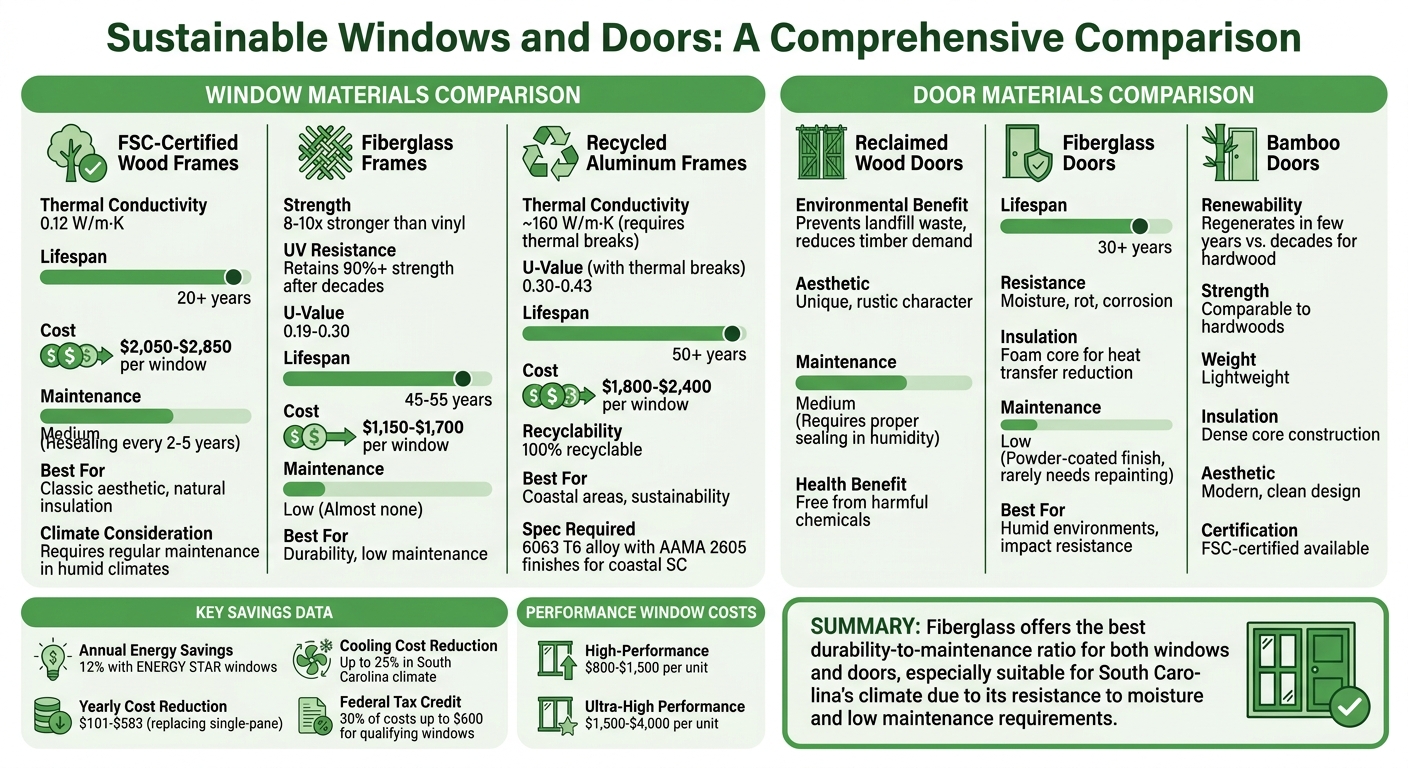
Frames made from FSC-certified wood come from responsibly managed forests that protect biodiversity. These frames excel at natural insulation due to wood’s low thermal conductivity (around 0.12 W/m·K). This means they help keep your home’s conditioned air inside while also providing natural soundproofing.
However, wood frames do require regular maintenance in humid climates like South Carolina’s. To prevent issues like rot, mold, and pests, resealing is needed every 2–5 years. Without this upkeep, moisture can compromise the frame’s structure. The installed cost typically ranges from $2,050 to $2,850 per window, and with proper care, these frames can last over 20 years. For those who love a classic look and are willing to invest time in maintenance, wood frames bring warmth and charm to any home.
Fiberglass Frames
Fiberglass frames are an incredibly durable option, ideal for South Carolina’s climate. They are 8–10 times stronger than vinyl and retain over 90% of their strength even after decades of exposure to UV rays and moisture. Their thermal expansion rate is nearly identical to that of glass, which helps maintain airtight seals and prevents leaks over time.
"Fiberglass window frames are dimensionally stable and have air cavities that can be filled with insulation, giving them superior thermal performance compared to wood or uninsulated vinyl." – U.S. Department of Energy
Fiberglass frames offer U-values between 0.19 and 0.30, ensuring excellent energy efficiency. They also have a projected lifespan of 45 to 55 years, requiring almost no maintenance. Costs range from $1,150 to $1,700 per installed window. Since fiberglass is primarily made from sand – a plentiful natural resource – it is fully recyclable at the end of its long life.
Recycled Aluminum Frames
Recycled aluminum frames are both durable and environmentally responsible, lasting over 50 years and being completely recyclable. However, aluminum’s high thermal conductivity (≈160 W/m·K) can lead to condensation issues. To address this, thermal breaks – polyamide strips inserted into the frame – are essential. These strips can reduce heat conduction by up to 500%, improving U-values to a range of 0.30 to 0.43.
For homes in coastal South Carolina, specifying 6063 T6 aluminum alloy with AAMA 2605 finishes is crucial to prevent corrosion from salt exposure. Installed costs for thermally broken aluminum windows typically fall between $1,800 and $2,400 per window. This makes them a premium choice, offering sustainability and resilience in harsh environments.
sbb-itb-cdbcc3e
Eco-Friendly Door Materials
The materials you choose for your doors can affect both your home’s environmental impact and its ability to withstand South Carolina’s unique climate. Reclaimed wood, fiberglass, and bamboo are all excellent options for homeowners who want to prioritize sustainability without sacrificing durability. Let’s take a closer look at each material and how it performs in this context.
In South Carolina, where humidity and heat are common, durability and minimal maintenance are especially important. These materials rise to the occasion.
Reclaimed Wood Doors
Reclaimed wood gives new life to old timber, saving it from landfills and reducing the need for fresh lumber. Beyond its eco-friendly credentials, this material brings a distinctive, rustic charm to any home.
"Reclaimed wood is an excellent choice for sustainable doors, offering a unique character and reducing the demand for new timber." – Sustainable Design Group
Another perk? Reclaimed wood is often free from the harmful chemicals found in some newly processed woods, making it a healthier option for your indoor air quality. That said, proper sealing is crucial to protect these doors from South Carolina’s humid conditions. With the right care, reclaimed wood doors can be refinished or repaired, extending their lifespan significantly.
For a more modern, low-maintenance option, fiberglass is worth considering.
Fiberglass Doors
Fiberglass doors are a standout choice for humid environments like South Carolina. They resist moisture damage, rotting, and corrosion, making them incredibly durable. Plus, their production process uses less energy compared to materials like aluminum or vinyl.
"Fiberglass doors are a marvel in the world of impact resistance. They’re crafted to endure harsh weather without cracking or breaking. But that’s not all; they’re also excellent insulators." – Impact Windows Center
Most fiberglass doors come with insulating foam cores, which help keep your home cool during those sweltering South Carolina summers by minimizing heat transfer. These doors can last for 30 years or more, and many come with powder-coated finishes that rarely, if ever, need repainting. While they may cost more upfront, their energy efficiency and low maintenance often make up for the initial investment over time.
If you’re looking for something renewable with a sleek, contemporary vibe, bamboo might be the answer.
Bamboo Doors
Bamboo is one of the fastest-growing plants on Earth, regenerating in just a few years compared to the decades it takes for traditional hardwoods. This rapid growth makes it an eco-friendly choice without compromising on strength – bamboo is both lightweight and as tough as many hardwoods.
"Bamboo is a highly sustainable material because it grows rapidly and requires minimal resources." – MD Canada
Bamboo doors also offer solid insulation, thanks to their dense core construction. With a modern, clean aesthetic, they’re easy to maintain using non-toxic cleaning products. For those who want FSC-certified materials, bamboo is an excellent option that combines sustainability with style.
| Material | Environmental Benefit | Practical Performance (SC Climate) |
|---|---|---|
| Reclaimed Wood | Prevents landfill waste; reduces timber demand | Unique aesthetic; requires proper sealing in high humidity |
| Fiberglass | Low production energy; recyclable | Resists rot, warping, and storm impact; excellent insulation |
| Bamboo | Rapidly renewable | High structural strength; lightweight with a modern design |
Energy Efficiency Features
Energy efficiency plays a big role in determining heating and cooling costs. When paired with eco-friendly materials, energy-efficient features are especially effective in South Carolina’s warm climate.
Modern windows incorporate advanced technologies to improve energy performance. The type of glazing is one of the most important factors, with double or triple-pane Insulating Glass Units (IGUs) now being the standard. Triple-pane windows, in particular, outperform high-quality double-pane units by 20% to 30% in thermal efficiency. For South Carolina homeowners, where summers often hit the 90s, the right glazing can cut cooling costs by up to 25%. These improvements work alongside Low‑E coatings, gas fills, and thermal spacers to further reduce energy loss.
"Windows are responsible for 25–30 percent of residential heating and cooling energy use and are an important consideration for both new and existing homes." – South Carolina Energy Office
Each component – Low‑E coatings, gas fills, and thermal spacers – contributes to managing heat transfer. Low‑E coatings, which are ultra-thin metallic layers, reflect heat while letting in natural light. Although they add 10% to 15% to the window cost, they can reduce energy loss by 30% to 50%. Spectrally selective Low‑E coatings, ideal for South Carolina’s climate, block 40% to 70% of solar heat while maintaining daylight. Between the panes, argon gas enhances insulation by about 6% compared to air, while krypton gas offers around 27% better insulation. Meanwhile, warm-edge spacers reduce heat transfer at the edges of the glass and prevent condensation, which is particularly useful in humid coastal areas prone to mold.
Glazing and Insulation Options
Knowing how these features work can help you choose windows that fit your budget and meet your climate needs. Here’s a quick breakdown of key features:
| Feature | Description | Benefits |
|---|---|---|
| Low‑E Glass | A thin metallic coating that reflects infrared heat but allows visible light through. | Cuts energy loss by 30–50% and reduces solar heat gain, lowering cooling costs in hot climates like South Carolina. |
| Double/Triple Glazing | Two or three glass panes with sealed air or gas spaces in between. | Triple-pane windows improve thermal performance by 20–30% compared to double-pane units and enhance soundproofing. |
| Argon Gas Fill | Dense, inert gas inserted between panes to slow heat transfer. | Provides about 6% better insulation than air, suitable for standard 1/2‑inch gaps. |
| Krypton Gas Fill | A denser inert gas for narrow gaps (around 1/4‑inch). | Offers 27% better insulation than air, ideal for slimmer window designs. |
| Warm‑Edge Spacers | Non-metal materials separating the glass at the edges. | Reduce heat conduction and condensation, helping to prevent mold in humid environments. |
For South Carolina homes, focus on windows with low Solar Heat Gain Coefficient (SHGC) ratings – ideally 0.23 or below – to keep interiors cooler. Always check the National Fenestration Rating Council (NFRC) label for whole-unit U‑factor and SHGC ratings, as these provide a more accurate picture than center-of-glass measurements.
High-performance windows typically cost between $800 and $1,500 per unit, while ultra-high performance options can range from $1,500 to $4,000. Federal tax credits are available, covering 30% of costs up to $600 for windows that meet "ENERGY STAR Most Efficient" standards.
Benefits of Eco-Friendly Windows and Doors
Eco-friendly windows and doors bring more than just environmental perks – they offer tangible financial and practical benefits as well. For starters, better insulation means your HVAC system doesn’t have to work as hard, which translates to lower monthly energy bills. Pair that with their long-lasting durability and the potential to boost your property’s value, and these upgrades prove to be a wise investment.
Durability is a standout feature. Materials like fiberglass and recycled aluminum are resistant to warping, rotting, and corrosion. This means fewer repairs and replacements over time. While the initial cost might be higher, the extended lifespan and minimal maintenance make the investment worthwhile in the long run.
Beyond durability, these upgrades can significantly enhance a home’s market value. Energy-efficient windows and doors, particularly those with ENERGY STAR ratings, not only lower utility costs but also make homes more attractive to buyers. Properties with such features often sell faster and at higher prices.
Builders and renovators aiming for LEED certification also reap rewards. For instance, FSC-certified wood meets sourcing standards, and high-performance glazing contributes to energy efficiency goals. Under LEED v4.1, windows fall under the "Wall Panels" category for low-emitting materials. Thanks to glass being naturally non-emitting, typical window assemblies – consisting of around 80% glass and 20% framing – can meet the 75% compliance threshold needed to earn points. A practical example: In August 2021, Emily Purcell, Sustainable Design Lead at CannonDesign, secured a LEED credit for a project using Tubelite 400T Thermal Curtainwall and storefront glass by leveraging this compliance method.
"Choosing sustainable window materials and doors is a practical step toward reducing your home’s environmental impact. From recycled aluminum to FSC-certified wood, these materials offer energy efficiency, durability, and aesthetic appeal." – Sustainable Design Group
Next, we’ll look at installation tips to maximize these benefits.
Installation Best Practices
Even the most durable sustainable windows and doors can fall short of their potential if not installed correctly. Poor installation can negate the efficiency benefits you’ve paid for, making attention to detail essential.
Proper Sealing and Alignment
Getting the seal right starts with measuring gap sizes. For gaps under 1/4 inch, high-quality caulk is your best bet. Make sure to clean the area thoroughly before applying the caulk, then smooth it out with a tool or your finger to create a seamless seal. For larger gaps, use window-rated non-expanding foam, as regular expanding foam can exert too much pressure and warp the frames during curing.
Want to check if your seal is effective? A couple of easy tests can help. Slide a piece of paper into the seal – if it pulls out easily, the weatherstripping isn’t tight enough. Another trick is to hold a lit incense stick near the window seams. If the smoke drifts in one direction, you’ve got an air leak that needs fixing. On average, sealing repairs can cost between $75 and $150 per window.
These sealing methods are especially important when dealing with South Carolina’s challenging climate, where humidity and temperature swings can test even the best materials.
Material Selection for South Carolina Climate
South Carolina’s hot, humid summers and coastal conditions call for materials designed to handle the elements. Fiberglass and vinyl frames are ideal because they resist warping and moisture damage much better than traditional wood. Opting for energy-efficient windows tailored to hot, humid climates can cut cooling costs by as much as 25% during summer.
For coastal areas, durability is crucial. Windows should be able to withstand wind speeds of 130–150 mph and include corrosion-resistant hardware to combat salt air. Look for products certified for the Southern Climate Zone with low Solar Heat Gain Coefficient (SHGC) ratings to block solar heat effectively. Double-hung windows are a smart choice in this region – they let hot air escape through the top while drawing in cooler air from below.
Working with Professional Installers
The role of professional installers is just as important as choosing the right materials. Proper installation ensures your eco-friendly windows and doors deliver on their promise of energy efficiency and durability. Plus, it helps maintain your warranty.
"Even the most energy-efficient window must be properly installed to ensure energy efficiency and comfort. Have your windows installed by trained professionals according to manufacturer’s instructions; otherwise, your warranty may be void." – U.S. Department of Energy
Experienced installers know how materials like aluminum expand and contract with temperature changes. For instance, aluminum window frames can last 20 to 40 years when sealed and installed with techniques that account for thermal movement. They also tailor their methods to your home’s construction – whether it’s wood framing, masonry, vinyl siding, or brick veneer.
Icon Window & Door provides site visits and consultations to evaluate your needs. They offer a one-year workmanship warranty on installations and are well-versed in South Carolina’s building codes and climate challenges. For homes built before 1978, their licensed installers also address potential lead paint risks during trim removal.
Conclusion
Sustainable windows and doors offer a combination of durability and long-term savings. To recap, materials like FSC-certified wood, fiberglass, and recycled aluminum for windows, paired with options such as reclaimed wood, bamboo, and fiberglass for doors, provide renewable and sturdy choices tailored to South Carolina’s climate.
When eco-friendly materials are paired with energy-efficient features, homeowners can reap both environmental and financial rewards. Features like Low-E glass coatings and double or triple glazing help maintain comfortable indoor temperatures throughout the year. Meanwhile, materials such as fiberglass and recycled aluminum ensure decades of energy efficiency with minimal upkeep. These upgrades not only cut utility costs but also reduce maintenance expenses and boost property value.
The advantages go beyond just saving money. Sustainable windows and doors contribute to better indoor air quality, lower greenhouse gas emissions, and reduced manufacturing waste. For instance, recycling aluminum for window frames requires much less energy compared to producing new aluminum. Similarly, fiberglass – primarily made from abundant sand – delivers excellent thermal performance while leaving a smaller carbon footprint. When installed properly, these materials thrive in South Carolina’s hot and humid conditions, maximizing their benefits.
FAQs
How do I choose the best sustainable frame material for my home’s climate?
When selecting a frame material that aligns with eco-friendly goals, it’s essential to think about how it will perform in your local climate. For regions with extreme weather, materials like fiberglass are a smart choice since they resist warping or cracking. On the other hand, wood brings a natural, warm aesthetic but might need extra care in humid environments to prevent damage.
Focus on factors like durability, insulation capabilities, and energy efficiency to make sure your frame material not only suits your climate but also minimizes environmental impact. This approach ensures a balance between comfort, sustainability, and long-term reliability for your home.
Which window ratings should I check to know it will actually save energy?
To figure out if a window is energy-efficient, look at its U-factor and Solar Heat Gain Coefficient (SHGC) ratings. The U-factor tells you how well the window insulates, while the SHGC shows how effectively it limits solar heat from entering. Together, these ratings reveal how much energy the window can help save.
Can poor installation cancel out the benefits of energy-efficient windows and doors?
Proper installation is crucial to getting the most out of energy-efficient windows and doors. When done right, it ensures key features like thermal performance function as they should. But poor installation? That can lead to problems like air leaks, drafts, and even moisture buildup – completely defeating the purpose of these upgrades. To truly enjoy the energy savings and improved comfort these products offer, high-quality sealing and weatherproofing are absolutely essential.