Your choice of door material can significantly impact your energy bills, especially in South Carolina’s hot, humid climate. Poorly insulated doors let heat in and cool air out, forcing your HVAC system to work harder. The right materials can keep your home comfortable while reducing energy costs by up to 12% and saving $150–$350 annually. Here’s a quick guide to the best options:
- Fiberglass Doors: Offer top insulation (R-values 6.0–7.0+), resist humidity, and last 30–50 years. Cost: $800–$1,500.
- Insulated Steel Doors: Affordable with good insulation (R-values 5.0–6.0) but prone to rust in coastal areas. Cost: $450–$650.
- Wood-Clad Doors: Stylish but high-maintenance and less durable in humid conditions. Cost: $1,000–$2,500+.
- Vinyl Doors: Moisture-resistant, low-maintenance, and budget-friendly. R-values 3.0–5.0.
- Composite Doors: Durable and energy-efficient, combining wood and polymers. R-values 4.0–6.0.
For South Carolina, fiberglass and composite doors are ideal for their durability and energy performance, especially in coastal or humid areas. Look for ENERGY STAR-certified doors with a U-Factor under 0.17 and SHGC below 0.25 for maximum savings.
Pro Tip: Proper installation is just as important as the door material. Poorly fitted doors can leak air, negating energy savings. Always hire a professional for expert door installation to ensure a snug, weatherproof fit.
Best Door Materials for Energy Efficiency
Choosing the right door material can make a big difference in energy costs and help protect your home from South Carolina’s hot, humid climate and coastal conditions.
Fiberglass Doors
Fiberglass doors are a top choice for energy efficiency in South Carolina homes. With a solid polyurethane foam core, they offer excellent insulation, boasting R-values between 6.0 and 7.0+ and U-factors as low as 0.09. This material’s low thermal conductivity keeps outdoor heat from creeping in during the blistering summer months. Plus, fiberglass resists moisture, making it ideal for humid environments where warping and rot are common.
"Fiberglass doors with polyurethane foam cores deliver the highest energy efficiency… significantly outperforming traditional wood or basic steel doors." – SolarTech
Take the Therma-Tru Smooth-Star Series, for example. It achieves an impressive R-value of 6.8 and U-factors as low as 0.09, thanks to its foam core and magnetic weatherstripping. Similarly, ProVia Premium Fiberglass doors feature a 2.5-inch thick design with dual perimeter sealing, providing nearly four times the insulation of traditional wood doors.
Insulated Steel Doors
For a cost-effective option with solid energy performance, insulated steel doors are worth considering. These doors typically offer R-values between 5.0 and 6.0, thanks to foam cores. Features like thermal breaks reduce heat transfer, while magnetic weatherstripping ensures a tight seal – important since air leaks can account for up to 20% of heat loss. Priced between $450 and $650, insulated steel doors are a budget-friendly choice, especially when finished to resist corrosion in coastal areas.
Wood-Clad Doors with Low-E Glazing
Modern wood-clad doors have overcome many of the issues associated with traditional wood. Designs like Glenview EuroTech™ doors use a 2.75-inch thick construction with a thermal insulating core sandwiched between wood layers, nearly doubling the insulation compared to standard wood doors. When paired with low-emissivity (Low-E) glass coatings, these doors help reflect infrared and UV rays, reducing solar heat while allowing natural light to filter in. For South Carolina’s climate, look for doors with a Solar Heat Gain Coefficient (SHGC) of 0.25 or less to minimize cooling demands. These doors typically cost between $1,000 and $1,800+.
Vinyl Doors
Vinyl doors are a practical and moisture-resistant choice, especially for coastal areas. Their multi-chambered frames trap air, providing R-values between 3.0 and 5.0. The hollow-core design further reduces heat transfer. For instance, Taylors Windows in Greenville, SC, custom-builds vinyl patio doors with multi-chambered, hollow-core welded frames to withstand local weather conditions. Vinyl doors also require no painting or sealing, making them an affordable and low-maintenance option.
Composite Doors
Composite doors combine wood fibers and polymers to achieve R-values ranging from 4.0 to 6.0. Materials like Fibrex – a mix of wood fiber and polymer – offer better insulation than standard vinyl and greater durability in coastal conditions. These doors resist moisture and warping, offering the natural look of wood with less upkeep and improved energy performance. The polymer component ensures dimensional stability, making them ideal for humid, coastal environments.
Whether you choose fiberglass, insulated steel, wood-clad, vinyl, or composite doors, selecting the right material can make a noticeable difference in your home’s energy efficiency. Icon Window & Door offers a range of energy-efficient doors tailored to South Carolina’s unique climate challenges.
sbb-itb-cdbcc3e
What to Look for in Energy-Efficient Doors
Choosing the right energy-efficient door for South Carolina’s climate comes down to a few key features that address the region’s unique conditions.
U-Factor and Solar Heat Gain Coefficient (SHGC)
The U-Factor measures how well a door prevents heat transfer. In South Carolina, where summers can be scorching, look for doors with lower U-Factor ratings for better insulation. Meanwhile, the Solar Heat Gain Coefficient (SHGC) tells you how much solar radiation passes through glass components. For the Southern zone of South Carolina, aim for an SHGC of 0.25 or lower to reduce heat from sunlight and keep cooling costs in check.
Check for the NFRC label and ensure the door meets ENERGY STAR standards. Not only do these ratings confirm the door’s performance in South Carolina’s climate, but they may also qualify you for tax credits.
Resistance to Humidity and Coastal Conditions
South Carolina’s high humidity and salty coastal air demand doors that can withstand these challenges. Composite frames are a great choice because they resist swelling and warping, unlike traditional wood. Additionally, anodized adjustable thresholds offer protection against corrosion and help seal out drafts.
If you’re in coastal areas like Charleston or Bluffton, look for doors with corrosion-resistant hardware and impact-rated components to handle salt air and stormy weather. For instance, ProVia’s Embarq fiberglass doors feature frames that are 43% thicker than standard fiberglass options, offering superior draft protection.
Maintenance and Lifespan
The material of your door plays a big role in how much maintenance it will need. Fiberglass and vinyl doors are low-maintenance, requiring no painting or sealing, and they resist moisture damage effectively. Steel doors are also fairly low-maintenance but need proper treatment to avoid rust, especially in coastal areas. On the other hand, solid wood doors demand regular staining and sealing, which can affect their energy performance over time.
Regular inspections are essential – look for issues like seal failure, drafts, or frame rot, especially in humid conditions. Even the most efficient door can lose its effectiveness if air leaks develop. Professional installation ensures a snug fit and helps maintain energy efficiency long term. Additionally, to qualify for federal energy efficiency tax credits, exterior doors and other building envelope components should have a lifespan of at least 5 years.
Door Material Comparison
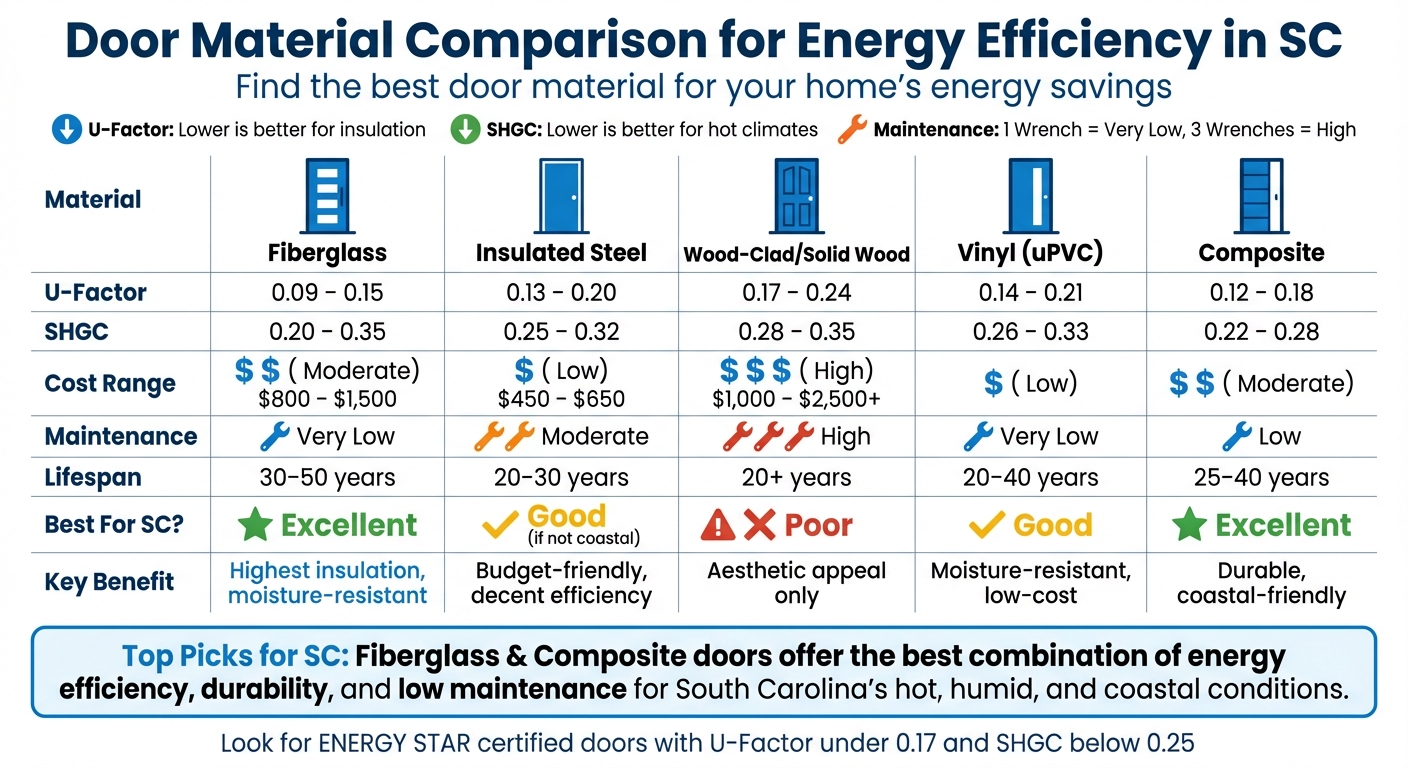
Door Material Comparison for Energy Efficiency in South Carolina
Let’s take a closer look at how different door materials stack up in terms of energy efficiency, cost, and maintenance – factors that directly impact comfort and energy expenses, especially in South Carolina’s climate.
Fiberglass doors lead the pack in energy efficiency, with U-factors as low as 0.09, far exceeding the ENERGY STAR standard of 0.17 for opaque doors. They boast a lifespan of 30–50 years and require very little upkeep. However, this performance comes at a premium, with prices typically ranging from $800 to $1,500 for quality models.
Insulated steel doors strike a balance between thermal performance and affordability, with prices ranging from $450 to $650. While they offer decent energy efficiency, they’re prone to dents and rust – an issue in coastal areas – and need periodic repainting to prevent corrosion. Some additional treatments may also be necessary to maintain their performance over time.
Wood-clad and solid wood doors, though visually appealing, are less practical in South Carolina’s humid environment. They are prone to warping, which can lead to air leaks and reduced energy efficiency. Additionally, they require frequent maintenance, such as staining or painting, making them less ideal for coastal regions.
Here’s a quick comparison of these materials and others:
Material Comparison Table
| Material | Typical U-Factor | Typical SHGC | Cost Range | Maintenance | Lifespan | Best For SC? |
|---|---|---|---|---|---|---|
| Fiberglass | 0.09 – 0.15 | 0.20 – 0.35 | $800 – $1,500 | Very Low | 30–50 years | Excellent |
| Insulated Steel | 0.13 – 0.20 | 0.25 – 0.32 | $450 – $650 | Moderate | 20–30 years | Good (if not coastal) |
| Wood-Clad/Solid Wood | 0.17 – 0.24 | 0.28 – 0.35 | $1,000 – $2,500+ | High | 20+ years | Poor |
| Vinyl (uPVC) | 0.14 – 0.21 | 0.26 – 0.33 | Low | Very Low | 20–40 years | Good |
| Composite | 0.12 – 0.18 | 0.22 – 0.28 | Moderate | Low | 25–40 years | Excellent |
Vinyl and composite doors stand out for their durability and practicality. These materials are specifically designed to resist moisture, salt air, and humidity, making them ideal for coastal areas like Charleston and Bluffton. With competitive U-factors and minimal maintenance needs, they provide consistent energy savings without the downsides of wood or steel.
For homeowners in South Carolina looking for energy-efficient, long-lasting doors, expert assistance is available at Icon Window & Door (https://iconwindowanddoor.com).
Choosing the Right Door Material
When picking the best door material for your home, it’s not just about aesthetics – it’s about how well the door handles your home’s specific needs, especially in South Carolina’s heat, humidity, and coastal weather. The right material can help balance energy efficiency, durability, and ease of maintenance. Did you know that air leaks from a front door can contribute to up to 20% of a home’s heat loss? That’s a huge factor in keeping energy bills manageable and maintaining comfort year-round.
For South Carolina’s climate, fiberglass doors are a solid option. They hold up against warping (a common issue with wood doors) and offer excellent insulation, with R-values of 6 or higher. To reduce unwanted heat from the sun, look for doors with a Solar Heat Gain Coefficient (SHGC) of 0.25 or below. Always check the NFRC label for these key performance metrics.
Still, even the most efficient door materials won’t perform well without proper installation. Poorly installed doors can lead to misalignment, air leaks, and ineffective weatherproofing. Professional installation is especially crucial in coastal areas like Charleston and Bluffton, where salt air and storms can wreak havoc. Corrosion-resistant hardware and quality weatherstripping are must-haves for these conditions.
"The right products should complement your home’s style while standing up to heat, humidity, storms, and salt air. That means effective weatherstripping, impact-resistant glass, and corrosion-resistant hardware." – Icon Window & Door
For homeowners in South Carolina, Icon Window & Door provides expert advice and free consultations to help you choose the perfect material – whether it’s fiberglass, insulated steel, or composite. They also ensure professional installation tailored to the demands of the region’s tough climate. Visit them at Icon Window & Door to learn more.
FAQs
How do I choose a door for coastal South Carolina?
For coastal South Carolina, it’s smart to go with doors made from fiberglass or steel. These materials are built to withstand the challenges of high humidity, salt air, and frequent storms. Unlike wood, they resist corrosion and tend to last much longer.
When choosing a door, prioritize features like corrosion-resistant hardware and reinforced frames for extra strength and security. Proper sealing is also crucial, so professional installation is key. This not only improves energy efficiency but also helps extend the life of your door.
Does replacing a door really lower energy bills?
Upgrading to an energy-efficient door can make a noticeable difference in your energy bills. By reducing heat transfer, these doors lighten the load on your HVAC system, helping it work more efficiently. This is especially helpful in South Carolina, where controlling indoor temperatures plays a big role in cutting costs.
What makes a door ENERGY STAR-certified?
For a door to achieve ENERGY STAR certification, it must meet rigorous energy efficiency criteria established by the U.S. Department of Energy. These standards focus on three key areas:
- Proper insulation: Ensures the door effectively blocks heat transfer.
- Effective sealing: Prevents drafts and air leaks.
- Low U-factor: Reduces heat loss, helping to maintain indoor temperatures.
By meeting these requirements, ENERGY STAR-certified doors not only help keep your home comfortable but also contribute to lower energy usage.