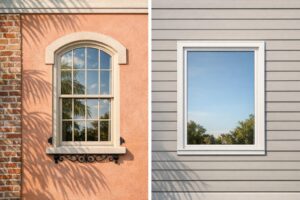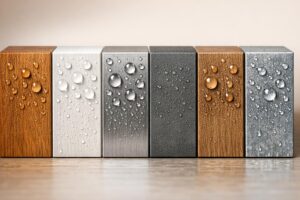
Energy-efficient doors are a must for Charleston homeowners due to the harsh coastal climate. The combination of high humidity, salt air, and temperature fluctuations can shorten the lifespan of standard doors and increase energy costs. Upgrading to durable, insulated doors designed for coastal conditions can:
- Reduce energy loss by up to 50% and lower utility bills.
- Protect against salt air corrosion, warping, and storm damage.
- Improve indoor comfort with features like Low-E glass and insulated cores.
- Increase property value and qualify for federal tax credits of up to $250 per door.
Best Materials for Charleston Homes:
- Fiberglass: Long-lasting, resistant to rust and rot, and highly efficient.
- Steel: Strong and secure but requires rust protection.
- Wood: Aesthetic appeal but high maintenance and less durable.
Proper installation is equally important. Coastal-specific techniques, such as marine-grade sealants and precise alignment, ensure maximum performance and longevity. While initial costs may range from $300 to $1,500, long-term savings and durability make the investment worthwhile. For Charleston’s climate, fiberglass doors stand out as the most reliable option.
How Charleston‘s Coastal Climate Affects Your Doors
Living in Charleston, part of Climate Zone 3A, means your doors face a tough battle against high humidity, corrosive salt air, and fluctuating temperatures. If your home is near the ocean, these factors can cut a door’s lifespan in half compared to properties further inland. Let’s break down how these environmental conditions impact your doors.
Humidity and Moisture Problems
Charleston’s constant humidity can wreak havoc on doors. For wood frames, this means swelling and warping, which can lead to issues like sticking, dragging, and latch failures. Worse, the damp conditions encourage mold and mildew growth. Metal parts aren’t spared either – moisture speeds up rusting on hinges, tracks, and springs. Even multi-pane glass isn’t immune, as condensation can form between panes, creating a foggy look and reducing insulation performance.
Salt Air Corrosion
The salty ocean air is another major challenge. Salt particles can travel as far as 50 to 100 miles inland, putting Charleston in a high-risk zone. These particles attract moisture, creating an electrolyte that accelerates corrosion on exposed metal surfaces. This can cause paint to bubble, wood to rot, and steel hardware to rust, even in hidden spots like joints and bolts. To counter these effects, materials like stainless steel, fiberglass, vinyl, and powder-coated finishes are better suited for resisting corrosion. Regularly rinsing your doors with fresh water every few weeks can also help clear away salt deposits before they cause lasting damage.
Temperature Changes Throughout the Year
Charleston’s seasonal temperature swings add another layer of stress. These shifts cause door materials to expand and contract, which can lead to seal failure, drafts, and misalignment. To meet the demands of Climate Zone 3A, doors should have a maximum U-Factor of 0.70 and be designed to reduce solar heat gain during the summer. Poorly sealed doors can lose up to 32% of their efficiency through air leakage and heat transfer. Fiberglass doors are a smart choice here – they’re better at maintaining tight seals and consistent energy performance compared to wood or steel. Switching to energy-efficient doors can cut energy loss by up to 50% and might even qualify you for federal tax credits of 30% of the cost, up to $250 per door.
These environmental challenges highlight why it’s essential to choose doors built for durability and energy efficiency in Charleston’s coastal climate.
sbb-itb-cdbcc3e
Key Features of Energy-Efficient Coastal Doors
Energy-efficient doors in coastal Charleston do more than just look good – they help cut cooling costs and stand up to the harsh realities of salt spray and scorching summer heat. These doors are designed with specialized features that enhance both insulation and durability. Here’s what makes them stand out:
Low-E Glass and Multi-Pane Windows
Low-E (low emissivity) glass coatings are a game-changer. They reflect infrared heat while allowing natural light to brighten your space. Many impact-resistant Low-E glass options block up to 99% of harmful UV rays, shielding your furniture from fading and keeping your home cooler. Multi-pane windows, such as double or triple glazing, add another layer of insulation. These panes create air pockets that slow heat transfer, cutting energy loss by as much as 50%. But it’s not just about the glass – the door’s core plays a big role in energy efficiency, too.
Insulated Cores and Gas Fills
The core of a door is key to keeping your home comfortable. Fiberglass doors with insulated cores provide up to four times the insulation of traditional wood doors. Many energy-efficient coastal doors also feature Argon or other inert gas fills between the glass panes, boosting insulation and helping maintain a steady indoor temperature. In Charleston’s humid climate, where relative humidity often exceeds 70%, moisture-resistant cores are a must to ensure a tight seal. Plus, "warm edge" spacers between the panes improve thermal performance and cut down on condensation buildup.
Corrosion-Resistant Materials
Coastal doors must endure constant exposure to salt air, which can be brutal on materials. That’s why they often use corrosion-resistant options like fiberglass, vinyl, or marine-grade stainless steel hardware. Fiberglass stands out because it won’t rust like steel or warp and rot like wood, even in Charleston’s humid, salty conditions. To further protect against the elements, all hinges, locks, and fasteners should be made of stainless steel. This helps prevent pitting and mechanical issues that standard hardware might face in such challenging environments.
Best Door Materials for Charleston Homes
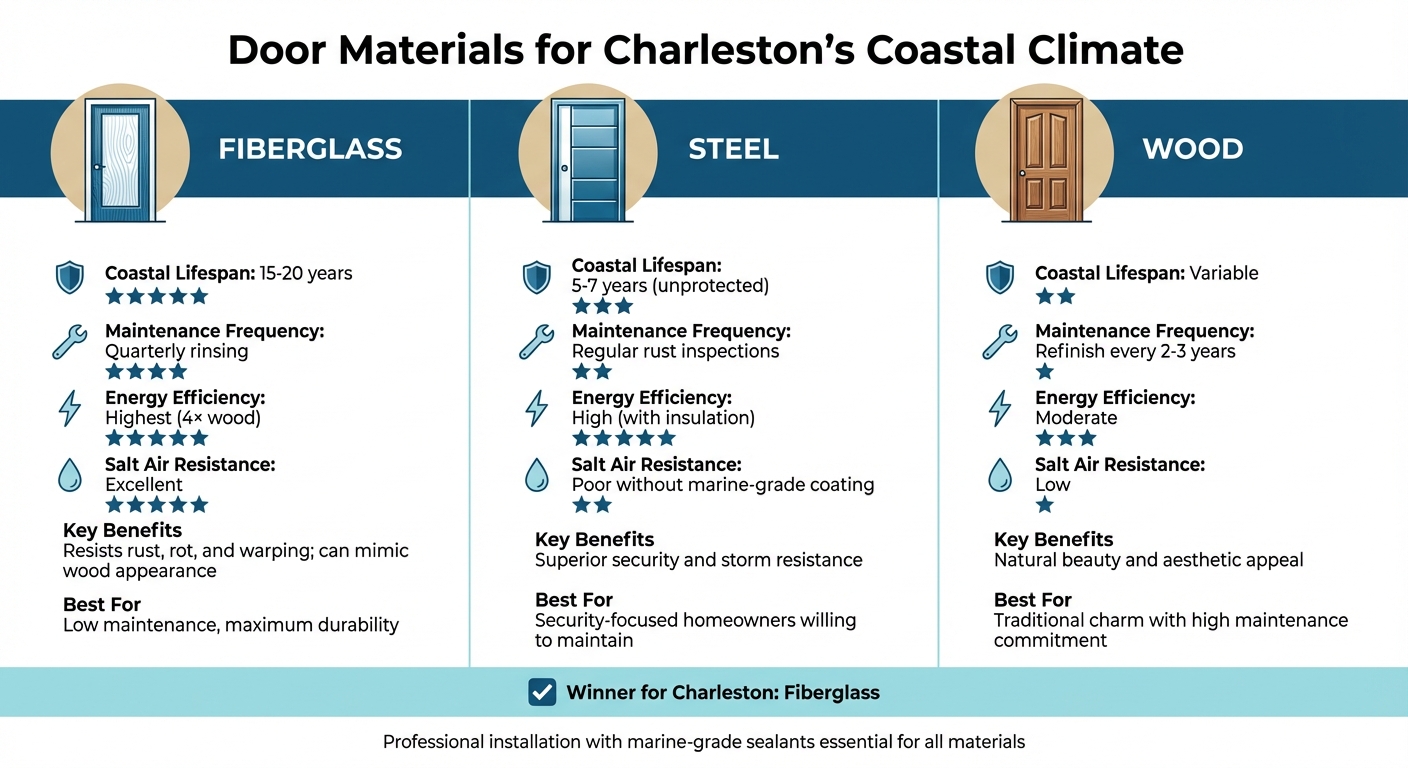
Charleston Coastal Door Materials Comparison: Fiberglass vs Steel vs Wood
When it comes to Charleston’s coastal environment, the right door material can make all the difference. Fiberglass, steel, and wood are the top contenders, each with its own strengths and challenges against salt air, humidity, and temperature shifts.
Fiberglass doors are a standout choice for their durability in coastal conditions. They resist rust, rot, and warping, even in Charleston’s high humidity. With proper care – like rinsing off salt deposits every few months – a fiberglass door can last 15–20 years. They also provide excellent insulation, offering up to four times the efficiency of wood doors. Plus, modern fiberglass designs can replicate the look of mahogany, oak, or cedar, giving you that classic Charleston charm without the hassle of constant upkeep.
Steel doors, on the other hand, shine when it comes to security and storm resistance. They’re tough, don’t warp in humid conditions, and provide solid energy efficiency when paired with insulated foam cores. However, steel has a major drawback – it’s prone to rust unless treated with a marine-grade coating. Without this protection, a steel door that might last 20 years inland could need replacing in just 5–7 years on the coast.
Wood doors bring unmatched beauty and natural insulation, but they’re not for the faint of heart in Charleston’s climate. They require frequent refinishing – every 2–3 years – to withstand the harsh elements. While their historic charm is undeniable, wood doors demand the most maintenance and are the least practical for energy efficiency in coastal areas.
Here’s a quick comparison to help you decide:
| Material | Coastal Lifespan | Maintenance Frequency | Energy Efficiency | Salt Air Resistance |
|---|---|---|---|---|
| Fiberglass | 15–20 years | Quarterly rinsing | Highest (4× wood) | Excellent |
| Steel | 5–7 years (unprotected) | Regular rust inspections | High (with insulation) | Poor without marine-grade coating |
| Wood | Variable | Refinish every 2–3 years | Moderate | Low |
Each material has its merits, but the right choice depends on your priorities – whether it’s low maintenance, energy efficiency, or classic aesthetics.
Installation Methods for Maximum Energy Efficiency
A high-quality door won’t perform at its best without proper installation. In fact, how a door is installed can be just as important as the door itself:
"The installation is just as necessary as the product itself. Premium windows fail within years because installers used standard techniques and materials unsuited for coastal conditions".
The contrast between standard and coastal-specific installation methods is striking. For example, professional air sealing can cut heating and cooling bills by 20% or more. Considering that up to 30% of a home’s heat escapes through inefficient doors and windows, proper installation becomes critical – not just for comfort, but for keeping costs down. Just like selecting the right materials, expert installation is the key to achieving the best energy efficiency. Below, we’ll explore how sealing, alignment, and locking systems work together to optimize energy performance.
Sealing and Weatherstripping
Creating an airtight seal is a must for energy efficiency. Using two-part expanding foam between the door frame and the house structure can close gaps and provide insulation. Weatherstripping, which typically costs $15 to $80 per door, is another layer of defense, but it’s important to use UV- and salt-resistant sealants. Standard caulking often fails under harsh sun and salty conditions, while an insulated threshold – costing an additional $50 to $150 – can help eliminate drafts.
Corrosion-resistant fasteners, like stainless steel, are also crucial. They prevent structural deterioration, which can lead to compromised seals over time. For patio and sliding doors, multiple layers of weather seals work together to block moisture and salty air. Ensuring that drainage paths and weep holes remain unobstructed is equally important to avoid water backups during heavy rains.
Once gaps are sealed, the next step is to ensure the door frame is perfectly aligned.
Frame Alignment and Leveling
Frame alignment isn’t just about aesthetics – it’s essential for maintaining energy efficiency. A properly leveled frame helps sustain the door’s seal through temperature and humidity changes, preventing gaps that allow salty air and moisture to seep in. Without alignment, doors can swell, warp, or even develop mold.
If the existing frame shows signs of rot or misalignment due to coastal exposure, repairs may add $100 to $500 to the installation cost. Installers should also use advanced flashing techniques to handle heavy coastal rains and ensure drainage paths are correctly positioned during the leveling process.
Switching to high-quality doors, when installed with perfect alignment, can reduce energy loss by up to 50%. But alignment needs to be precise from the very beginning.
With the frame aligned, advanced locking systems can further enhance the door’s performance.
Multi-Point Locking Systems
Multi-point locking systems are a step up from traditional single deadbolts, improving both security and energy efficiency. These systems secure the door at the top, middle, and bottom, pressing it tightly against the weatherstripping to create an airtight seal. This seal is especially important during extreme weather, like heat waves and hurricanes, as it evenly distributes wind pressure and keeps hurricane-rated doors firmly in place. By providing full-length support, multi-point locks also help prevent warping caused by high humidity.
For coastal environments, pairing multi-point locks with marine-grade or stainless steel hardware is a smart choice. Standard hardware can fail when exposed to salty air, but these specialized materials are built to last. Some modern locking systems even integrate with smart home technology, letting homeowners remotely check if all locking points are secure before a storm. Together, these methods reduce energy loss and improve home comfort, particularly in Charleston’s challenging coastal climate.
| Component | Coastal Requirement | Energy Efficiency Benefit |
|---|---|---|
| Fasteners | Stainless Steel / Corrosion-Resistant | Prevents frame sagging and seal gaps |
| Sealants | Specialized Sealants | Maintains airtightness against sun and salt |
| Locking | Multi-Point System | Compresses seals for maximum airtightness |
| Hardware | Marine-Grade | Ensures long-term functional sealing |
| Insulation | Two-Part Expanding Foam | Eliminates air leaks around the frame |
Labor costs range from $300 to $800 for a standard door replacement and $600 to $1,500 for a full door and frame replacement. While the upfront investment may seem steep, the long-term savings on energy bills and the durability of doors designed for coastal conditions make it worthwhile.
Door Material Comparison: Fiberglass vs. Steel vs. Wood
Choosing the right door material for Charleston’s coastal climate means prioritizing energy efficiency, durability, and minimal maintenance. Salt air and high humidity can take a toll on certain materials, so understanding how fiberglass, steel, and wood doors perform under these conditions is crucial. Here’s a breakdown to help you decide.
Fiberglass doors are a top contender for coastal areas. They resist salt air corrosion, maintain their shape in humid conditions, and can last 15–20 years. Plus, they can convincingly mimic the look of natural wood.
Steel doors provide excellent security and energy efficiency, thanks to their insulated cores. However, they can be vulnerable to salt corrosion unless treated with a coastal-grade finish. Regular maintenance is necessary to prevent rust.
Wood doors bring a timeless, natural look but struggle in humid climates. They’re prone to swelling, warping, and rot, which can lead to air leaks. These doors also require refinishing every 2–3 years to maintain their appearance and functionality.
| Feature | Fiberglass | Steel | Wood |
|---|---|---|---|
| Energy Performance | Excellent – stable seals maintained | High – insulated cores | Moderate to Poor – air leaks from warping |
| Coastal Durability | Superior – resists salt, rust, and rot | Good – strong but prone to salt corrosion | Low – prone to swelling, warping, and rotting |
| Maintenance | Minimal – requires minimal upkeep | Moderate – periodic rust prevention needed | High – refinishing every 2–3 years |
| Lifespan | 15–20 years | Varies with proper coating maintenance | Shorter – frequent repairs required |
For Charleston homeowners, fiberglass doors stand out as the most reliable, low-maintenance option for long-term performance. If security is your main concern, steel doors are a solid choice, provided you’re ready for routine upkeep to protect against corrosion. While wood doors offer unmatched charm, they require significant care and may not hold up well in the harsh coastal environment.
Icon Window & Door Products for Charleston
Icon Window & Door brings over five decades of combined expertise in construction and project management to Charleston homeowners, offering door solutions specifically designed to handle the Lowcountry’s tough coastal conditions. Their products are built to combat salt air, high humidity, and hurricane-strength weather while helping homeowners save on energy costs.
Custom Exterior Doors
The exterior door collection from Icon Window & Door includes fiberglass, steel, and clad options, all crafted to withstand Charleston’s unique climate. These doors come with advanced insulation and weatherproof glass, ensuring durability and energy efficiency in coastal environments. Homeowners can benefit from up to 25% energy savings thanks to reduced air leakage and better indoor temperature control.
The collection offers a wide range of styles, such as paneled, French, modern glass, and Dutch designs, with customization options to suit Charleston’s architectural styles – whether Colonial, Victorian, or modern. Materials and finishes are chosen to resist the effects of coastal weathering. For areas prone to hurricanes, impact-resistant features provide extra security. For example, a Mount Pleasant home equipped with fiberglass French doors featuring Low-E glass saw a 20% drop in summer cooling costs over five years, with no damage from salt exposure. These exterior doors not only protect but also set the foundation for improved energy efficiency inside the home.
Interior Door Selection
Icon Window & Door also offers interior doors designed to enhance energy performance within the home. These doors are constructed with MDF (medium-density fiberboard), which resists swelling and cracking in Charleston’s humid climate. Insulated cores and sealed frames help minimize drafts between rooms, contributing to up to 15% better overall energy efficiency when paired with exterior door upgrades.
Style options include classic paneled designs for living spaces, Shaker styles for kitchens, and modern glass panels for bedrooms and bathrooms. For added durability, fiberglass and steel options are available, while wood doors feature finishes that protect against coastal humidity. The MDF material ensures a smooth surface that won’t stick in door frames, a common issue with traditional wood doors in Charleston’s humid summers.
Professional Installation
The key to maximizing the benefits of these premium doors lies in their installation. Icon Window & Door emphasizes precision fitting, weatherproof sealing, and proper alignment to prevent air leaks and ensure long-lasting performance. Their installation process uses marine-grade sealants and advanced techniques. Products are backed by 20–25-year warranties and a one-year workmanship guarantee.
Free consultations are available, and bulk discounts are offered for whole-home projects. Rigorous post-installation checks ensure airtight results. At one Kiawah Island property, impact-rated steel entry doors successfully withstood hurricane-force winds without warping, maintaining their efficiency as verified by local energy audits. On average, Charleston homeowners save $300–$500 annually on air conditioning costs, thanks to features like double and triple-pane Low-E glass, which blocks up to 40% more heat than standard doors.
Cost Savings and Home Value Benefits
Energy-efficient doors offer more than just comfort – they bring tangible financial perks to the table. By upgrading from outdated doors, which account for up to 32% of a home’s energy loss, to high-efficiency models, homeowners can cut energy loss by as much as 50%. Pairing these upgrades with proper installation amplifies the savings. For example, Energy Star-certified doors can save homeowners between $500 and $833 annually on utility bills, depending on the size of the home.
The financial benefits don’t stop at energy savings. Replacing doors and windows can significantly boost a home’s resale value. These projects typically offer a 50% to 75% return on investment (ROI), with some reaching as high as 85%. Take fiberglass doors as an example: with an average installation cost of $7,000, homeowners can enjoy a 75% ROI, translating to an added $5,250 in resale value. As Icon Window & Door points out:
"Many recoup most of their expenses for the service when selling their homes".
Beyond the numbers, energy-efficient doors deliver immediate comfort. Better sealing and insulation eliminate drafts and hot spots, stabilize indoor temperatures, and reduce HVAC strain – essential in Charleston, where humidity often exceeds 70% during the summer.
Durability is another key factor. High-quality fiberglass doors, for instance, can last 15 to 20 years with minimal upkeep. Compare that to wood doors, which may require refinishing every 2–3 years and are prone to warping in Charleston’s humid climate. A door installation expert from Muhler explains:
"A quality fiberglass entry door installed in a coastal home can easily last 15-20 years with minimal maintenance, compared to wood doors that might need refinishing every 2-3 years and can warp in our humidity".
Additionally, impact-resistant doors can lower homeowners’ insurance premiums while cutting down on maintenance costs. UV protection further enhances savings by shielding interior furnishings from sun damage.
When you combine energy savings, increased home value, and reduced maintenance, the financial case for upgrading to energy-efficient doors becomes hard to ignore – especially for Charleston homeowners looking to enhance both their living experience and long-term investment.
Conclusion
Charleston’s coastal environment demands door solutions that can handle its unique challenges. The region’s salt air, high humidity, and storm risks make it essential to choose doors that enhance energy efficiency, structural strength, and home value. As Plastpro explains:
"Coastal homes are constantly exposed to harsh elements like salt air, high humidity, and the threat of storms, necessitating doors that can withstand these conditions".
Fiberglass doors stand out for their resistance to warping and rot, while steel doors provide unmatched security. Equally important is proper installation – precise alignment and effective weatherstripping are key to ensuring your doors perform as they should. Adhering to Charleston County‘s building codes and wind-load requirements is a must, especially during storm season.
Energy-efficient doors do more than just improve comfort – they offer long-term savings. Replacing outdated doors can significantly reduce energy loss. On top of that, homeowners may qualify for federal tax credits of up to $250 per door, helping to offset the initial investment. Professional installation ensures these benefits last for years to come.
Icon Window & Door brings over 50 years of combined expertise to meet these coastal challenges. Their team provides tailored solutions like impact-resistant glass and corrosion-resistant hardware, all backed by a one-year workmanship warranty. From fiberglass entry doors to patio doors, their white-glove service covers everything from product selection to installation.
Ready to upgrade your home? Contact Icon Window & Door for a complimentary consultation today.
FAQs
How can I tell if my door is leaking air?
To spot air leaks around your door, start by checking for drafts. Run your hand along the edges of the door to feel for airflow or notice any temperature changes in these areas. Visible gaps or cracks between the door and its frame are another telltale sign. Sealing these gaps is especially important if you live in Charleston’s coastal climate, where weather conditions can make your home less energy-efficient. If you’re unsure about potential leaks, calling in a professional can help pinpoint the problem and make the necessary fixes to enhance both comfort and energy savings.
What U-Factor should I look for in Charleston?
For Charleston’s coastal climate, a U-Factor of 0.20 or lower works best. This helps improve energy efficiency and insulation, making your home better equipped to handle the area’s humidity, salty air, and frequent temperature shifts.
Do I need marine-grade hardware and sealants?
Yes, using marine-grade hardware and sealants is a smart choice for Charleston’s coastal climate. These materials are specially designed to resist salt air, high humidity, and corrosion, which are common challenges in coastal areas. By opting for these durable options, you can protect your doors, maintain their energy efficiency, and ensure they last longer, even under tough environmental conditions.