- Rubber (EPDM/Silicone): Durable, weather-resistant, and easy to install. Works well for exterior doors. Costs range from $5.55 per strip to $15–$150 for commercial-grade options.
- Foam: Budget-friendly and simple to apply with self-adhesive backing. Ideal for low-traffic or interior doors. Costs start at $0.16 per foot but lasts only 1–3 years.
- Metal (Bronze/Aluminum): Long-lasting and highly effective in extreme conditions. Best for high-traffic or exterior doors. Priced at $2–$25 per foot, with installation costs of $100–$300 per door.
Key Takeaway: Rubber balances cost and durability for most homes, foam is great for quick fixes, and metal is the top choice for longevity and weather resistance.
1. Rubber Weatherstripping
Rubber weatherstripping – especially EPDM and silicone – remains a popular pick for homeowners. It offers a practical balance of performance and affordability, making it suitable for both interior and exterior doors.
Durability
EPDM rubber is designed to handle frequent use without losing its shape, even with constant door movement. Unlike vinyl, which can harden and crack over time, rubber stays flexible and holds up well against aging, ozone exposure, and temperature changes. Some EPDM products even come with warranties lasting up to 10 years. While metal weatherstripping is the longest-lasting option, often enduring for decades, rubber provides a durable and reliable alternative. Its ability to perform under varying weather conditions makes it a dependable choice.
Weather Resistance
Rubber is highly effective in extreme weather. It seals out drafts, moisture, dust, and pollen with ease. For instance, upgrading the weatherstripping on exterior doors can cut air leakage by as much as 15%. Silicone, which offers even better resistance to UV rays and temperature extremes, is another option, though it typically costs more than EPDM. Beyond its weatherproofing benefits, rubber weatherstripping is also known for being easy to install.
Ease of Installation
Most rubber weatherstripping comes with a self-adhesive backing, making it straightforward for DIY enthusiasts. You’ll only need basic tools like a tape measure, utility knife, and cleaning supplies. To ensure proper adhesion, apply the seal to a clean, dry surface when temperatures are above 20°F (-7°C). While tubular rubber or reinforced silicone strips may require cutting metal carriers or using specialized tools, standard EPDM tape is simple enough for most homeowners to manage.
Cost
Rubber weatherstripping is available in a low to moderate price range. For example, individual EPDM strips designed for larger gaps cost around $5.55 each. On the higher end, commercial-grade seals can range from $15 to $150 per opening, depending on material quality and performance ratings. Silicone, though more expensive, offers enhanced durability and weather resistance. These factors make rubber weatherstripping an appealing and practical choice for many homeowners.
sbb-itb-cdbcc3e
2. Foam Weatherstripping
Foam weatherstripping is one of the most affordable options for sealing doors, with basic tape starting at just $0.16 per linear foot. It comes in two primary types: adhesive-backed foam tape and reinforced foam, which combines closed-cell foam with wood or metal strips. While installation is straightforward, foam weatherstripping has a lifespan of about 5 years. However, in areas with extreme temperatures, it may need to be replaced every 2 to 3 years to maintain effectiveness. Let’s break down how foam performs in terms of durability, weather resistance, and ease of use.
Durability
The lifespan of foam weatherstripping depends on the type of foam used. Closed-cell foam, being nonporous, is better at blocking drafts compared to open-cell foam, which is more prone to moisture damage and wear from harsh weather. For high-traffic exterior doors, reinforced foam is a more durable choice, capable of withstanding temperatures as low as –40°F without cracking. On the other hand, standard foam tape tends to wear out quickly on frequently used doors, making it a better fit for low-traffic areas like attic hatches or closet doors.
Weather Resistance
Reinforced closed-cell foam performs well in wind resistance tests and creates an effective barrier against drafts. Its flexibility allows it to seal irregular gaps and corners where rigid materials might struggle. For exterior doors exposed to strong winds, reinforced closed-cell foam provides a sturdier and more reliable seal than basic adhesive-backed foam tape. Open-cell foam, however, is less effective in blocking airflow and should be avoided in areas exposed to the elements. Despite its limitations, foam weatherstripping offers solid weather resistance and is easy to work with.
Ease of Installation
Foam weatherstripping is a favorite for DIY enthusiasts due to its self-adhesive backing. Installation is simple: clean and dry the surface, then press the foam into place – no special tools are required aside from a tape measure and utility knife. For best results, apply the foam in temperatures above 20°F (-7°C). Reinforced foam, however, requires more effort, as it involves cutting, nailing, and possibly painting. For quick, no-fuss fixes in low-traffic areas, standard foam tape is a practical solution.
Cost
Foam weatherstripping is a budget-friendly choice for homeowners. Basic foam tape costs between $0.16 and $0.25 per linear foot, while reinforced foam is priced at $1.25 to $1.50 per linear foot. DIY kits typically range from $10 to $40 per door, while professional installation costs fall between $35 and $80 per door. Compared to pricier options like bronze or metal weatherstripping, which range from $2 to $5 per linear foot, foam is an economical solution. While materials like tubular rubber or silicone may last longer, foam’s lower upfront cost makes it ideal for interior doors or temporary fixes.
3. Metal Weatherstripping
Metal weatherstripping is a durable, long-lasting option. Common materials like bronze, copper, stainless steel, aluminum, and zinc are known for their strength and resilience. You can expect to pay between $2 and $5 per linear foot for standard metal strips, $6 to $10 per linear foot for interlocking metal channels, and $22 to $25 per linear foot for magnetic strips. Professional installation costs typically range from $100 to $300 per door, which includes labor. Unlike foam or rubber, metal is built to perform reliably even in extreme conditions, offering unmatched longevity.
Durability
Metal weatherstripping holds up against constant wear and tear from door movement without breaking down. Unlike foam or rubber, which rely on adhesives that can fail due to heat, cold, or moisture, metal is secured with nails or screws, ensuring a stable and weather-resistant installation. It also remains dimensionally stable, unaffected by temperature changes.
"Metal weather stripping is the most durable option available. It can last for decades and is highly effective in sealing gaps."
– Anthony Rider, Window Hardware Direct
Bronze tension seals, for example, require nailing every three inches to prevent bending or wrinkling. When installed correctly, these seals provide a friction-resistant barrier that outlasts cheaper alternatives by many years. This durability translates directly into better weather protection over time.
Weather Resistance
The Department of Energy has rated interlocking metal channel weatherstripping as "exceptional", a distinction no other material has achieved. Its interlocking design forms a nearly airtight seal, making it incredibly effective. Aluminum door shoes are another example, as they are designed to direct rainwater away from exterior doors. Additionally, frost-brake thresholds, combining metal and wood, help reduce cold transfer in extreme climates. Unlike vinyl, which can become brittle, or foam, which loses flexibility in freezing temperatures, metal maintains its performance regardless of the weather. For older or historic homes, metal not only provides excellent weatherproofing but also complements the home’s original aesthetic.
Ease of Installation
Installing metal weatherstripping is more complex than working with foam or vinyl. Interlocking metal channels, in particular, often require professional installation since even small misalignments can compromise the seal. Cutting metal channels to the correct length demands tools like a hacksaw or jigsaw, and the door frame must be clean and dry before installation. Unlike foam, which can compress to fit uneven gaps, metal requires precise measurements due to its rigidity. Bronze strips, for example, must be nailed in place every three inches, adding to the time and effort required. For many DIYers, the complexity of this task makes hiring a professional a practical choice.
Cost
Although metal weatherstripping involves a higher upfront cost, its durability and effectiveness make it a worthwhile investment. Foam tape, which costs just $0.16 to $0.25 per linear foot, often needs replacing every 2 to 5 years. In contrast, metal weatherstripping rarely requires replacement. Professional installation costs between $100 and $300 per door, including labor. While the initial expense is higher, metal’s ability to withstand constant friction and extreme weather conditions makes it an excellent choice, especially for high-traffic exterior doors.
Advantages and Disadvantages
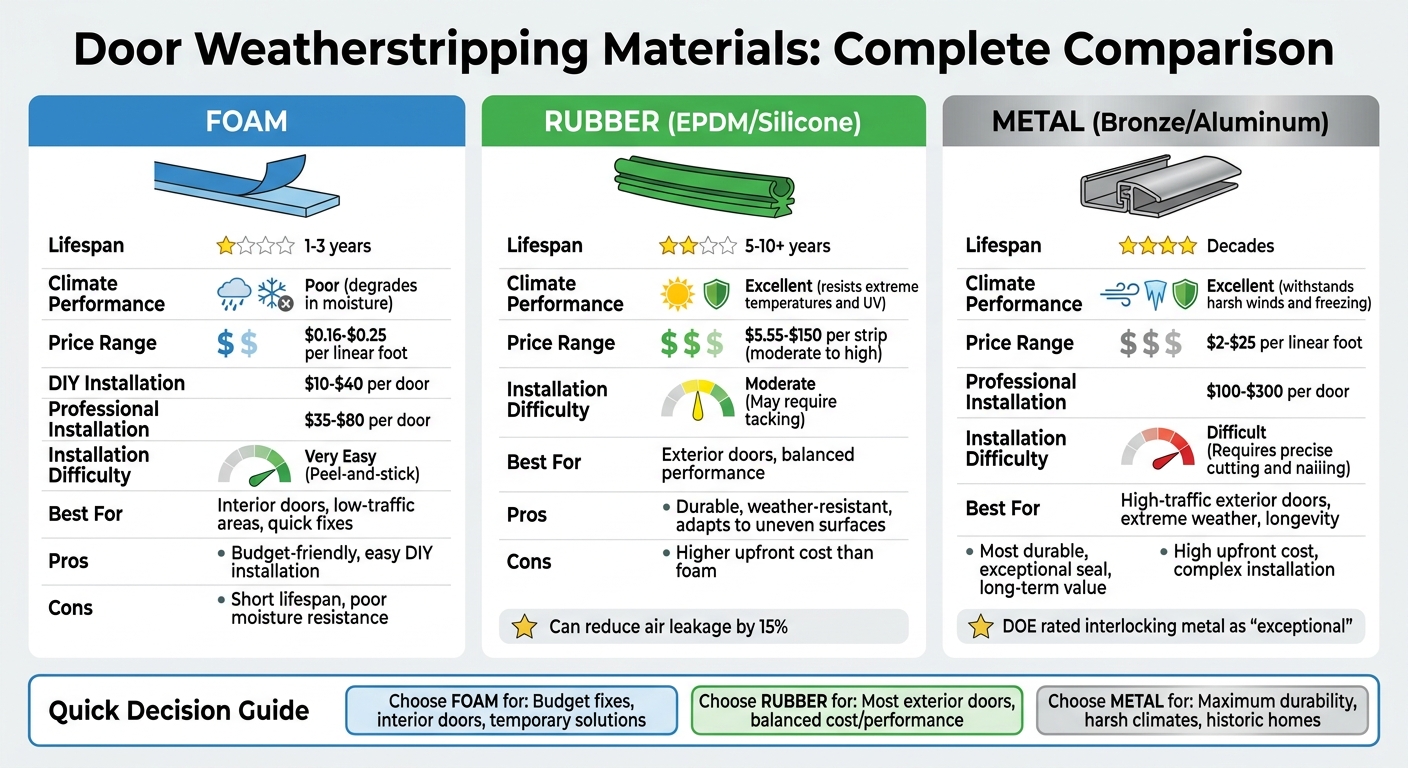
Door Weatherstripping Materials Comparison: Foam vs Rubber vs Metal
When it comes to weatherstripping, each material brings its own strengths and weaknesses. The choice often boils down to weighing performance, cost, and maintenance needs.
Foam weatherstripping is budget-friendly and incredibly easy to install, thanks to its peel-and-stick backing. However, it typically lasts only 1–3 years and doesn’t hold up well in damp or high-traffic areas. Compression and tearing are common issues in such conditions.
For a more balanced option, rubber weatherstripping – including EPDM and silicone – stands out. It adapts well to uneven surfaces and handles extreme weather effectively. With a lifespan of 5 to 10+ years, it offers solid long-term value, though the upfront cost is moderate to high. Self-adhesive rubber can work well, but some surfaces might require additional tacks or screws for secure installation.
Metal weatherstripping, such as bronze, stainless steel, or aluminum, is the most durable option, often lasting for decades. It maintains a strong seal even in freezing temperatures and harsh winds. However, metal requires precise cutting and nailing, making professional installation a smart choice for most homeowners.
Here’s a quick comparison of these materials:
| Material | Lifespan | Climate Performance | Price Range | Installation Difficulty |
|---|---|---|---|---|
| Foam | 1–3 years | Poor; degrades in moisture | Low | Very Easy (Peel-and-stick) |
| Rubber (EPDM/Silicone) | 5–10+ years | Excellent; resists extreme temperatures and UV | Moderate to High | Moderate (May require tacking) |
| Metal (Bronze/Aluminum) | Decades | Excellent; withstands harsh winds and freezing | High | Difficult (Requires precise cutting) |
Ultimately, your decision should align with your specific needs. Foam is ideal for quick, low-cost fixes in less demanding areas. Rubber offers a reliable middle ground for exterior doors, balancing durability and cost. For those seeking maximum weather resistance and longevity, metal is the go-to choice, despite its higher installation demands.
Conclusion
Choosing the right weatherstripping comes down to your door’s specific needs. For exterior doors in South Carolina, rubber weatherstripping – especially silicone and EPDM – stands out. These materials are built to handle UV rays, ozone exposure, and extreme temperature swings. Plus, they bounce back after countless compression cycles, maintaining a reliable seal against drafts and moisture.
For interior doors, the requirements are different. Foam weatherstripping is a practical and budget-friendly option for areas with minimal environmental exposure. It’s great for sealing small gaps in quieter indoor spaces, like offices, or for keeping out dust and odors from mechanical rooms. Foam works best in low-impact, interior environments.
If you’re dealing with high-traffic areas or exterior doors in coastal regions, metal weatherstripping – like aluminum door shoes with built-in drip edges – offers unmatched durability and excellent water resistance.
Ultimately, the right choice depends on your door’s exposure to the elements and how often it’s used. These material options not only affect how long the weatherstripping lasts but also play a role in energy efficiency and overall performance, as highlighted earlier.
For more information or help upgrading your doors, check out Icon Window & Door for options designed to meet South Carolina’s climate challenges.
FAQs
How do I know what size gap I need to seal?
To figure out the size of the gap you need to seal, start by checking the edges of your closed door or window for any drafts or air leaks. Once you’ve located the gaps, use a ruler or a feeler gauge to measure their width. Getting precise measurements is important because weatherstripping materials are available in different sizes, and choosing the right one depends on the width of the gap.
When should I replace my door weatherstripping?
If your door’s weatherstripping is worn out, damaged, or no longer provides a proper seal, it’s time to replace it. Signs like air leaks or visible wear can compromise your home’s energy efficiency and comfort. By checking your weatherstripping regularly, you can spot these issues early and ensure your home stays well-sealed and energy-efficient.
Should I DIY weatherstripping or hire a pro?
When deciding between DIY and hiring a professional, it comes down to your experience and the complexity of the task. If you’re handy with basic tools, simple fixes like adding foam tape or door sweeps are great DIY projects. However, for more challenging jobs – like dealing with irregular gaps or ensuring a precise fit – a professional’s expertise can make all the difference. This is especially true for high-traffic areas or commercial doors, where proper installation is crucial for long-term energy savings and durability.