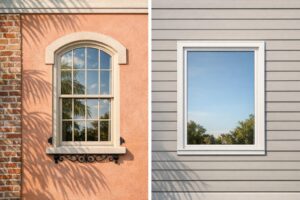
When performing a window replacement in Charleston, you’ll need to choose between full-frame and retrofit installations. Full-frame involves removing the entire window, including the frame, to address structural issues and improve energy efficiency. Retrofit installations replace only the window itself, keeping the original frame intact, making it less disruptive and more budget-friendly.
Here’s what you need to know:
- Full-Frame Installation:
- Best for damaged or rotted frames.
- Ideal for resizing or changing window styles.
- Costs $800–$1,500+ per window.
- Offers maximum efficiency but requires more time and higher upfront costs.
- Retrofit Installation:
- Works with solid, undamaged frames.
- Preserves existing trim and is faster to complete.
- Costs $300–$800 per window.
- Limited to the current frame size and style.
Charleston homeowners should consider the humid climate, potential moisture damage, and historic preservation guidelines when deciding. Full-frame installations are better for long-term durability and efficiency, while retrofits are a cost-effective option for homes with sound frames.
Quick Comparison
| Factor | Retrofit Installation | Full-Frame Installation |
|---|---|---|
| Cost | $300–$800 per window | $800–$1,500+ per window |
| Time | ~1 hour per window | 2–6 hours per window |
| Energy Efficiency | Moderate | High |
| Frame Condition | Must be solid | Replaces damaged frames |
| Best For | Budget, historic trim | Structural issues, resizing |
Your choice depends on your budget, frame condition, and goals for efficiency or preservation.
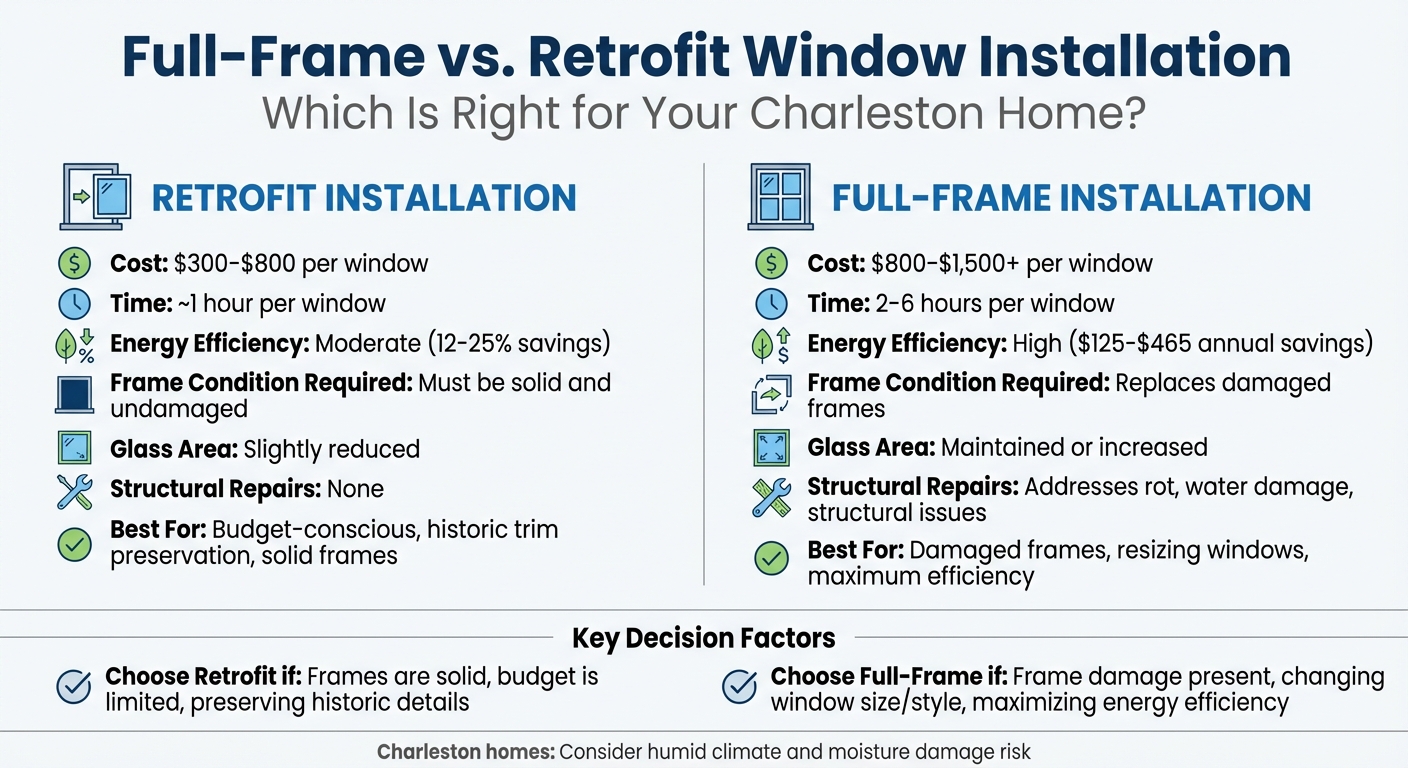
Full-Frame vs Retrofit Window Installation Comparison Chart
Full-Frame Window Installation: Complete Window and Frame Replacement
What Is Full-Frame Window Installation?
Full-frame window installation involves removing the entire window – frame, sash, sill, and trim – down to the rough opening. This process allows for a thorough inspection of the structure and the addition of updated weatherproofing measures. During the installation, technicians strip out the old window, check for hidden issues like water damage or rot, and then install a completely new window. This includes modern flashing and insulation to ensure a tight, weather-resistant seal. Unlike retrofit methods, this approach addresses any structural problems that may be lurking beneath the surface.
Let’s look at the scenarios where full-frame installation becomes necessary.
When You Need Full-Frame Installation
Full-frame installation is essential when window frames show significant damage. For instance, a soft or spongy frame or sill often points to rot that requires full replacement. Other signs include water stains, mold, warped frames, or a persistent musty smell – indicators of moisture problems that need to be resolved.
This method is also the go-to choice when you’re looking to change the size, shape, or style of a window. For example, converting a slider window into a casement style requires full-frame installation. In older homes, especially in Charleston, where settling over time can leave windows out of square, full-frame installation allows professionals to correct these issues – a task that retrofit installation cannot accomplish.
Pros and Cons of Full-Frame Installation
Advantages:
- Improved energy efficiency: Full-frame installation includes new insulation and modern flashing around the rough opening, creating a tighter air seal.
- More natural light: This method can preserve or even increase the visible glass area.
- Structural repairs: Exposing the window opening allows for inspection and repair of damage, ensuring compliance with current building codes – especially important in Charleston’s humid conditions.
Disadvantages:
- Higher cost: Full-frame installation is generally 15% to 20% more expensive than retrofit options, with prices starting around $800 per window and exceeding $1,000 for custom designs.
- Time-consuming: The process can take several days for an entire house, as it involves removing and replacing both interior and exterior trim.
Despite the higher upfront investment, homeowners often see a return on their expense. On average, they recoup 68% to 72% of the replacement costs when selling their home. Additionally, replacing old single-pane windows can cut energy bills by 12% to 25%. For Charleston homeowners dealing with humid coastal weather and historic properties, these trade-offs are worth considering.
This overview of full-frame installation provides a solid basis for comparing it with retrofit methods.
sbb-itb-cdbcc3e
Retrofit Window Installation: Installing New Windows in Existing Frames
What Is Retrofit Window Installation?
Retrofit installation – sometimes called "insert" or "pocket" replacement – focuses on replacing the old sashes and moving parts while leaving the existing frame, interior trim, and exterior casing intact. The new window unit is designed to slide seamlessly into the current frame, where it’s secured and sealed using caulk and insulation. This approach is especially appealing for preserving the architectural charm of older homes, such as Charleston’s historic properties, which often feature intricate trim details.
Precision is key. Installers carefully measure the opening, clean it thoroughly, and ensure the new unit is aligned and sealed to create a weathertight fit.
When Retrofit Installation Works Best
While full-frame installation is necessary for addressing structural issues, retrofit installation is ideal when the existing frames are in good condition. It works best when the frames are solid, square, and free of any signs of rot, water damage, or warping. Before opting for this method, it’s wise to have a professional inspect the frames for potential problems like soft wood, water stains, mold, or musty smells – these are red flags that retrofit installation cannot resolve.
Retrofit is also a great choice if you’re happy with your current window size and style. If you’re looking to change these, a full-frame installation will be required. For many Charleston homeowners, retrofit installation is an attractive option because it’s budget-friendly and improves energy efficiency without the need for extensive demolition.
"The decision really comes down to the health of your existing frames. If the frame is in great shape, retrofitting is a smart, cost-effective way to go." – Signature Glass and Windows
Pros and Cons of Retrofit Installation
Advantages:
- Lower cost: Retrofit installations generally range from $300 to $800 per window.
- Quick process: Crews can replace several windows in just one day, minimizing disruption to your home.
- Preserves original details: The existing trim and casing stay intact, which is particularly valuable in historic districts.
Disadvantages:
- Slightly smaller glass area: Because the new window fits inside the old frame, you lose a small amount of visible glass.
- No structural fixes: This method doesn’t address hidden issues within the wall cavity or allow for updated insulation around the rough opening.
- Frame condition matters: Energy efficiency depends entirely on the quality of the existing frame, which can be a concern in Charleston’s humid coastal climate.
Even with these drawbacks, upgrading from old single-pane windows to modern retrofit units can lower energy bills by 12% to 25%. For homeowners with solid frames and tight budgets, retrofit installation offers an efficient and practical way to enhance comfort and energy savings.
Next, we’ll compare retrofit and full-frame installations to help you decide which option best suits your Charleston home.
Full-Frame vs. Retrofit Installation: Direct Comparison
Choosing between full-frame and retrofit installation depends on factors like your home’s condition, your budget, and what you want to achieve long-term. Both methods have their strengths, but the differences can be significant, especially in a place like Charleston, where the humid climate can make moisture-related issues a real concern.
Full-frame installation involves removing everything down to the studs, creating a completely sealed system. This method allows installers to check for hidden water damage and add modern insulation around the entire window opening. On the other hand, retrofit installation works within the existing frame. While it doesn’t offer the same level of weatherproofing, it can still reduce energy bills by 12% to 25% when replacing old single-pane windows.
"In standard replacement, the new window relies on the integrity of the old frame. Multiple seal points can lead to increased air leakage. Full-frame replacement reduces this risk by creating a single, properly sealed system." – WinChoice Editorial Team
Time and disruption also vary between the two. Retrofit installations are quicker – about one hour per window – and often finish in a single day. Full-frame installations, however, take 2 to 6 hours per window and may stretch over several days, especially if exterior siding or interior trim needs to be removed and replaced.
Comparison Table: Installation Methods
| Factor | Retrofit (Insert) Installation | Full-Frame Installation |
|---|---|---|
| Cost per Window | $300 to $800 | $800 to $1,500+ |
| Cost per Square Foot | $21 to $44 | $66 to $109 |
| Installation Time | ~1 hour per window; often one day | 2–6 hours per window; multi-day project |
| Glass Surface Area | Slightly reduced (new frame fits inside old) | Maintained or increased |
| Energy Efficiency | Significant improvement; depends on old frame seal | Maximum; allows full perimeter insulation |
| Structural Requirements | Existing frame must be sound and square | Replaces everything to studs; fixes rot |
| Labor Intensity | Low; no disruption to siding or trim | High; removes trim, casing, sometimes siding |
| Annual Energy Savings | Average 20% on energy costs | $125 to $465 per year |
| Best for Charleston Homes | Solid frames, historic preservation, tight budgets | Water damage, structural issues, maximum efficiency |
Both options can deliver great results if paired with the right circumstances. The decision comes down to the state of your home and your priorities. Next, we’ll dive into how these differences play out specifically for homes in Charleston.
What Charleston Homeowners Should Consider
Charleston’s Climate and Building Code Requirements
Charleston’s humid subtropical climate brings challenges that directly influence window installation choices. The high humidity and salt air in this region can cause window frames to rot, decay, or warp over time. If you’re considering a retrofit installation, it’s crucial to inspect your existing frames for signs like softness, water stains, or musty odors. These issues often signal deterioration, making a full-frame replacement a smarter, longer-lasting option.
Additionally, Charleston’s coastal location means strict building codes that demand impact-resistant windows or protective coverings. These impact-rated windows typically cost between $800 and $2,500 per window. Materials like vinyl and composite are especially popular due to their resistance to warping, rot, and salt-air corrosion. While upfront costs may seem high, these materials often prove more durable and cost-effective over time.
Balancing Upfront Costs with Long-Term Savings
Retrofit installations generally come with lower upfront costs compared to full-frame replacements, but it’s important to think about the bigger picture. Charleston’s humid environment increases the risk of moisture damage, and full-frame installations offer better insulation by sealing the entire window opening. This improved air seal can significantly cut energy costs, reducing energy bills by 12% to 25% when replacing old single-pane windows. Full-frame installations alone can lead to annual savings ranging from $125 to $465.
If your current frames have hidden moisture damage, opting for a retrofit might only delay the inevitable need for a full-frame replacement, which could end up costing more in the long run. It’s also worth factoring in whether your home’s historic designation or HOA rules might influence your decision.
Historic Homes and HOA Requirements
For those living in Charleston’s historic districts, window installations often require approval from the Charleston Board of Architectural Review (BAR). The BAR evaluates details like window style, grid patterns, color, and frame materials to ensure they align with the home’s historical character. Before starting any project, it’s a good idea to consult the City of Charleston Permit Center for specific preservation guidelines.
When the existing frames are in good condition, retrofit installations are often the preferred choice for historic homes. This method preserves the original interior and exterior trim, which is vital to maintaining the home’s architectural charm. On the other hand, full-frame replacements usually require removing the entire frame and trim, which may impact the structure and often necessitates a building permit. While "like-for-like" retrofits usually don’t require permits, always double-check with your homeowners association to ensure compliance with local rules.
Conclusion: Selecting the Right Installation Method for Your Home
The best installation method depends on the condition of your current window frames. As experts explain:
"Healthy frames favor retrofitting; signs of rot, water damage, or warping call for full-frame replacement."
Start by carefully assessing your existing frames. Look for signs like soft wood, water stains, mold, or misalignment. If structural damage is present, retrofitting won’t resolve the issue and could lead to more expensive repairs down the line. A professional inspection can help uncover hidden problems and guide you toward the most suitable option for your home.
Your goals for aesthetics and energy efficiency also play a role in the decision. Full-frame replacement offers better insulation and a tighter seal, which improves energy efficiency. On the other hand, retrofitting helps maintain historic trim and the original character of your home.
In terms of cost, retrofit installations typically range from $300 to $800 per window, while full-frame replacements start at $800. However, full-frame replacements can save you $125 to $465 annually on energy bills.
Ultimately, your choice should balance factors like budget, energy savings, structural condition, and design preferences. By considering these elements, you’ll ensure your window upgrade is well-suited to Charleston’s climate challenges and preservation needs. Whether you’re tackling coastal humidity, maintaining a historic property, or aiming to cut energy costs, this thoughtful approach will help protect your home for years to come.
FAQs
How can I tell if my window frames have hidden rot or moisture damage?
Inspect your frames carefully for any signs of trouble. Gently press on the frame to check for soft or crumbly spots. Look for discoloration, such as yellowing or dark stains, and keep an eye out for peeling paint or wallpaper near the frame. A musty smell or visible decay, like crumbling wood, can also signal damage. Regular inspections can help you spot moisture issues early and avoid more extensive problems down the line.
Will a retrofit window make my room noticeably darker or reduce my view?
A retrofit window, when installed correctly, generally won’t make your room feel darker or limit your view. This is because it fits neatly within your existing frame, keeping the window’s original size and placement intact. That said, if your current frame is particularly small or has obstructions, there could be a slight effect on natural light or visibility. Overall, retrofit windows are an excellent option for keeping your space bright and open while boosting energy efficiency.
Do I need a permit or historic approval to replace windows in Charleston?
Yes, if you’re planning to replace windows in Charleston, you’ll need a permit. For properties located in a historic district, you’ll also need approval from the Board of Architectural Review (BAR). It’s important to review local regulations to ensure you meet all the necessary requirements.