Looking for a reliable door installation company in Charleston? Here’s what you need to know:
- Hire Licensed and Insured Contractors
Verify the contractor’s South Carolina license on verify.llr.sc.gov and confirm they have general liability and workers’ compensation insurance. This ensures legal compliance and protects you from financial risks. - Find Local Climate Expertise
Charleston’s coastal weather demands materials like fiberglass or steel, marine-grade sealants, and impact-resistant doors to handle salt air, humidity, and storms. Choose installers familiar with these conditions. - Check Experience with Door Types
Whether it’s front entry, patio, or impact-resistant doors, ensure the company has experience with the specific door type you need. Historic homes may require special care to balance preservation with performance. - Read Reviews and Ask for References
Look for detailed reviews from Charleston residents and request references from past clients. Ask about the company’s reliability, cleanup process, and how well the doors have held up over time. - Compare Quotes and Warranties
A detailed quote should include materials, labor, weatherproofing features, and cleanup. Ensure the company offers a workmanship warranty (at least one year) in addition to the manufacturer’s product warranty.
Key Tip: Avoid lowball quotes, vague timelines, and contractors without written guarantees. Properly installed doors can improve security, lower energy costs, and withstand Charleston’s challenging climate.
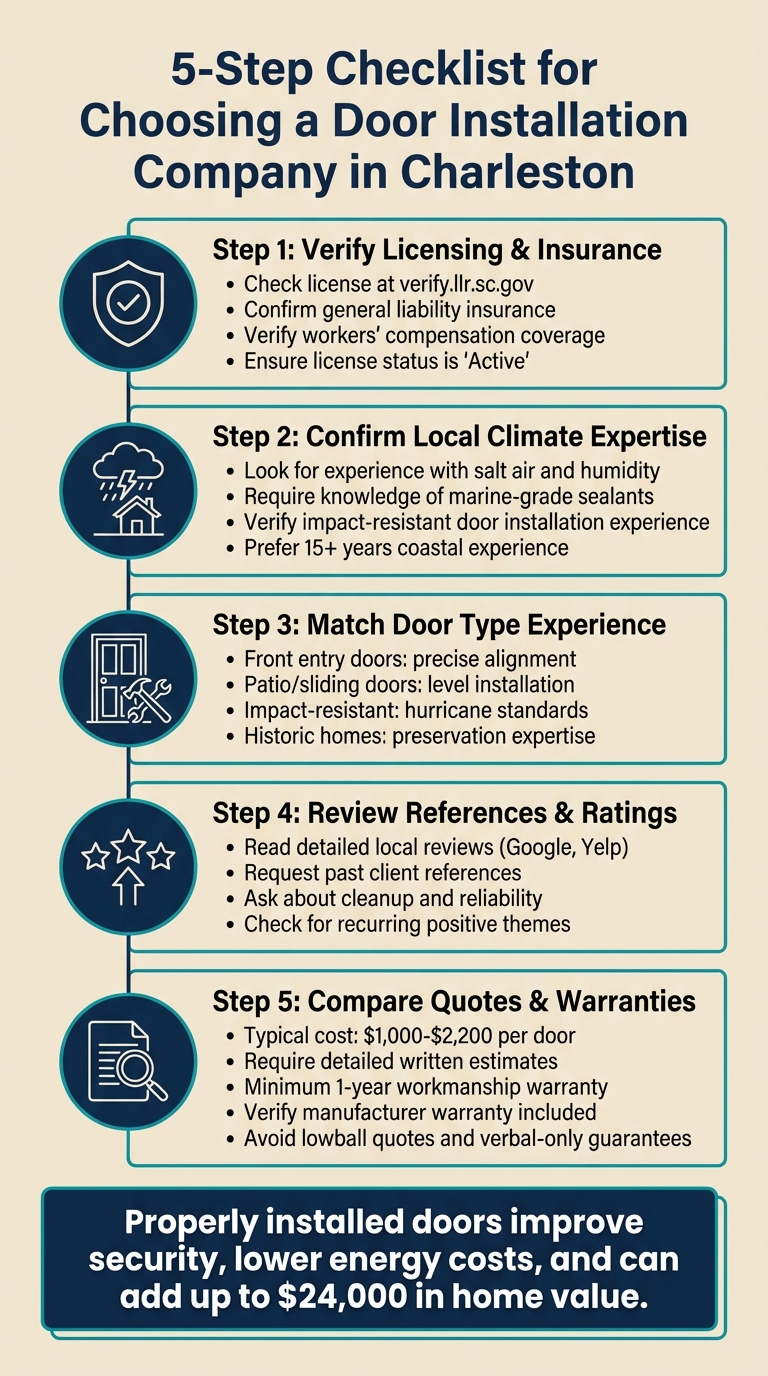
5-Step Checklist for Choosing a Door Installation Company in Charleston
Check Licensing and Insurance
Before hiring an installer, make sure they have a valid South Carolina contractor license and sufficient insurance to protect yourself from potential financial risks. South Carolina law prohibits unlicensed contractors from taking on projects that require a license. Plus, contracts with unlicensed contractors might not be enforceable.
How to Verify Licensing Credentials
You can easily check a contractor’s licensing credentials online. Head over to the South Carolina Department of Labor, Licensing and Regulation (LLR) website at verify.llr.sc.gov. Use the search tool to look up the contractor by their license number, business name, or the name of the individual qualifying party. The search results will provide key details like:
- License number
- Classification
- Active status
- Expiration date
- Disciplinary history
Make sure the license is marked as "Active", as only active licenses allow contractors to legally perform work. Also, double-check that the license classification aligns with the type of door installation you need. Keep in mind, General Contractor licenses in South Carolina expire on October 31st of even-numbered years, so pay attention to the expiration date. Once you’ve confirmed licensing, the next step is ensuring the contractor has proper insurance coverage.
Why Insurance Matters
A valid license alone isn’t enough – you also need to verify insurance. Ask for a Certificate of Insurance (COI) to confirm the contractor has both general liability and workers’ compensation coverage. Here’s why these are critical:
- General Liability Insurance: Protects your property in case any damage occurs during the installation process.
- Workers’ Compensation: Shields you from being held financially responsible if a worker gets injured on your property.
Additionally, check if the installer offers a workmanship warranty. This type of policy covers errors made during installation, giving you peace of mind. For example, if problems like gaps, sticking, or security issues arise, the installer should fix them at no extra cost. Keep in mind that manufacturer warranties typically apply only to the door itself – not the labor – so it’s important to confirm the installer provides their own warranty for their work.
sbb-itb-cdbcc3e
Review Experience With Door Types and Local Climate
When choosing a company for door installation, it’s crucial to find one with hands-on expertise in your specific door type and a deep understanding of how Charleston’s coastal climate affects long-term performance.
Experience With Different Door Types
Different doors demand different installation techniques to function effectively. For example, front entry doors require precise alignment and weatherproofing to protect your home. This is particularly important in Charleston, where homes range from historic to modern styles, each presenting unique challenges. For patio and sliding doors, level installation and proper track mounting are key to ensuring smooth operation and protection from the elements. Meanwhile, interior doors like French, pocket, or barn doors need skilled installers who can deliver space-saving solutions that match your design preferences.
For coastal homes, it’s essential to hire professionals experienced in installing impact-resistant doors that meet hurricane-force wind standards. These doors are a must for protecting against extreme weather, and many local experts in Charleston boast over 15 years of experience dealing with these specific coastal conditions.
But expertise with door types alone isn’t enough – installers also need to factor in Charleston’s unique environmental challenges.
Understanding Charleston’s Climate Requirements
Charleston’s humid, coastal environment presents specific risks that installers must address. Salt air and moisture are particularly harsh on metal components, making materials like fiberglass or steel better choices for exterior doors. These materials resist warping, rot, and corrosion far better than wood. This is especially critical given that over 90% of hurricane damage occurs when wind enters through weak openings.
Wooden doors, while beautiful, require consistent upkeep in Charleston’s salty, humid conditions to prevent warping and decay. Skilled installers will use marine-grade sealants and advanced flashing techniques to shield doors from salt air and heavy rain. They may also recommend doors with insulating cores and thermally broken frames to improve energy efficiency and reduce air leaks.
For an extra layer of assurance, ask if the company uses thermal imaging during their assessment. This technology helps detect air leaks and ensures your new door installation provides maximum energy efficiency.
Read Customer Reviews and Check References
Once you’ve ensured a company understands Charleston’s unique climate and the specific door types suited to your home, the next step is to evaluate their track record. Customer reviews and direct references can give you a clear picture of whether the installer consistently meets expectations.
How to Read Online Reviews
Approach online reviews thoughtfully. On platforms like Google or Yelp, focus on reviews that include local details to verify authenticity. Mentions of well-known neighborhoods like Church Street, Tradd Street, or King Street often indicate the reviewer is a genuine Charleston resident. For instance, Claire M. from Church Street shared her experience with a fiberglass front door installation, highlighting how the team arrived on time, protected her floors, and adjusted the hinges for a perfect fit. She noted that her home became draft-free and stayed cooler in Charleston’s heat.
While online reviews provide a solid starting point, pay attention to recurring themes rather than isolated comments. Look for details such as improved weatherproofing or lower energy bills. For example, Harris W. from Tradd Street praised his experience, saying:
The new doors look amazing and slide like butter. They took time to show me how all the locking mechanisms work. The crew left the space spotless.
At the same time, be cautious of red flags. Reports of installers missing appointments, failing to protect floors, or leaving debris behind can signal potential issues. Complaints about doors sticking or failing to close properly shortly after installation may point to poor alignment or inadequate adjustments for Charleston’s humid environment. For a deeper understanding, always request direct references from the installer.
How to Request and Contact References
Speaking directly with past clients is a great way to confirm an installer’s reliability and workmanship. Ask the company for contact information of previous customers who have completed similar projects, whether it’s restoring a historic home or installing doors designed to handle hurricane conditions. When reaching out, consider asking specific questions like:
- Did the crew take steps to protect your floors and clean up afterward?
- Has the door’s alignment and weatherproofing held up through Charleston’s humidity?
- Was the final cost consistent with the initial estimate?
- Were the locking mechanisms and maintenance instructions clearly explained?
Also, check if the company stands by its work. Reputable installers often offer at least a one-year workmanship guarantee in addition to the manufacturer’s warranty. This reassurance can make a big difference if any issues arise after installation.
Compare Product Quality and Warranties
Now let’s dive into evaluating door products, hardware, and warranty terms to ensure they can withstand Charleston’s coastal environment.
Evaluating Door Materials and Hardware
Charleston’s unique climate calls for door materials that can handle moisture, salt air, and extreme weather. Fiberglass doors stand out as an excellent choice for coastal homes. They resist warping, cracking, and rotting, all while mimicking the appearance of natural wood. According to Mr. Handyman of Charleston and Summerville:
"Fiberglass is a good option when you want something that’s going to hold up well for a long time and keep thermal energy from escaping your house."
For those prioritizing security, steel doors are incredibly durable but must have coastal-grade finishes to prevent rust caused by salty air. On the other hand, wooden doors are ideal for historic preservation projects but demand specialized treatments and enhanced weatherproofing to combat the region’s moisture.
When it comes to glass and hardware, impact-resistant laminated glass is a must. It provides protection against hurricanes, break-ins, and flying debris during storms. For hardware, select finishes designed to resist corrosion, such as marine-grade bronze or powder-coated black. Additionally, multi-point locking systems – which secure the door at multiple points – offer better protection and a tighter seal against the elements. Doors with built-in weatherproofing, such as marine-grade sealants and flashing systems, further enhance durability.
Energy efficiency is another key factor. Look for doors with insulating cores – fiberglass or steel shells filled with foam – paired with double-glazed glass and quality weatherstripping. These features help minimize heat transfer, reducing your energy bills. To ensure optimal performance, choose products with Energy Star certification to meet federal energy conservation standards.
What Warranty Coverage Includes
When purchasing a door, it’s crucial to secure two types of warranties: one from the manufacturer for product defects and another from the installer for workmanship. For example, Icon Window and Door offers a one-year workmanship warranty on installations, while the manufacturer covers the product itself.
A short-term workmanship warranty is particularly important, as installation issues typically surface early on. Ask your installer how they handle follow-up concerns months after the job is done, and confirm that they have an established reputation in Charleston – this ensures they’ll be around to honor the warranty in the future. Finally, request a detailed, written estimate outlining what’s included in the labor guarantee versus the manufacturer’s product warranty.
Get and Compare Installation Quotes
When planning a door installation, it’s crucial to request detailed quotes. This helps you avoid unexpected charges and compare companies on equal terms. In Charleston, door installation costs typically range between $1,000 and $2,200 per door. A clear estimate should outline all costs involved.
What a Complete Quote Should Include
A proper quote should break down every aspect of the project. The materials section, for instance, should specify the door slab, frame or jambs, and all hardware – things like locks, handles, and hinges. If you see vague terms like "new door", ask for specifics, such as the manufacturer, model, and material type.
Labor costs should also be detailed. This includes door removal, installation, proper alignment, and debris cleanup. Generally, standard installations take 2–4 hours, while custom or exterior doors may take up to 5 hours.
Given Charleston’s coastal climate, ensure the quote accounts for weather-specific features. Look for impact ratings, corrosion-resistant hardware, and marine-grade sealants that can handle the humidity and salt air. Additionally, the estimate should include warranty details for both the product and the installation. For instance, Icon Window & Door offers a one-year workmanship warranty.
Other important elements include a clear project timeline with start and end dates, as well as post-installation services like cleanup, weather-sealing, and a final walkthrough. An on-site assessment is also crucial to obtain accurate measurements and identify potential issues like frame rot.
Once you’ve reviewed these details, keep an eye out for warning signs that might indicate unreliable or incomplete estimates.
Warning Signs to Avoid
Be wary of these red flags when evaluating quotes:
- Unusually low pricing: This could mean the installers are inexperienced or using materials that won’t hold up against Charleston’s salty, humid conditions. As New Beginnings Construction puts it:
The cheapest contractor is rarely the least stressful one.
- Vague timelines: If a quote doesn’t include specific start and end dates, it might signal unreliable service.
- Hidden costs: Some estimates might cover the door itself but skip essential items like weatherstripping or locksets. Make sure flashing, waterproofing, and permit fees are explicitly included – not treated as add-ons.
- Verbal-only guarantees: Avoid companies that won’t provide written warranties. As New Beginnings Construction advises:
If it’s not written, it’s not included.
Finally, confirm that the installer is fully licensed and carries liability insurance. Unlicensed crews can lead to poor workmanship and potential legal issues down the road.
| Quote Component | What to Look For | Red Flag |
|---|---|---|
| Materials | Specific manufacturer, model, and material type | Generic terms like "new door" |
| Coastal Specs | Impact ratings and corrosion-resistant hardware | No mention of wind or salt-air protection |
| Labor | Written workmanship warranty, licensed crew | Verbal-only guarantees or "as-is" labor |
| Project Scope | Includes tear-off, disposal, and permit fees | Missing details on cleanup or legal fees |
Conclusion
Finding the right door installation company in Charleston requires focusing on quality, transparency, and professionalism. Start by confirming the installer’s licensing, insurance, and experience with handling your specific door type. Charleston’s unique climate – marked by salt air, humidity, and storms – demands expertise in weather-resistant solutions.
As Icon Window & Door explains:
"The right products should complement your home’s style while standing up to heat, humidity, storms, and salt air. That means weatherproof seals, impact-resistant glass, and corrosion-resistant hardware are non-negotiables."
Beyond technical qualifications, customer reviews and references are essential. They provide insight into the company’s reliability and commitment to satisfaction. Aim for installers with over 15 years of experience and consistently high ratings. Transparency matters, too – detailed quotes that clearly break down materials, labor, coastal specifications, and warranties can help you avoid surprises.
Look for companies that back their work with written guarantees. For example, a one-year workmanship warranty demonstrates accountability. A properly installed door not only boosts security and energy efficiency but can also increase your home’s value – potentially adding as much as $24,000 in curb appeal. By carefully assessing these factors, you ensure a door installation that protects your home and enhances its overall worth.
FAQs
Do I need a permit to replace an exterior door in Charleston?
Replacing an exterior door in Charleston does require a permit, even if the new door is an exact match for the old one. This ensures the installation meets local building codes, prioritizing safety and compliance with regulations.
What should I ask to confirm an installer is insured?
When hiring an installer, always ask for proof of their licensing and insurance coverage. This helps confirm that they are both qualified and properly insured to handle the job safely and professionally.
Which door material lasts best in Charleston’s salt air and humidity?
Fiberglass and steel doors stand out as the most durable choices for Charleston’s coastal climate. Built to handle the corrosive effects of salt air and the relentless high humidity, these materials offer reliable, long-term performance in tough environmental conditions.