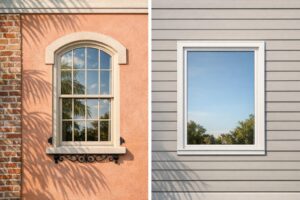
When replacing windows, you’ll likely face a key decision: standard windows or custom windows. Standard windows are mass-produced, affordable, and available immediately, but they come in fixed sizes and styles. Custom windows, on the other hand, are made to fit your home’s exact specifications, offering better fit and design flexibility but at a higher cost.
Here’s what you need to know:
- Costs: Standard windows cost $150–$400 per unit, while custom windows range from $500–$1,500 or more, excluding installation.
- Installation: Custom windows often require less structural adjustment, potentially reducing labor costs.
- Timing: Standard windows are readily available, while custom windows can take 3–6 weeks to manufacture.
- Applications: Standard windows suit newer homes with standard openings, while custom windows are ideal for older homes, unique designs, or specific building codes.
- Long-Term Value: Custom windows may save on energy costs and improve resale value due to their precise fit and durability.
Quick Comparison:
| Feature | Standard Windows | Custom Windows |
|---|---|---|
| Cost | $150–$400/unit | $500–$1,500+/unit |
| Material Options | Limited | Wide range |
| Lead Time | Immediate | 3–6 weeks |
| Installation | May require adjustments | Fits exact opening |
| Best For | Budget-friendly, simple | Unique sizes, long-term fit |
Choose standard windows for quick, cost-effective projects. Opt for custom windows for a tailored fit, better energy efficiency, and long-term value.
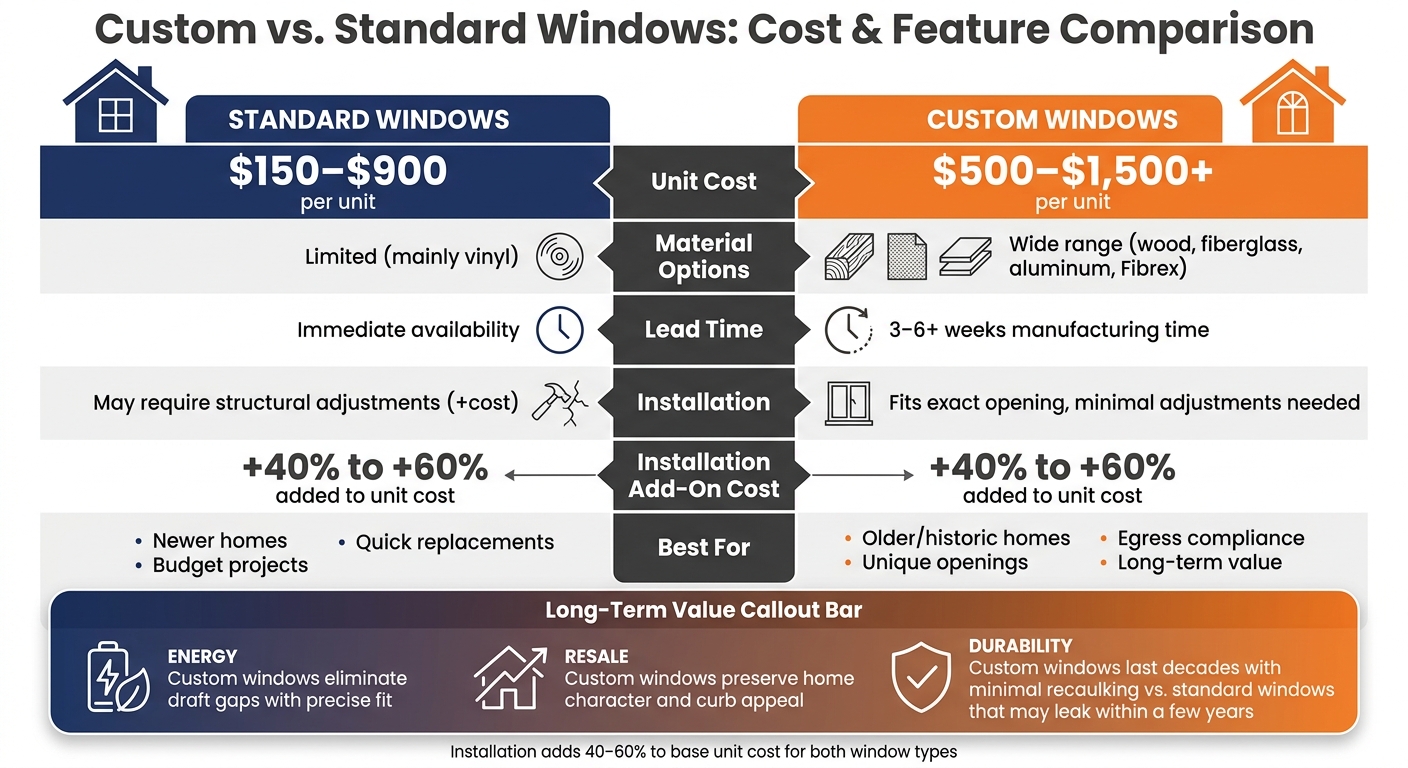
Custom vs. Standard Windows: Cost & Feature Comparison
Custom vs. Standard Windows: Key Differences
Choosing between custom and standard windows isn’t just about price. The differences in design, timing, and fit can significantly influence how smoothly a project runs – and what it ultimately costs in the end.
Design and Customization Options
Standard windows are built to fixed industry dimensions. For instance, a "2030" size code translates to 2’0″ x 3’0″. These windows come in limited styles, whereas custom windows allow for unique shapes, materials, and finishes, tailored down to 1/8th of an inch.
"Off-the-shelf windows require your home to adapt to the product, while custom windows adapt to your home." – WindowDoor.com
Custom windows ensure a precise fit, reducing the need for extra labor and sealants. While they offer more flexibility and style, they tend to come with higher price tags. These design factors not only impact aesthetics and functionality but also influence project timelines.
Lead Time and Availability
Standard windows are readily available at most hardware stores, meaning you can purchase and install them almost immediately. On the other hand, custom windows typically require a 3–6 week lead time.
The exact timeline depends on factors like materials, glass type, and design complexity. If you’re working with a tight deadline, this difference can be critical. However, for projects with more flexible schedules, the wait for custom windows is often manageable. Understanding these timing contrasts is vital for aligning window choice with your project’s timeline and scope.
Common Applications
Standard windows are ideal for straightforward projects, especially in newer homes with uniform, square openings. They’re also a go-to for quick replacements or when budget and speed are the main concerns.
"Standard window sizes are cost-effective, widely available, and easy to install, making them ideal for newer homes or simple replacements." – Rob Mato, Founder, Keystone Window of Pennsylvania
Custom windows, however, shine in specific scenarios:
- Homes built before 1970 with non-standard openings
- Historic properties with unique proportions
- Projects requiring compliance with egress codes
- Homes or buildings with distinctive architectural designs
Ultimately, the best choice depends on your home’s structure, age, and the goals of your project. These factors become even more crucial when you start weighing the overall costs and benefits of each option.
sbb-itb-cdbcc3e
Cost Breakdown: Materials, Labor, and Installation
Material Costs
The price difference between standard and custom windows boils down to their production process. Standard windows are mass-produced in fixed sizes using automated systems, which keeps the cost per unit lower. On the other hand, custom windows are crafted in smaller, specialized facilities – often involving manual work – and require custom-sized thermopane glass, significantly driving up costs.
"At Marvin the standard sizes are built on an automated system, where the customs are built more or less in a normal shop. One of the big contributors to the cost is the custom size thermopane glass." – Larry Edgerton, Builder
Vinyl is the go-to material for standard windows due to its affordability, durability, and energy-saving properties. For custom windows, materials like wood, fiberglass, and aluminum are more common. These materials not only improve performance but also increase the price. For instance, custom windows from high-end brands like Marvin can cost more than twice as much as their standard-sized counterparts.
Labor and Installation Costs
Labor expenses for standard windows can rise if the rough openings in a home have shifted – a frequent issue in older buildings. In such cases, a standard window may not fit properly, requiring extra work to adjust the framing, repair drywall, or blend new siding with aged exterior materials.
"Installation costs associated with stock windows may be higher than custom made windows, since modifications are likely needed for the stock window to accommodate openings properly." – Lindus Construction
Custom windows, designed to fit exact openings, often eliminate the need for extensive framing adjustments, resulting in a cleaner installation process. However, regardless of the type, professional installation typically adds 40% to 60% to the base cost of the window. For example, a $1,000 window could end up costing between $1,400 and $1,600 after installation. Keep in mind that permits, disposal fees, and unexpected repairs might not be included in initial estimates.
Cost Comparison Table: Standard vs. Custom Windows
| Category | Standard Windows | Custom Windows |
|---|---|---|
| Vinyl (unit cost) | $250 – $900 | $600 – $1,500 |
| Wood (unit cost) | $300 – $700 | $500 – $1,200+ |
| Aluminum (unit cost) | $300 – $600 | $400 – $900 |
| Fiberglass (unit cost) | $400 – $800 | $600 – $1,500+ |
| Installation add-on | +40% to +60% | +40% to +60% |
| Structural modifications | Often required | Rarely required |
| Lead time | Immediate | ~7 weeks or more |
Custom vinyl windows alone can cost 25% to 60% more than standard vinyl options due to the specialized manufacturing process. When comparing quotes, make sure to request itemized estimates that separate materials, labor, permits, and disposal fees – this ensures you’re making a fair comparison.
Understanding these material and installation costs is key before diving into other factors like energy efficiency and durability.
Long-Term Cost Factors
Energy Efficiency
Standard windows that don’t fit perfectly can lead to drafts and energy loss, making your home less comfortable and more expensive to heat or cool. Custom windows, on the other hand, are built to exact measurements, eliminating the need for excessive caulk or shims to fill gaps.
Custom manufacturing also allows for tailored U-Factor selections and advanced glass options, ensuring top-notch insulation. Materials like Fibrex® – a blend of wood fiber and thermoplastic polymer – offer better thermal performance compared to standard vinyl, aluminum, or even wood frames. As Chelsea Kuhel from Pella explains:
"Replacing aging or underperforming windows can improve how a home feels day to day, even though energy savings and resale impact vary by home and market."
This focus on energy efficiency doesn’t just help with utility bills – it also contributes to lower maintenance needs and longer-lasting performance.
Durability and Maintenance
The lifespan of your windows plays a big role in long-term costs. Standard windows, often made with less durable materials and traditional construction methods, can wear out faster. In fact, poorly fitted standard windows may start leaking air within just a few years.
Custom windows, however, are designed to endure for decades with minimal upkeep. They don’t require constant recaulking or adjustments, and they often come with more extensive warranties. Standard windows, by contrast, typically offer limited warranties that may be voided if installation issues arise.
Resale Value
Investing in custom windows doesn’t just save money on energy and maintenance – it can also boost your home’s value. Custom windows preserve the original design and character of a home, which is especially important for older properties where standard sizes don’t align with existing openings. Installing standard windows in such cases often leads to compromises like patching drywall, resizing siding, or reducing the glass area, all of which can hurt curb appeal.
As Lindus Construction highlights:
"Custom windows often provide a tighter seal and better long term performance, even though they may cost more upfront."
For homeowners who plan to stay in their homes for years, the combination of lower energy bills, reduced maintenance, and enhanced resale appeal makes custom windows a smart financial decision in the long run.
Choosing Between Custom and Standard Windows
Key Decision Factors
When deciding between custom and standard windows, there are four main factors to keep in mind: budget, opening dimensions, building code requirements, and climate performance. While custom windows typically cost about 30–50% more than standard options, this higher upfront expense might save you from added costs like resizing drywall or cutting into walls to make standard windows fit.
Here’s how these factors play into your decision:
- Opening dimensions: Older homes often have irregular window frames. Custom windows are made to fit these unique openings, eliminating the need for structural changes.
- Building code compliance: U.S. egress codes require bedroom and basement windows to have a minimum net clear opening of 5.7 square feet, with the sill no higher than 44 inches from the floor. If your current window openings don’t comply, custom windows may be your only option to meet these standards.
- Climate performance: South Carolina’s coastal climate, with high humidity, hot summers, and hurricane-season winds, demands durable materials and specialized glass coatings. Custom windows allow you to select the exact U-Factor and solar heat gain coefficient that suits your home.
- Long-term plans: If you plan to stay in your home for a decade or more, custom windows might be worth the investment. Their precise fit and higher-quality materials can result in lower energy costs and fewer repairs over time.
Understanding these factors will guide you toward the best choice for your home.
Step-by-Step Decision Process
Follow these steps to make an informed decision about your windows:
- Measure your openings carefully: Measure each window at multiple points (top, center, and bottom for width; left, center, and right for height). Also, check the diagonals to ensure the frame is square. If the diagonals differ by more than ¼ inch or if the dimensions don’t match standard sizes, custom windows are likely the better choice.
- Determine the installation type: Decide whether you need new construction windows (which include a nailing flange and require full-frame removal) or replacement (or pocket) windows that fit into the existing frame. Choosing the wrong type can lead to leaks and interior damage.
- Get a professional estimate: Seek an estimate that includes any potential modifications, like resizing openings or repairing structural issues.
- Consult a local specialist: A professional can identify challenges – like foundation shifts that may have warped your window frames – that you might miss on your own.
Working with Local Experts in South Carolina
If you’re in South Carolina, partnering with a local expert can simplify the process. Icon Window & Door offers on-site consultations and tailored recommendations based on your home’s specific needs. They work with top manufacturers to provide both standard and custom window options, all supported by a one-year workmanship warranty. Whether you’re replacing one window or upgrading your entire home, professional measurements ensure the job is done right the first time.
Conclusion
Standard windows typically range from $350 to $800 per unit, making them a more budget-friendly option for straightforward replacements. On the other hand, custom windows come with a higher price tag, costing between $1,000 and $3,000 per unit, with full projects sometimes reaching $4,000 to $12,000. These higher costs often reflect a tighter, more durable fit that may eliminate the need for extra structural modifications.
But price alone shouldn’t dictate your decision. While standard windows may seem cheaper upfront, hidden costs – like adjustments or additional materials – can quickly add up. On the flip side, if your home features standard-sized openings and is relatively new, the extra expense of custom windows might not make financial sense.
When weighing your options, consider more than just the initial cost. Factors like long-term energy efficiency, durability, and fit play a big role in the overall value. For homeowners in South Carolina, specific conditions like coastal humidity, heat gain, and storm resistance should also influence your choice. Tailoring your decision to your home’s unique needs and environment is the best way to ensure a smart investment.
FAQs
How do I know if my window openings are “standard” or need custom sizing?
To ensure your windows fit perfectly, measure the width and height of your window openings at several points. Compare these measurements to standard window sizes. If the dimensions don’t align with typical sizes or if the openings are uneven, you might need custom-sized windows. This step is crucial for achieving the best fit and performance.
What hidden costs can make standard windows more expensive than they look?
Hidden costs for standard windows often crop up due to sizing problems, installation difficulties, and energy inefficiencies. Pre-made windows might not fit perfectly, leading to extra work like resizing wall openings or sealing gaps – both of which can drive up labor costs and overall expenses. A poor fit can also result in energy loss, pushing utility bills higher or requiring additional adjustments to fix the issue.
On top of that, attempting a DIY installation can lead to delays or even compliance problems if not done correctly. In contrast, custom windows usually come with professional measurements and installation services, helping to avoid these unexpected expenses.
Are custom windows worth it if I plan to sell my home soon?
Custom windows offer a tailored fit that not only improves energy efficiency but also adds long-term durability to your home – features that can attract potential buyers and boost your home’s value. While the initial cost is higher, they may save you money in the long run by reducing maintenance needs. On the other hand, if keeping costs low is your main concern, standard windows might be the better option. The choice comes down to balancing your budget with the potential benefits and buyer appeal that custom windows bring.