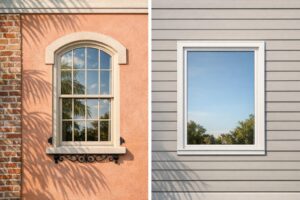
Energy-efficient windows can save Charleston homeowners money, improve comfort, and protect against the region’s challenging climate. With up to 30% of heating and cooling energy lost through outdated windows, upgrading to modern, ENERGY STAR-certified models can reduce energy bills by 12% to 13% annually. These windows also block up to 75% of harmful UV rays, prevent drafts, and offer better storm protection with impact-resistant glass.
Key takeaways:
- Lower energy costs: Reduce energy loss by 30% to 50% with features like Low-E coatings and gas-filled panes.
- Improved durability: Materials like vinyl and fiberglass withstand Charleston’s humidity and storms.
- Tax credits: Federal tax credits cover 30% of product costs, up to $600 annually.
- Long-term savings: Annual energy savings and reduced maintenance make these windows a cost-effective investment.
For Charleston’s hot, humid climate and storm-prone seasons, energy-efficient windows are a practical upgrade that enhances your home’s comfort, safety, and energy performance.
How Charleston’s Climate Affects Your Windows
Charleston’s weather isn’t just a conversation starter – it’s a serious factor in how long your windows last and how much you’ll spend on energy bills. The region’s intense heat, high humidity, and stormy seasons can take a toll on traditional windows.
High Humidity and Energy Use
Humidity in Charleston is relentless, keeping your windows exposed to moisture all year. This constant dampness can cause wood frames to rot or warp if they’re not well-maintained. Even low-grade vinyl windows aren’t immune – they can fade, warp, or sag under the combined stress of heat and moisture.
But it’s not just about physical damage. Humidity also impacts your energy use. Poorly insulated windows allow warm, moist air to creep inside, forcing your air conditioner to work overtime to keep things cool. That’s why windows with a Solar Heat Gain Coefficient (SHGC) of 0.23 or less are a smart choice for Charleston. They’re better at keeping solar heat out, which means your HVAC system gets a break and your energy bills stay in check.
And as if high energy costs weren’t enough, Charleston’s humidity brings another challenge: storm season.
Storm Damage and Window Strength
From June to November, Charleston braces for storm season, with high winds capable of turning everyday objects into flying hazards. A broken window during a storm isn’t just an inconvenience – it can lead to major structural damage.
"When a window breaks during a storm, it creates an opening that allows hurricane-force winds to invade. This sudden pressure can lead to catastrophic consequences, such as blowing off the roof or collapsing walls." – Charleston Design Center
To combat this, many homeowners opt for impact-resistant or laminated glass. These materials stay intact even when cracked, keeping your home sealed against the elements. Properly installed, energy-efficient windows designed for coastal climates can last 20 to 25 years in Charleston – though salt air and humidity may shorten their lifespan.
In Charleston, your windows are more than just a design choice – they’re a frontline defense against the elements.
sbb-itb-cdbcc3e
Benefits of Energy-Efficient Windows
Switching to energy-efficient windows can make a noticeable difference in both your home’s comfort and your monthly expenses. For Charleston homeowners, the perks often include lower energy bills, a more comfortable living environment, and added protection for your interiors.
Reduced Energy Costs
Windows are a common source of energy loss, but energy-efficient models are designed to tackle this issue head-on. Features like multi-pane glass filled with inert gases (such as argon or krypton) create an effective thermal barrier, far outperforming traditional single-pane windows. Low-E coatings add another layer of efficiency by reflecting infrared light, keeping your home cooler during Charleston’s hot summers. Together, these features can cut energy loss through windows by 30% to 50%, delivering substantial savings over time.
In fact, ENERGY STAR-qualified windows can save an average of $2 per square foot over their lifespan compared to less efficient options. For a typical Charleston home, that adds up quickly.
"Replacing single-pane windows with ENERGY STAR® certified windows can help homeowners across the United States reduce their annual heating and cooling costs by 12% on average." – Pella
These windows also help lighten the load on your HVAC system by maintaining more consistent indoor temperatures, which can extend the system’s life and reduce repair costs. This means lower energy bills and a more reliable, balanced indoor climate.
Better Temperature Control
Energy-efficient windows are a game changer when it comes to maintaining even temperatures throughout your home. Their combination of multiple glass panes, gas fills, and specialized coatings creates a strong thermal barrier that keeps drafts and moisture at bay, which is especially important in Charleston’s humid, coastal climate. High-quality window frames – whether vinyl, fiberglass, or wood – paired with proper installation and weatherstripping ensure a snug, energy-saving fit.
The result? A home where every room feels comfortable without constant thermostat adjustments. Beyond temperature control, these windows also help shield your interiors from harsh sunlight and reduce outside noise.
UV Protection and Sound Insulation
Charleston’s coastal sun can take a toll on your home’s interiors, but energy-efficient windows offer protection. Advanced Low-E coatings can reduce UV damage by up to 75%, helping to preserve furniture, flooring, and artwork while also improving acoustic comfort.
"ENERGY STAR certified windows have coatings that keep out the summer heat and act like sunscreen for your house, protecting your valuables from harmful, fading ultraviolet light without noticeably reducing visible light." – ENERGY STAR
Spectrally selective coatings block 40%–70% of heat while still allowing natural light to brighten your space. Additionally, the extra layers of glazing and gas fills work to dampen outside noise – whether it’s traffic, neighborhood activity, or coastal storms – making your home quieter and more peaceful.
Energy-Efficient Window Technology Explained
Window efficiency boils down to two key technologies: Low-E coatings and gas fills between panes. In a city like Charleston, where humidity and blazing sunlight are a daily reality, these features can make a world of difference. They act as a barrier against heat transfer, which is a lifesaver when summer temperatures soar into the 90s.
In Charleston’s hot and humid conditions, these technologies are essential for keeping indoor spaces comfortable. When considering window replacement, you’ll come across two important ratings: U-Factor and SHGC. Think of these as your window’s performance scorecard. The U-Factor measures how well a window keeps heat from escaping or entering your home – lower numbers mean better insulation, with typical ratings ranging from 0.2 to 1.2 Btu/(h·ft²·°F). Meanwhile, the SHGC (Solar Heat Gain Coefficient) indicates how much solar heat penetrates the glass, with ratings between 0.20 and 0.80. Let’s dive into how these technologies and ratings work for Charleston homeowners.
Low-E Coatings and Gas Fills
Low-emissivity (Low-E) coatings are ultra-thin metallic layers applied to the glass. Picture them as a heat-reflecting shield – they bounce back infrared heat while letting visible light pass through. In Charleston, these coatings are designed to block solar heat from entering your home, reducing the strain on your air conditioning.
The spaces between window panes are filled with inert gases like argon or krypton, which are denser than air and slow down heat transfer. Argon is the go-to choice for standard 1/2-inch gaps due to its affordability and solid performance. Krypton, while pricier, offers better thermal resistance in thinner 1/4-inch spaces.
For even greater efficiency, spectrally selective coatings take Low-E technology to the next level. These coatings filter out 40% to 70% of solar heat while allowing natural daylight to brighten your home. The result? You enjoy sunlight without turning your living room into a sauna. Together, Low-E coatings and inert gas fills can cut energy loss by up to 50%.
U-Factor and SHGC Ratings
In Charleston, where keeping out solar heat is a top priority, the SHGC rating often matters more than the U-Factor. Look for windows with an SHGC below 0.40 to effectively reduce cooling demands during South Carolina’s long, hot summers.
That said, the U-Factor still plays a role. A low U-Factor (ideally below 0.30) helps keep your cooled air inside while keeping the hot outdoor air out. Windows with a U-Factor of 0.30 or lower provide excellent insulation.
Every energy-efficient window should feature a National Fenestration Rating Council (NFRC) label displaying these ratings. This standardized label makes comparing products across brands easy and reliable. For Charleston homeowners, pay special attention to windows on the west side of your house – these face the brunt of the afternoon sun and benefit most from the lowest SHGC ratings.
| Rating Type | What It Measures | Ideal for Charleston |
|---|---|---|
| U-Factor | Heat escape/entry (insulation) | Lower (typically <0.30) |
| SHGC | Solar heat gain (sun blocking) | Lower (typically <0.40) |
| Visible Transmittance | Amount of natural light | Higher (typically >0.50) |
Top Window Styles for Charleston Homes
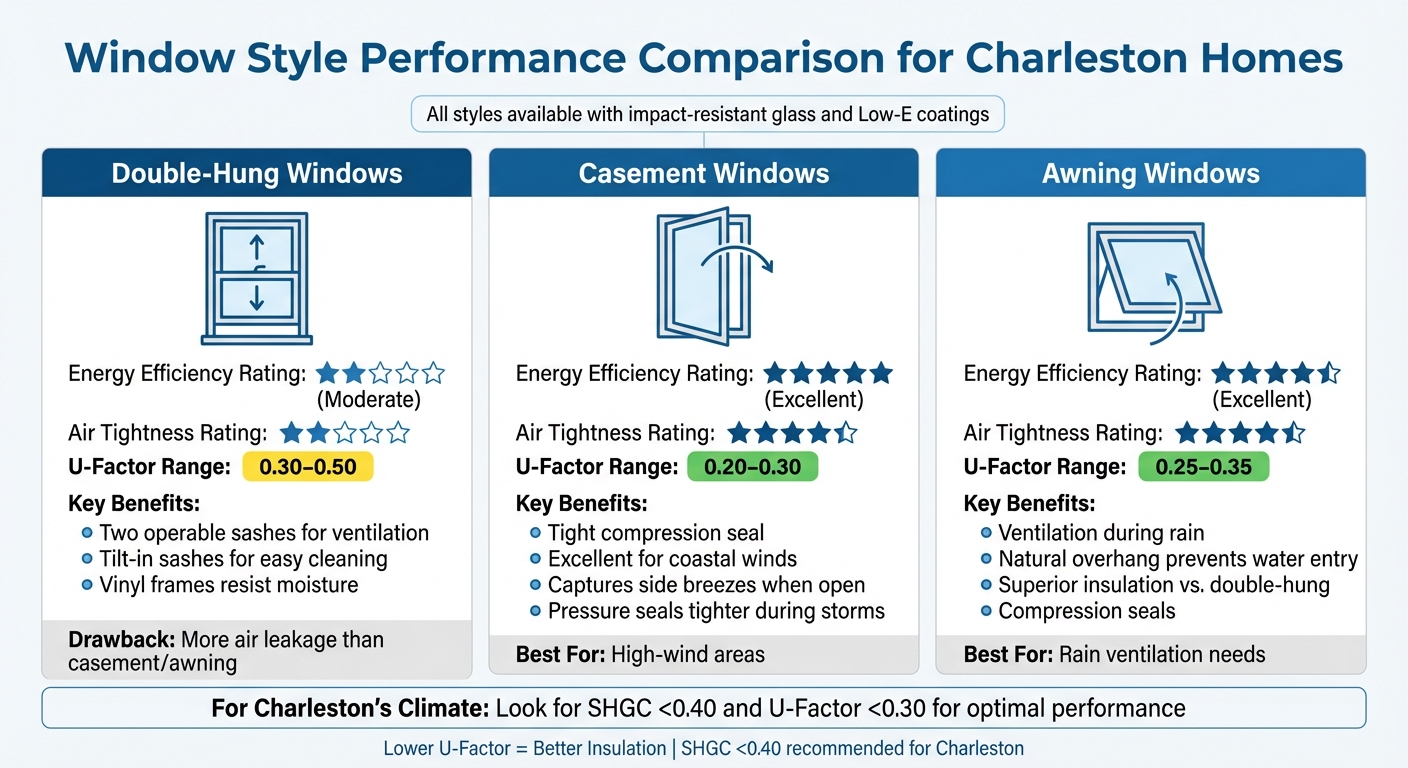
Energy-Efficient Window Performance Guide for Charleston Homes
Choosing the right window style can make a big difference in managing Charleston’s challenging climate. With its heat, humidity, and frequent rain, selecting windows that enhance energy efficiency is key. Double-hung, casement, and awning windows each bring specific benefits suited to these conditions.
Double-Hung Windows
Double-hung windows, with their two operable sashes that slide vertically, are a popular choice for natural ventilation on pleasant days. Their vinyl frames are particularly effective in resisting moisture and heavy rain, a must in Charleston’s humid subtropical environment. Many models also feature tilt-in sashes, making cleaning a breeze. However, because the sashes slide past each other rather than forming a tight seal, they can allow more air leakage compared to other styles like casement or awning windows.
Casement Windows
Casement windows are known for their tight sealing capabilities. Hinged on the sides, they swing outward and close with a compression seal that minimizes air leakage. This design is especially effective in Charleston’s coastal winds, as the pressure pushes the sash tighter against the frame during storms, keeping drafts at bay. When opened fully, these windows also capture side breezes, improving airflow. For high-wind areas, vinyl or fiberglass frames are recommended to enhance durability and thermal performance.
Awning Windows
Awning windows offer a clever way to ventilate your home during Charleston’s frequent rain showers. Hinged at the top and opening outward from the bottom, they create a natural overhang that prevents rain from entering while still allowing airflow. Their compression seals make them highly energy-efficient, with a 4/5 star rating for airtightness. With a U-Factor range of 0.25–0.35, they provide better insulation than double-hung or sliding windows. These features make awning windows a great option for spaces needing ventilation while keeping out rain.
Each of these window styles offers unique advantages, setting the stage for exploring materials and custom options tailored to Charleston homes.
| Window Style | Energy Efficiency | Air Tightness | Typical U-Factor Range |
|---|---|---|---|
| Awning | Excellent (4/5) | 4/5 | 0.25–0.35 |
| Casement | Excellent (5/5) | 4/5 | 0.20–0.30 |
| Double-Hung | Moderate (2/5) | 2/5 | 0.30–0.50 |
Choosing Window Materials and Glass for Charleston
Selecting the right frame material and glass is crucial for handling Charleston’s unique mix of humidity and storms. These choices build on the energy-efficient features discussed earlier, ensuring your windows perform well and last in Charleston’s challenging climate.
Window Frame Materials: Vinyl, Fiberglass, and Wood
Vinyl frames are a solid choice for Charleston’s salty air and high humidity. They resist rot, corrosion, warping, and peeling, thanks to their durable, multi-chambered construction, which also provides excellent thermal insulation. Vinyl is favored for its low maintenance – no painting or sealing required – and its ability to hold up in harsh coastal environments.
Fiberglass frames are another excellent option, known for their durability and dimensional stability. They resist moisture, rotting, and swelling, making them ideal for coastal conditions.
"Fiberglass window frames are dimensionally stable and have air cavities that can be filled with insulation, giving them superior thermal performance compared to wood or uninsulated vinyl".
Although fiberglass frames may cost more upfront, their longevity and performance – especially for larger window openings – make them a worthwhile investment.
Wood frames offer a classic aesthetic and natural insulation but require more upkeep in Charleston’s humid climate to prevent rot. For those who love the look of wood without the maintenance headaches, clad-wood frames are a great alternative. These combine a wood interior with a metal-clad exterior, offering better protection against the elements. Keep in mind, though, that regular sealing and maintenance will still be necessary.
Here’s a quick comparison of these materials to help you decide:
| Material | Moisture Resistance | Energy Efficiency | Maintenance | Best Use Case in Charleston |
|---|---|---|---|---|
| Vinyl | Excellent; won’t rot or corrode | High (multi-chambered) | Very Low | Budget-friendly, high-humidity areas |
| Fiberglass | Excellent; won’t warp or swell | Superior (insulated cavities) | Low | Large window openings, long-term durability |
| Wood | Poor (requires sealing) | High (natural insulator) | High | Historic districts or aesthetic matching |
Impact-Resistant Glass
In Charleston, impact-resistant glass is a must-have. This type of glass uses laminated panes with a plastic interlayer that holds fragments together if broken. Unlike temporary storm panels or plywood, impact-resistant windows provide constant, year-round protection against debris.
Beyond protecting your home during hurricanes, impact-resistant glass prevents wind, water, and debris from compromising your home’s structure, especially by reducing internal pressure on the roof. When paired with Low-E coatings and gas fills like argon or krypton, these windows also improve energy efficiency, potentially cutting cooling costs by 30% to 50%.
To maximize efficiency in Charleston’s climate, look for windows with a Solar Heat Gain Coefficient (SHGC) of 0.25 or lower and a U-Factor of 0.40 or less. Always check the National Fenestration Rating Council (NFRC) label to compare the full "whole window" performance, not just the glass rating.
Custom Window Solutions from Icon Window & Door
Custom Window Options for Your Home
With more than 50 years of combined experience in construction and project management, Icon Window & Door brings expertise to every Charleston window project. They specialize in crafting custom windows tailored to non-standard dimensions, unique finishes, and hardware preferences. Whether you’re updating a historic home or designing a sleek, modern build, Icon has options to suit your style and budget. Choose from vinyl, natural wood, clad (wood interior with metal exterior), or steel frames to perfectly complement your home’s aesthetic.
These windows are built to withstand Charleston’s coastal climate, featuring impact-resistant glass, weatherproof seals, and corrosion-resistant hardware. You can select from a variety of styles, including double-hung windows with tilt-in sashes for easy cleaning, crank-operated casement windows, or awning windows that allow ventilation even during rain. To top it off, Icon offers insulated glass packages and energy-efficient frames designed to reduce heat transfer and help lower energy bills. These features ensure your windows perform well in Charleston’s heat, humidity, and storms.
"We partner with top manufacturers to deliver exceptional products and expert guidance that transform homes into beautiful, secure, and energy-efficient sanctuaries." – Icon Window & Door
Icon Window & Door also provides free consultations and estimates, offering personalized guidance on materials and styles that best meet your home’s security and energy efficiency needs. Their custom solutions are designed to not only enhance your home’s appearance but also ensure it performs well in Charleston’s demanding climate.
Professional Window Installation
The benefits of custom windows are only fully realized with expert installation, and Icon Window & Door has this covered with a thorough six-step process: consultation, material selection, precise measurement, site protection, installation, and quality inspection. Each window is installed in just 30–60 minutes, ensuring precise alignment and secure seals that maximize energy efficiency.
"With Icon Window & Door, you can count on flawless alignment and secure installation – ensuring long-lasting performance, enhanced safety, and year-round comfort in your home." – Icon Window & Door
To provide extra peace of mind, every installation comes with a one-year workmanship warranty. In addition, professional installation is required to maintain the manufacturer’s product warranty, ensuring your windows deliver optimal performance. This meticulous installation process guarantees your new windows will stand up to Charleston’s challenging coastal environment.
Tax Credits, Rebates, and Long-Term Savings
Energy-efficient windows not only enhance comfort and cut down energy expenses but also come with some attractive financial perks for Charleston homeowners.
Available Tax Credits and Utility Rebates
Charleston residents can take advantage of federal tax credits to offset the upfront costs of upgrading to energy-efficient windows. The Energy Efficient Home Improvement Credit allows homeowners to claim 30% of the product cost, up to $600 annually, for qualifying windows and skylights. To qualify, the windows must have ENERGY STAR Most Efficient certification for Charleston’s climate zone and be installed in your primary residence.
The $600 annual cap means you can spread out window replacements over several years if needed. However, the credit only applies to the product cost – it doesn’t cover labor or installation fees. To claim this credit, you’ll need to file IRS Form 5695 and keep documentation like receipts, ENERGY STAR labels, and the QMID.
Looking ahead, South Carolina’s Home Efficiency Rebates (HOMES) program is expected to roll out in 2026, offering additional rebates for whole-home energy upgrades, including windows and doors. Charleston homeowners should also explore local utility rebates using tools like the ENERGY STAR Rebate Finder. Keep in mind, when calculating your tax credit, any rebates or manufacturer discounts must be subtracted from the purchase price, as the IRS considers these to be price adjustments.
These incentives, combined with energy savings, make upgrading windows a smart financial move, as outlined in the return on investment section below.
Calculating Your Return on Investment
Aside from tax credits, energy-efficient windows deliver tangible savings. Nationwide, replacing old windows with ENERGY STAR certified models can lower household energy bills by up to 13% annually. In Charleston’s hot and humid climate, where cooling costs are a major concern, the savings can be even more significant.
To figure out your return on investment, begin with your net cost: subtract the federal tax credit (up to $600) and any local utility rebates from the total purchase price. Then, divide this net cost by your estimated yearly savings on energy bills and reduced maintenance costs. Additionally, energy-efficient coatings help protect your home’s interior, cutting down on furniture and flooring wear, which saves money over time. Keep all receipts and certifications for tax filings and to increase your home’s adjusted basis, which could lower capital gains taxes if you decide to sell.
| Financial Benefit | Amount/Impact |
|---|---|
| Federal Tax Credit (Windows) | 30% of product cost, up to $600/year |
| Average Energy Bill Reduction | Up to 13% annually |
| UV Damage Reduction | ~75% less fading |
| Heat Transfer Through Windows | 25%–30% of heating/cooling costs |
Conclusion
Every detail – from energy savings to expert installation – plays a role in boosting your home’s overall efficiency. For Charleston homeowners dealing with a humid subtropical climate, energy-efficient windows are a wise investment. These windows can cut down the 25% to 30% of heating and cooling energy lost through outdated windows, while also shielding your interiors from UV exposure and coastal storm damage.
With more than 50 years of expertise, Icon Window & Door helps Charleston residents make informed, energy-smart decisions. Their high-performance windows feature double or triple-pane glass, Low‑E coatings, and gas fills tailored to Charleston’s unique needs. Additionally, their moisture-resistant vinyl and fiberglass frames are built to handle heavy rain and humidity while maintaining energy efficiency.
"Choosing the right windows allows more light into your home, providing natural heat and comfort." – Icon Window & Door
Professional installation by Icon Window & Door ensures a precise fit, eliminating drafts and moisture issues. Their skilled technicians focus on accuracy and speed, helping you save energy while extending the lifespan of your HVAC system. The combined benefits of lower energy bills and a more comfortable home make this an excellent choice.
With potential annual savings of $200 to $600, take the next step by scheduling a free estimate with Icon Window & Door to enhance your home’s efficiency and value.
FAQs
How can I tell if my windows are wasting energy?
Keep an eye out for drafts, condensation, or windows that are tough to open and close – these are telltale signs of energy inefficiency. If you’re noticing uneven indoor temperatures or unusually high energy bills, your windows might be the culprit. In fact, around 30% of a home’s energy loss happens through inefficient windows.
For a more precise evaluation, consider a professional energy audit. Experts often use tools like thermal imaging to identify areas where heat escapes. This can be especially helpful if your windows are older, single-pane, or have poor sealing.
What window ratings should I look for in Charleston’s heat and humidity?
For Charleston’s hot and humid climate, it’s important to select windows with a U-factor of 0.20 or lower and a Solar Heat Gain Coefficient (SHGC) of 0.23 or lower. These specifications help maintain energy efficiency while keeping your home comfortable in the region’s challenging weather conditions.
Is impact-resistant glass worth it if I’m not right on the coast?
Impact-resistant glass is built to withstand strong storms and hurricanes, making it particularly useful in coastal or high-wind regions such as Charleston. While it may not be a necessity for homes outside these high-risk areas, it can still offer extra durability and reassurance during severe weather events.