Hurricane-resistant doors are a must-have for South Carolina homeowners facing severe storms. These doors are engineered to withstand high winds, flying debris, and water intrusion while offering additional benefits like UV protection, noise reduction, and improved security. Unlike temporary solutions like plywood or storm shutters, these doors provide permanent, year-round protection and can even lower your insurance premiums.
Key Features:
- Impact-Resistant Glass: Laminated glass holds together even when cracked, preventing debris from entering your home.
- Reinforced Frames: Made from steel, aluminum, or fiberglass, these frames are designed to handle extreme wind forces.
- Multipoint Locking Systems: Secure the door at multiple points for added strength and stability.
- Certifications: Look for Miami-Dade NOA or Florida Building Code compliance to ensure durability and performance.
Types of Hurricane-Resistant Doors:
- Entry Doors: Starting at $1,500, these doors offer strength and style, with options for single or double configurations.
- Patio Doors: Sliding or French styles with reinforced glass and frames, priced from $3,500.
- Custom Mahogany Doors: Luxury options with premium finishes, starting at $6,000.
Benefits Beyond Storm Protection:
- Blocks 99.7% of UV rays to protect your interiors.
- Reduces outside noise for a quieter home.
- Enhances security with break-resistant glass and advanced locks.
- Improves energy efficiency, cutting down on heating and cooling costs.
Installation Tips:
- Use 3-inch screws to anchor frames into wall studs.
- Opt for stainless steel hardware in coastal areas to prevent corrosion.
- Install drip flashing and pan flashing to protect against water damage.
For South Carolina’s coastal homes, hurricane-resistant doors are a smart investment that combines safety, durability, and added comfort.
What Makes Doors Hurricane-Resistant
Hurricane-resistant doors are designed with three essential features that help protect your home from powerful winds and flying debris. Here’s a closer look at how these components work together to withstand extreme conditions.
Impact-Resistant Laminated Glass
The glass in hurricane-resistant doors isn’t your typical windowpane. It’s made of multiple layers of glass bonded with a durable polymer interlayer, such as Polyvinyl Butyral (PVB) or Ethylene-Vinyl Acetate (EVA). This interlayer is significantly stronger – up to five times – than standard safety glass.
During rigorous testing, the outer glass may crack under impact, but the interlayer holds the shards together, preventing dangerous fragments from flying and keeping the barrier intact. These doors also endure up to 9,000 cycles of simulated wind pressure.
"When debris strikes the glass, it may crack or shatter, but the interlayer holds the pieces together, maintaining the protective barrier and preventing projectiles from entering your home." – Titan Florida Doors
Reinforced Frames and Construction
The strength of the glass is only part of the equation. The door’s frame must also be engineered to handle intense winds. Hurricane-rated doors use materials like heavy-gauge steel, aluminum, or impact-resistant fiberglass, all designed to transfer wind forces into your home’s wall studs. Without this reinforcement, the door could fail under pressure.
Steel is the strongest option, capable of passing FEMA 361 and ICC 500 tests for tornado-level winds reaching 250 mph. Fiberglass provides excellent durability with minimal upkeep, while aluminum is ideal for resisting corrosion in salty coastal environments.
To ensure the frame stays firmly in place, manufacturers use reinforced fasteners and long screws that anchor deeply into the wall framing. This system keeps the door secure even during peak wind conditions.
Multipoint Locking Systems
Relying on a single deadbolt isn’t enough for hurricane protection. Instead, hurricane-resistant doors feature three- or five-point locking systems that secure the door at the top, middle, and bottom, creating a stronger connection between the door and its frame.
"Many new door models feature three- and five-point latching vs. a traditional single-point latch and handle as they create a stronger door-to-doorframe connection." – Federal Alliance for Safe Homes (FLASH)
These locking systems are particularly important for double doors. When paired with an astragal – the seal between the panels – they provide strength comparable to single doors. This added reinforcement helps prevent the door from bending or giving way during sudden pressure changes caused by a storm.
Together, these features – impact-resistant glass, reinforced frames, and advanced locking systems – create a robust defense that enhances your home’s ability to weather even the fiercest storms.
Certifications and Testing Standards
When you’re shopping for hurricane-resistant doors in South Carolina, certifications are your proof that a door can handle water intrusion, wind pressure, and debris impact. These standards ensure that the doors you choose can endure the critical stress points that extreme weather throws their way.
Miami-Dade NOA and DP Ratings
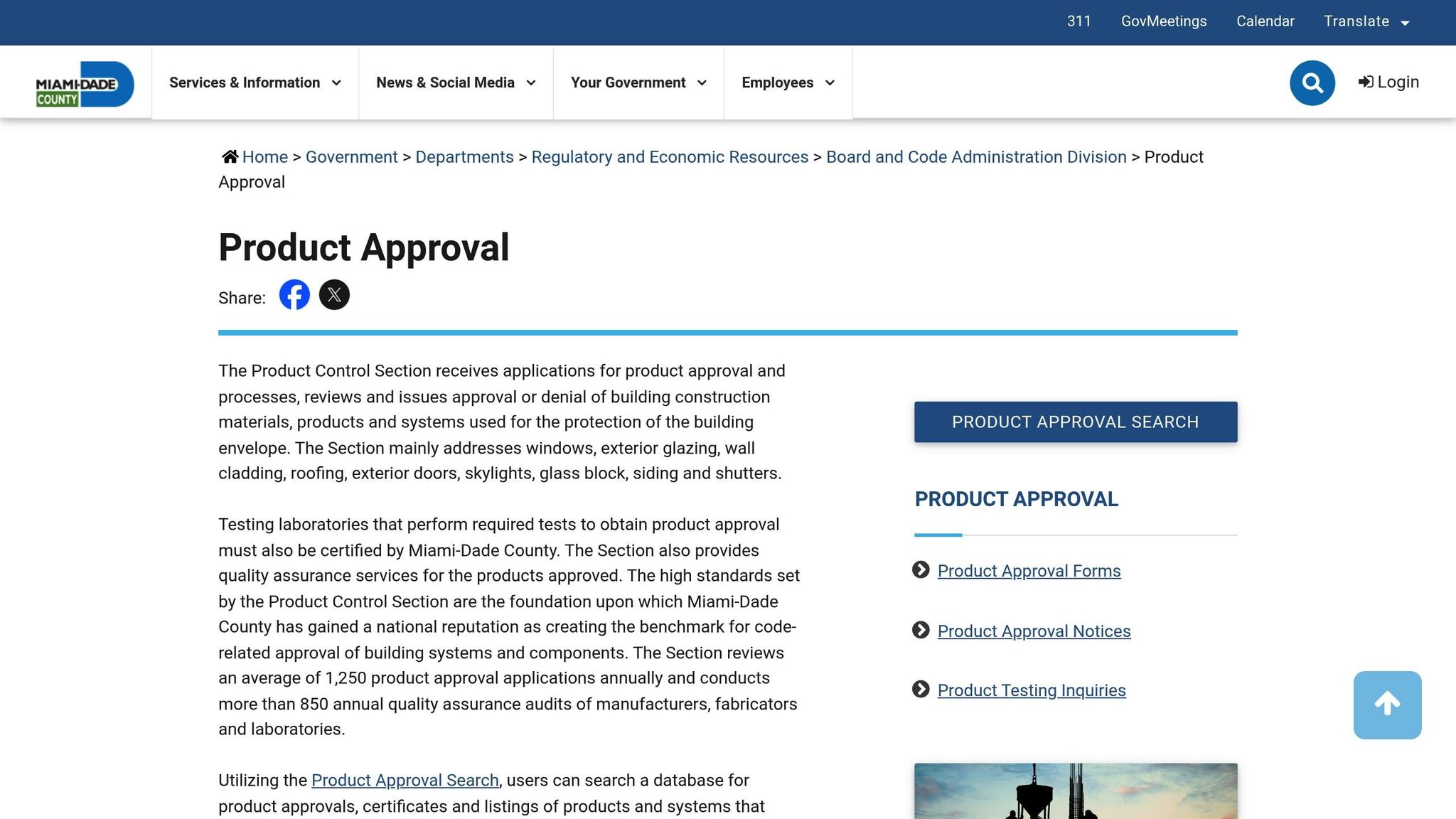
The Miami-Dade Notice of Acceptance (NOA) is often regarded as the gold standard for hurricane resistance. It certifies that products can withstand the punishing conditions of High Velocity Hurricane Zones (HVHZ). Another key metric is the Design Pressure (DP) rating, which measures how much wind force a door can resist. DP ratings usually range from 20 to 70, with higher numbers signaling greater strength. For example, a door with a DP-50 rating can stand up to 75 pounds per square foot (psf) of force, which translates to wind speeds of about 200 mph.
"A DP-50 rating indicates that hurricane impact front doors are resistant to 75 psf of force, equivalent to 200 mile per hour wind speeds." – DSA Doors
However, don’t just focus on wind speed when evaluating a door. The DP rating also factors in your home’s specific location, height, and the surrounding landscape. To make the right choice, consult a structural engineer to calculate the exact design pressure requirements for each opening in your home. Building codes typically require products to withstand test loads that are 1.5 times the specified design load, providing an added layer of safety.
Florida Building Code Compliance
The Florida Building Code (FBC) might be designed for Florida’s coastal areas, but it’s widely recognized along the Atlantic coast as a benchmark for hurricane-resistant construction. Many coastal areas in South Carolina follow these standards, especially in regions where debris and wind speeds can reach up to 140 mph or more.
"The Florida Building Code mandates their use statewide, with Miami-Dade County enforcing even stricter requirements in High Velocity Hurricane Zones (HVHZ) to withstand the most extreme wind and impact forces." – Steel Door Institute
This code ensures that every part of the door – whether it’s a latch or an anchor – works together to maintain the door’s integrity. To confirm compliance, check for FBC certification labels on the door or in the manufacturer’s details.
Large Missile Impact Testing (TAS 201)
The TAS 201 test is all about proving a door’s ability to withstand flying debris. To pass, a door must endure two impacts from a 9-pound 2×4, fired at 34 mph.
"To pass these tests, the products must resist penetration from a length of 2×4 framing lumber weighing 9 pounds fired twice from an air cannon at a speed of 34 miles per hour." – MW Millworks
But the testing doesn’t stop there. After the impact test, the door must survive 9,000 cycles of alternating positive and negative wind pressure. This simulates the intense and fluctuating forces a hurricane brings. The goal? To ensure the door stays intact and keeps your home sealed. If the building envelope is breached, internal pressure can cause catastrophic damage – like blowing off the roof or even collapsing the entire structure.
For the best protection in South Carolina’s coastal areas, look for doors with Miami-Dade NOA or NAMI certification labels. These certifications confirm the doors have passed both TAS 201 and TAS 203 testing protocols. These rigorous tests are your assurance that the door can handle the toughest challenges, helping you make an informed choice.
Types of Hurricane-Resistant Doors
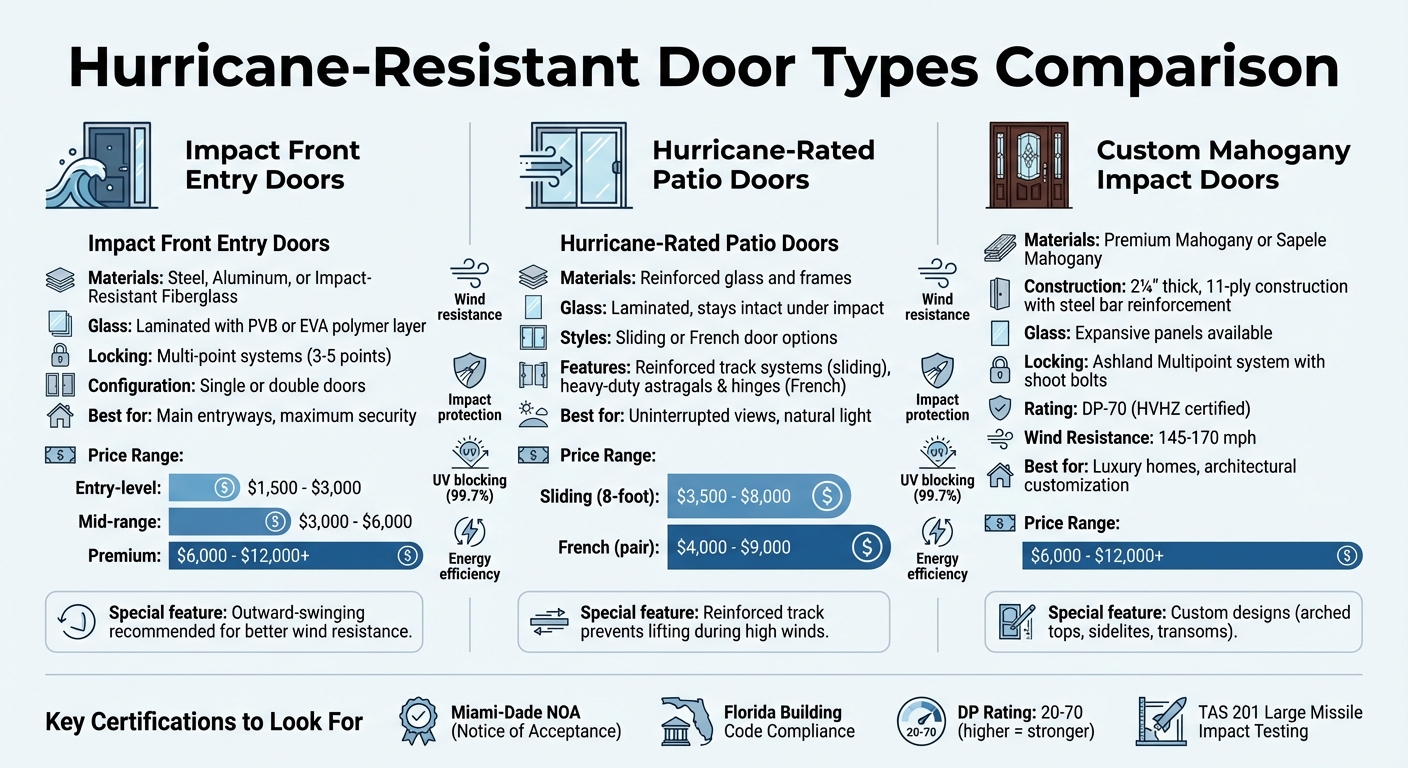
Hurricane-Resistant Door Types: Features, Prices & Specifications Comparison
In South Carolina, homeowners have access to a variety of hurricane-resistant doors that combine safety with style. The best choice depends on your home’s design, your budget, and the level of protection your location requires.
Impact Front Entry Doors
Impact-resistant entry doors are a solid choice for both security and aesthetics. These doors feature laminated glass with a polymer layer – usually PVB or EVA – that holds the glass together when struck, helping to prevent dangerous pressure changes that could damage your home’s structure. Built using heavy-duty steel, aluminum, or impact-resistant fiberglass, they’re designed to endure hurricane-force winds and resist corrosion from salty coastal air.
To maximize security, these doors often include multi-point locking systems that anchor the door to its frame at three or five points. For even more durability, outward-swinging designs are recommended, as the interior door stop adds extra resistance against powerful winds.
Costs vary depending on materials and features:
- Entry-level models (steel or basic fiberglass): $1,500 to $3,000
- Mid-range options (enhanced design and performance): $3,000 to $6,000
- Premium doors (custom wood, heavy aluminum, or large double-door setups): $6,000 to $12,000+
If you’re considering a double-door configuration, it’s essential to include reinforcements like slide bolts and heavy-duty astragals to maintain the same level of protection. These features ensure your home is well-prepared for intense hurricane conditions.
Hurricane-Rated Patio Doors
Hurricane-rated patio doors combine safety with uninterrupted views and natural light. Available in both sliding and French door styles, these doors use laminated glass that stays intact even under severe impact.
"Hurricane-impact doors are built with a stronger glass, panel and frame than ordinary doors, and are designed to withstand strong winds and impact from flying debris." – Samantha Hageman, Pella
Sliding patio doors are equipped with reinforced track systems to prevent the panels from lifting during strong winds. French doors, on the other hand, come with heavy-duty astragals and reinforced hinges for added stability.
Here’s a look at typical costs:
- Sliding glass doors: $3,500 to $8,000 for an 8-foot opening (including installation)
- French doors: $4,000 to $9,000 for a pair
For the best results, consider outward-swinging models. Like with entry doors, this design uses the interior door stop to provide extra wind resistance.
Custom Mahogany Impact Doors
If you’re after a combination of luxury and protection, custom mahogany impact doors are a standout option. These doors offer natural elegance while delivering hurricane-grade durability. Made entirely from premium mahogany or Sapele mahogany, they’re built to withstand the challenges of coastal environments.
Custom mahogany doors can be tailored to suit various architectural styles. Whether you prefer traditional raised panels and arched tops or sleek, modern designs with expansive glass panels, there’s a configuration to match your home. Options include single or double doors, bi-hinge setups, and the addition of sidelites or transoms for a grand entryway.
"Our 2 ¼" thick luxury doors feature 11-ply construction to last for generations. Every DSA impact door is reinforced with steel bars and utilizes shoot bolts along with an Ashland Multipoint Locking system for maximum safety and security." – DSA Doors
These doors often achieve DP-70 ratings, certifying them for High Velocity Hurricane Zones (HVHZ) and ensuring they can handle wind speeds of 145 to 170 mph. Prices for custom mahogany doors typically start at $6,000 and can climb above $12,000 for oversized designs with premium finishes and hardware. While fiberglass requires less upkeep and steel provides maximum security, mahogany remains a favorite for high-end homes due to its timeless beauty and adaptability for intricate designs.
Each of these options ensures your home is prepared to withstand the challenges of hurricane season while complementing your personal style.
Benefits Beyond Storm Protection
Hurricane-resistant doors do more than just shield your home from storms. They offer year-round advantages that enhance comfort, cut costs, and bring peace of mind. From improving energy efficiency to reducing outside noise, these doors provide value far beyond storm protection.
Energy Efficiency and Noise Reduction
The same features that make hurricane-resistant doors tough against storms also help regulate your home’s temperature. Impact-resistant laminated glass is often made with multiple panes, low-emissivity (low-e) coatings, and argon gas fills, all working together to reduce heat transfer. In South Carolina’s warm climate, doors with a low Solar Heat Gain Coefficient (SHGC) are particularly effective at keeping unwanted heat out.
Insulated steel and fiberglass impact doors offer impressive thermal performance, with R-values ranging from R-5 to R-6 – more than five times better than standard solid wood doors. These doors also come with reinforced frames and tight weatherstripping, significantly cutting down on air leaks and drafts.
"Your home’s exterior doors can contribute significantly to air leakage, and can also waste energy through conduction, especially if it’s old, uninsulated, improperly installed, and/or improperly air sealed." – U.S. Department of Energy
Noise reduction is another bonus. The laminated glass and sturdy frames work together to absorb sound vibrations, keeping out noise from traffic, construction, or noisy neighbors. Many homeowners report a noticeable drop in outside noise immediately after installing these doors.
Increased Security and Durability
Beyond energy savings and noise control, hurricane-resistant doors add an extra layer of security. The laminated glass includes a thermoplastic interlayer that’s 5 times stronger than regular safety glass, making it nearly impossible for intruders to break through. This feature helps deter break-ins and protects against "smash-and-grab" thefts.
"Laminated security glass… doubles as a security upgrade for your property." – Muhler
Designed to withstand harsh coastal conditions, these doors come with corrosion-resistant hardware and weatherproof seals that hold up against salt air, high humidity, and extreme heat. Multi-point locking systems secure the door at several points along the frame, offering much stronger protection than a standard deadbolt. Additionally, the impact-resistant glass blocks 99.7% of harmful UV rays, helping to preserve your furniture and flooring.
sbb-itb-cdbcc3e
Installation Tips for South Carolina Homes
Getting your door installation right is crucial – no matter how sturdy the door itself is, it won’t perform well without proper framing, anchoring, and sealing. Here are some essential tips to help prepare your door for South Carolina’s hurricane season.
Proper Framing and Sealing
The weakest link during hurricanes is often where the door meets the wall structure. To strengthen this connection, replace standard hinge screws with 3-inch screws that anchor directly into the wall studs.
Keep the gap between the door frame and the rough opening to 1.5 inches or less. If the gap is larger, install structural bucks that secure the frame to the wall.
"Anchorage failures can allow the entire door to be ripped from the wall… Either type of failure results in the failure of the building envelope and allows wind and water to enter the building." – PNNL/Building America Solution Center
For homes located within 3,000 feet of the ocean, use stainless steel hardware, including frame anchors and fasteners, to resist the corrosive effects of salt air. Opt for outward-swinging doors, as their interior door stops provide better wind resistance. Additionally, seal the threshold directly to the door frame to block wind-driven rain.
Once the frame is securely in place, focus on installing flashing to keep water from infiltrating.
Overhang and Threshold Requirements
Pan flashing at the threshold is a must – it protects your subfloor in case the primary seal fails. Above the door, install drip flashing with an overlapping hook design to divert water away from the door opening. Together, these flashing components help keep wind-driven rain outside where it belongs.
If your home features overhangs above the door, make sure they’re reinforced with ladder-framed gable techniques. Use 2x framing and structural sheathing to withstand wind speeds of up to 160 mph. Overhangs not only shield your door from direct rain and UV exposure but also help reduce heat buildup in South Carolina’s hot climate.
| Installation Component | Hurricane Requirement |
|---|---|
| Hinge Screws | 3 inches long, anchored into wall studs |
| Gap Management | No more than 1.5 inches; structural bucks required if exceeded |
| Coastal Hardware | Use stainless steel within 3,000 feet of the shoreline |
| Pan Flashing | Protects subfloor at the threshold |
| Drip Flashing | Overlapping hook design for water redirection |
Finally, don’t remove or paint over the impact-resistance label on the edge of your door. This label is essential for inspections and insurance claims. Proper installation not only safeguards your home but also preserves its value and your peace of mind.
Icon Window & Door Hurricane Solutions
When it comes to hurricane-resistant doors, Icon Window & Door stands out as a trusted local expert for the Charleston and Lowcountry region. Since opening in 2020, the company has combined durable storm protection with a focus on style, catering to the unique needs of coastal homes.
Custom Exterior Doors for Coastal Homes
Icon Window & Door offers a variety of hurricane-resistant door options tailored to South Carolina’s challenging coastal climate. Their fiberglass exterior doors are designed with realistic wood-grain textures, offering a balance of durability and energy efficiency. For homeowners who prioritize strength, heavy-gauge steel front doors are available in custom designs and finishes. If patio doors are on your mind, they’ve got you covered too, with French doors, sliding glass doors, and bi-fold options that let in plenty of natural light while still providing top-notch storm protection.
Each door comes with impact-resistant glass, weatherproof seals, and corrosion-resistant hardware – features specifically designed to handle South Carolina’s toughest weather conditions. Icon partners with well-known manufacturers like PGT Sliders, Neuma Doors, Masonite, Rogue Valley Doors, and French Steel Windows and Doors to ensure their products meet the highest storm-rated standards. Whether you’re looking for wood, fiberglass, steel, or clad finishes, customization options include sizes, colors, and hardware, making it easy to match your door to your home’s style, whether it’s a historic Lowcountry property or a sleek modern build.
"We offer doors and windows designed to withstand Charleston’s heat, humidity, salt air, and storms – built for lasting performance." – Icon Window & Door
Professional Installation and Warranty
Even the strongest hurricane-rated door won’t perform at its best without expert installation. Icon Window & Door provides end-to-end service, from helping you choose the right door to ensuring precise installation. Their team takes care of every detail, including frame reinforcement, strike plate upgrades with extra-long screws, and proper alignment of locks and hardware. This attention to detail ensures your door is securely anchored for both storm protection and energy efficiency.
All installations come with a one-year workmanship warranty that covers labor and fitting. While product warranties are handled by the manufacturers, Icon’s team walks you through the specifics of your chosen door’s coverage. They also offer complimentary site visits, where experts evaluate your home’s exposure and recommend the best solutions for your coastal location. Known throughout the Lowcountry for quality and reliability, Icon Window & Door has built a reputation for delivering hard-to-find custom sizes and exceptional service.
Conclusion: Protecting Your Home and Investment
Hurricane-resistant doors do more than just safeguard your home during storms – they also increase its long-term value. These doors are designed to maintain your home’s structural integrity during severe weather by keeping the building envelope intact. Thanks to laminated glass that stays in place even when cracked, they provide an extra layer of protection for your family against flying debris.
But the benefits extend beyond storm protection. These doors enhance everyday living in several ways:
- UV Protection: They block up to 99.7% of harmful UV rays, helping to prevent furniture and flooring from fading.
- Noise Reduction: They minimize outside noise while boosting energy efficiency.
- Security: Multi-point locking systems make them a strong deterrent against break-ins.
- Financial Perks: Lower insurance premiums and increased property value are added advantages.
To ensure maximum performance, choose doors that meet stringent standards like the Florida Building Code and Miami-Dade certifications. Professional installation is equally important – no matter how strong a door is, improper fitting or anchoring can compromise its effectiveness. Regular maintenance, including checking hardware and weatherstripping, will keep your doors functioning at their best.
When it comes to selecting and installing hurricane-resistant doors, expertise matters. Icon Window & Door has over 50 years of combined experience helping South Carolina homeowners find solutions tailored to their unique coastal environment. Their team understands the challenges of heat, humidity, salt air, and storms in the Lowcountry. They offer custom options that combine protection with aesthetic appeal, backed by a one-year workmanship warranty and complimentary site visits. Trust Icon Window & Door to secure your home while enhancing its beauty and value.
FAQs
What are the benefits of installing hurricane-resistant doors in South Carolina homes?
Installing hurricane-resistant doors is a crucial step for South Carolina homeowners looking to protect their homes from the region’s severe storms and high winds. These doors are built with reinforced frames, impact-rated glass, and water-tight seals, offering a strong defense against flying debris and heavy rain. By keeping the elements at bay, they help protect both your home and loved ones while preserving the structural integrity of your property. This added layer of protection can also save you from the headache and expense of major repairs after a storm.
But the benefits don’t stop at storm protection. These doors are also designed with energy efficiency and durability in mind. Their insulated, airtight construction helps keep your home’s temperature steady, which can reduce heating and cooling costs. Plus, the tough materials used in their construction resist corrosion from South Carolina’s salty coastal air, ensuring they perform well for years to come. On top of that, installing certified impact-rated doors may qualify you for reduced insurance premiums, making them a smart, long-term investment.
For homeowners looking to combine safety with style, local specialists like Icon Window & Door offer a range of hurricane-rated doors that meet South Carolina’s building codes. These options provide not only the protection you need but also designs that enhance your home’s overall look.
What makes hurricane-resistant doors different from standard doors?
Hurricane-resistant doors are crafted to endure the most severe weather conditions. They incorporate reinforced materials such as heavy-duty steel or fiberglass frames, impact-rated laminated glass, and durable hardware like robust hinges and deadbolts. Additionally, these doors are designed with tight, weather-sealed construction to block out wind and water effectively.
What sets them apart from regular doors is the rigorous testing they undergo to meet strict impact and pressure standards. This ensures they can handle intense winds and flying debris. Their combination of safety and durability makes them a smart investment for homes in hurricane-prone regions, including South Carolina.
What safety certifications should I check for when buying hurricane-resistant doors for my South Carolina home?
When selecting hurricane-resistant doors, it’s essential to prioritize certifications that confirm their ability to meet rigorous safety and performance standards. Look for certifications like the Miami-Dade County product approval or compliance with the Florida Building Code – both indicate that the door has been tested to endure high winds and impacts.
You should also consider doors that meet ASTM E1886/E1996 impact standards, which evaluate their resistance to windborne debris, and those carrying ICC 500 certification, which confirms they meet storm-shelter assembly requirements. Another strong choice is doors listed under the Insurance Institute for Business & Home Safety (IBHS) Fortified Home Hurricane Standard, as these are specifically designed to offer increased protection during severe weather.
These certifications provide confidence that your home is better equipped to handle hurricanes, helping to safeguard both your family and property.