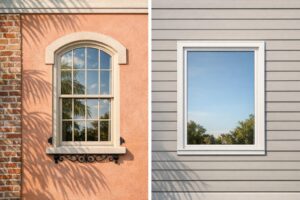
Upgrading your doors can save you money and keep your home comfortable year-round. Poorly installed or outdated doors are a major source of energy loss, especially in Charleston’s hot, humid climate. Even tiny gaps around doors can let in unwanted heat and humidity, forcing your HVAC system to work harder and driving up energy bills.
Key takeaways:
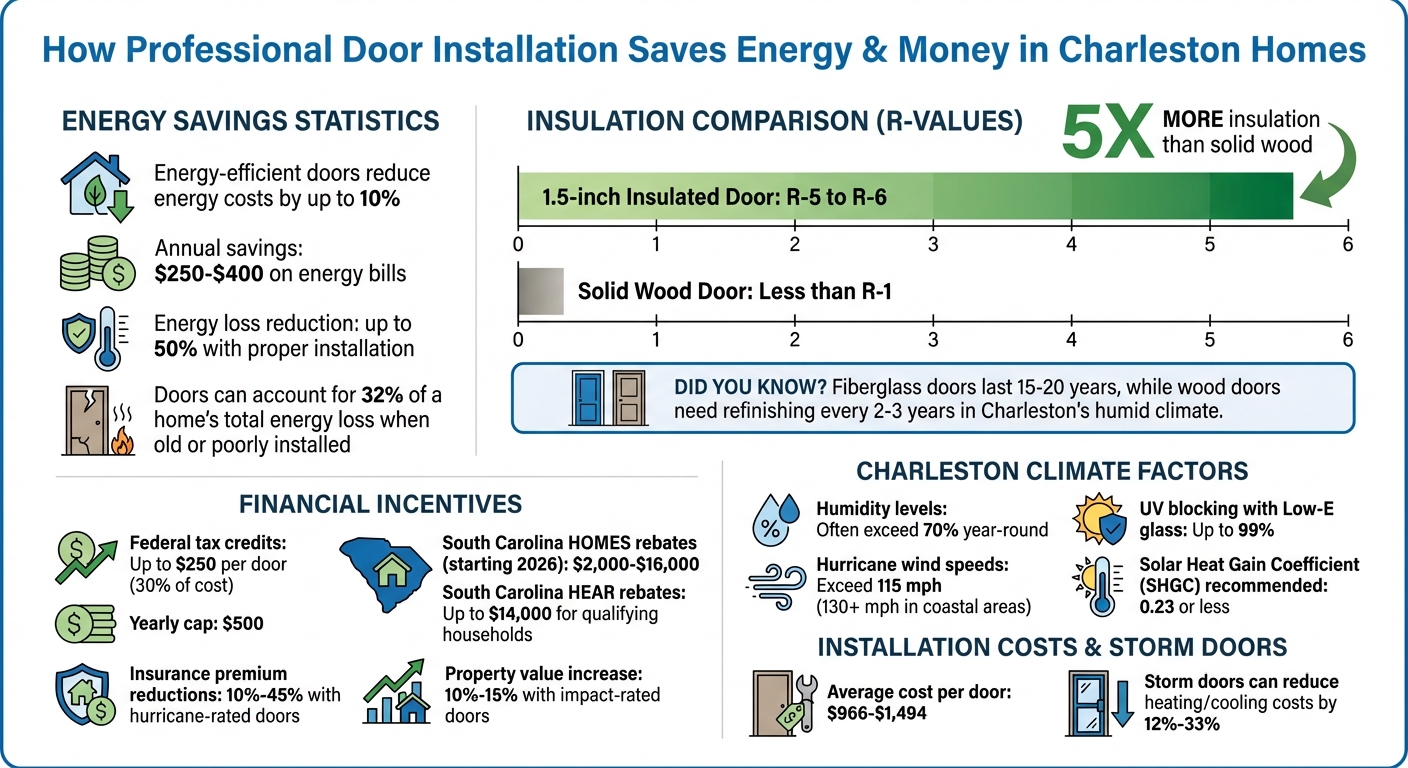
- Energy-efficient doors (insulated steel or fiberglass) can lower energy costs by up to 10%.
- Proper installation ensures a tight seal, reducing air leaks and maintaining indoor temperatures.
- Charleston’s climate challenges, like humidity and storms, make professional installation essential for durability and efficiency.
- Rebates and tax credits can offset costs, with potential savings of $250–$400 annually on energy bills.
Professional door installation not only improves energy efficiency but also protects your home from moisture, drafts, and storm damage. Investing in high-quality doors and expert installation pays off in comfort, cost savings, and long-term performance. Working with a trusted window and door supplier ensures you select the right products for the Lowcountry climate.
Energy Savings from Professional Door Installation in Charleston Homes
How Doors Cause Energy Loss
Air Leaks and Drafts
Exterior doors can weaken your home’s protective barrier, especially when they aren’t sealed properly. These gaps create an open invitation for air to flow between your cozy, climate-controlled interior and Charleston’s hot, humid outdoor air. Over time, natural wear and seasonal changes can make these gaps worse, leading to noticeable energy loss.
Charleston’s climate adds extra challenges for wooden doors. One easy way to spot air leaks is to look for visible light around the edges of your door, a clear sign that air is slipping through. These leaks force your HVAC system to work overtime, using more energy to maintain a comfortable temperature. This not only increases your utility bills but also puts unnecessary strain on your heating and cooling equipment.
But air leaks aren’t the only issue – poor insulation also plays a big role in energy inefficiency.
Poor Insulation
Uninsulated doors allow heat to pass through them easily, a process known as thermal conduction. Older doors, like solid wood or hollow-core designs, are particularly bad at resisting heat transfer compared to modern options. For instance, a 1.5-inch insulated door can have an R-value more than five times higher than a solid wood door.
Doors with glass inserts make the problem worse. Single-pane glass acts like a magnifying glass, amplifying heat gain during Charleston’s sweltering summers. In contrast, modern insulated steel and fiberglass doors usually have R-values between R-5 and R-6, while older wood doors often struggle to reach even R-1.
These insulation issues are especially problematic in Charleston’s unique weather conditions.
Charleston’s Climate Challenges
Charleston’s coastal environment amplifies door-related energy loss. The area’s high humidity takes a toll on door seals, causing them to swell and break down over time, which only worsens energy inefficiency.
"We have such high humidity in Charleston that wooden door swelling is super noticeable." – Morgan, Co-founder, Charleston Crafted
Coastal storms add another layer of difficulty. Wind-driven rain and high-pressure events can exploit even the smallest gaps in door seals. Salt air also speeds up the wear and tear on weatherstripping, especially on in-swinging doors that are more exposed to the elements. Beyond energy loss, poorly sealed doors can let moisture seep in, leading to wood rot, mold, and even termite infestations. This makes Charleston a hotspot for damage from wood-destroying organisms.
Fixing these vulnerabilities through expert door installation in Charleston is key to improving energy efficiency.
sbb-itb-cdbcc3e
What Makes Doors Energy-Efficient
Insulated Cores and Thermal Breaks
Modern steel and fiberglass doors with insulated cores are game-changers when it comes to energy efficiency. These doors often feature a polyurethane foam core encased in durable materials, creating a strong barrier against heat transfer. For example, a 1.5-inch insulated door can provide up to five times more insulation than a solid wood door, with R-values ranging from R-5 to R-6. In homes with metal frames or large glass panels, thermal breaks – usually made from plastic or vinyl – help stop heat from moving through the door. Fiberglass doors, in particular, are a smart choice for Charleston’s humid, coastal climate since they resist warping, rotting, and swelling. To further cut down on unwanted heat, look for doors with a low Solar Heat Gain Coefficient (SHGC), which is especially important in cooling-heavy climates like Charleston’s. Pair these features with high-quality weatherstripping to ensure a tight seal and optimal energy savings.
Quality Weatherstripping
Even the most insulated door won’t work effectively without proper weatherstripping. This crucial component seals the gap between the door and its frame, keeping your cool, conditioned air inside while blocking out Charleston’s humid air. Magnetic weatherstripping is a popular option for steel and fiberglass doors, working much like the seal on a refrigerator. For other door types, tension seals, also known as V-strips, create a durable barrier, and a good door sweep helps prevent drafts at the bottom. Not sure if your weatherstripping is doing its job? Try the paper test: close the door on a sheet of paper – if it slides out easily, it’s time to replace the weatherstripping. With proper weatherstripping and insulation, you could see energy bill savings of up to 10%. In coastal areas, out-swinging doors are a smart choice since their weatherstripping is positioned inside, offering extra protection against salt spray and moisture. To keep everything working as it should, inspect your weatherstripping annually for cracks or loss of elasticity.
Types of Energy-Efficient Doors
When it comes to energy-efficient doors, options with strong insulation and tight seals are the best performers. Insulated steel and fiberglass doors are often considered the top choice for Charleston homes. Their foam-insulated cores provide excellent thermal performance. Steel doors with magnetic weatherstripping create a tight, refrigerator-like seal, while fiberglass options excel in humid conditions. For patio doors, swinging French-style doors generally seal better than sliding glass doors, which can develop air leaks over time. If you prefer doors with glass panels, go for double or triple-pane glass with low-emissivity (low-e) coatings and argon gas fills to improve insulation. Adding storm doors can also help reduce heating and cooling costs by 12% to 33%. However, avoid glass storm doors for entryways that get a lot of sun, as trapped heat can damage the main door.
For those looking to save even more, ENERGY STAR-certified doors might qualify for federal tax rebates of up to $250 per door, with a yearly cap of $500. While choosing the right door is important, professional installation is essential to ensure you get the most out of these energy-saving features.
Why Professional Installation Matters
Proper Door Alignment and Fit
A door that looks great still falls short if it’s not aligned correctly. Professional installers make sure the doorframe is square and level, ensuring a snug seal against the jamb and smooth operation without dragging on the threshold. They work with a rough opening that’s typically 1.5 to 2 inches larger than the door frame, giving them the space needed to position and secure the door properly.
Alignment is no small task – it requires precise adjustments to hinges and interlocking metal channels. Even minor misalignments can compromise the weather seal. To confirm their work, professionals use tools like blower door tests, infrared cameras, or smoke pencils to detect even the tiniest air leaks. A well-installed door opens and closes effortlessly while maintaining consistent contact with the weatherstripping when shut. If you notice light peeking through the edges, it’s a sign the alignment isn’t right. Proper alignment is key to ensuring a tight seal, which helps prevent air leakage.
Sealing and Insulation Methods
To fill gaps between the door frame and the rough opening, professionals use non-expanding spray foam or insert closed-cell polyethylene backer rods into gaps wider than 1/4 inch. They then apply a bead of silicone or polyurethane caulk to create a flexible, airtight seal. Research indicates that this method can dramatically reduce leakage, cutting the equivalent leakage area from 28.2 cm²/m² to just 0.5 cm²/m².
In areas like Charleston, where coastal climates pose extra challenges, installers also add waterproof flashing around the exterior frame, integrating it seamlessly with the house’s existing wrap. Sealants are applied near the interior edge of the door unit, allowing the exterior joint to drain moisture and equalize pressure with the outside.
"The U.S. Department of Energy confirms that an incorrectly installed door can lose significant heating and cooling energy each year".
These methods not only improve energy efficiency but also ensure compliance with strict local building codes.
Meeting Local Building Codes
Charleston’s coastal environment demands doors that meet rigorous standards for hurricane and high-wind resistance. Professional installers ensure exterior doors are pressure- and impact-rated to handle wind-driven rain and extreme pressures. This is not just about energy efficiency; it’s also a matter of safety. If doors or windows fail during a storm, internal wind pressures can double the forces exerted on a home’s roof and walls.
Installers adhere to the International Residential Code (IRC) Section R703.4, which specifies the use of proper flashing to keep moisture out of the wall system. In high-wind areas like Charleston, out-swinging doors are often preferred because wind pressure helps them stay securely sealed against the weatherstripping. By using the right anchoring and sealing techniques, professionals ensure the door remains firmly in place during storms, protecting both your home’s energy efficiency and structural safety.
Energy Savings and Cost Benefits
Expected Energy Cost Reductions
Homeowners in Charleston who upgrade to energy-efficient doors can expect to save between $250 and $400 annually on their energy bills. These savings stem from minimizing energy loss, which can account for up to 32% of a home’s total energy use when old or poorly installed doors are in place. By installing energy-efficient doors, energy loss can be cut by as much as 50%.
Federal rebates make these upgrades even more accessible. Starting in 2026, South Carolina will introduce two rebate programs to help offset installation costs. The Home Efficiency Rebates (HOMES) program offers incentives ranging from $2,000 to $16,000 for whole-home energy improvements, while the Home Electrification and Appliance Rebates (HEAR) program provides up to $14,000 for households earning less than 150% of the area median income. The best part? These rebates are applied directly to the purchase price and are not considered taxable income. Additionally, many Charleston-based installers provide promotional financing options, such as 18 months of no-interest payments with no money down until the project is finished.
When you combine annual energy savings with these generous rebates, the return on investment becomes clear. With installation costs ranging from $966 to $1,494 per door and federal tax credits covering 30% of the cost (up to $250 per door), homeowners can recoup their investment in no time.
Financial Benefits for Charleston Homes
The financial perks of energy-efficient doors go beyond just cutting energy bills. Charleston’s hot and humid summers, where temperatures often soar above 90°F, put a heavy strain on air conditioning systems. Energy-efficient doors are specifically designed to combat this. For example, doors with a low Solar Heat Gain Coefficient (SHGC) of 0.23 or less effectively block solar heat from entering your home, reducing the cooling load significantly.
Doors made from insulated steel or fiberglass, known for their high R-values, provide excellent insulation by keeping cooled air inside. This reduces the frequency at which your HVAC system needs to operate to maintain comfortable indoor temperatures. Over time, this enhanced insulation translates into consistent monthly savings on energy bills, making energy-efficient doors a smart and practical investment for Charleston homeowners.
Door Solutions for Charleston’s Coastal Climate
When it comes to energy efficiency and protection, specialized door solutions are essential for Charleston’s unique coastal conditions.
Hurricane-Rated Doors
Living in a hurricane-prone area like Charleston means dealing with wind speeds exceeding 115 mph, with some coastal homes facing debris risks at speeds over 130 mph. Hurricane-rated doors are designed to handle these challenges while also improving energy efficiency. These doors undergo rigorous testing, including the "Large Missile Test", where they must withstand a 9-pound 2×4 board traveling at 50 feet per second. Unlike manual shutters that need to be installed before each storm, impact-rated doors offer constant protection.
Beyond storm safety, these doors enhance insulation and cut down on energy loss. Their insulated polyurethane foam cores achieve R-values between R-5 and R-6, while laminated, impact-resistant glass with Low-E coatings helps lower cooling costs and blocks up to 99% of harmful UV rays. Reinforced weatherstripping prevents air leaks, further boosting efficiency. Although these doors cost 15% to 30% more than standard options, the investment can lead to insurance premium reductions of 10% to 45% and property value increases of 10% to 15%.
Resistance to Salt and Humidity
Charleston’s coastal climate, with year-round humidity levels often exceeding 70%, demands materials that can withstand constant exposure to moisture. Fiberglass doors are a top choice for coastal homes as they resist salt air corrosion, humidity, decay, and pest damage, all while maintaining energy efficiency with R-values between R-5 and R-6. As one door installation expert from Muhler noted:
"A quality fiberglass entry door installed in a coastal home can easily last 15-20 years with minimal maintenance, compared to wood doors that might need refinishing every 2-3 years and can warp in our humidity."
For homes within 3,000 feet of the shoreline, fiberglass or vinyl frames paired with Grade 316 stainless steel hardware are recommended to prevent corrosion. Steel doors are another option for security, but scratches must be addressed immediately to prevent rust in the salty air. Additionally, outward-swinging doors are better suited for wind resistance, as the interior door stop provides more structural strength than latch mechanisms alone.
Compliance with Local Standards
Ensuring doors meet Charleston’s building codes is crucial, especially for windborne debris regions. Doors must comply with ASTM E1996 and ASTM E1886 standards. Proper installation techniques – like using pan flashing at the base and drip flashing at the head – are essential for keeping wind-driven rain out of the subfloor and frame. These steps not only protect your home during storms but also help you qualify for insurance discounts and maintain your property’s resale value.
It’s a good idea to inspect exterior doors and hardware before each hurricane season to ensure they remain compliant and functional. Regular maintenance and professional care will keep your doors performing well and continue the energy-saving benefits of a proper installation.
Conclusion
Getting a professional to install your doors can make a big difference in energy efficiency. It helps seal out drafts and reduces the strain on your HVAC system, which means lower energy bills each month. Properly installed doors are key to preventing air leaks and minimizing heat transfer.
In Charleston’s unique climate, doors also need to stand up to moisture, salt air, and frequent swelling. Fiberglass and insulated steel doors are excellent choices – they offer better insulation than traditional wood doors and are less likely to warp in the Lowcountry’s humid conditions.
Precise installation does more than just cut energy loss – it ensures your door performs its best. Professionals align doors perfectly, fill gaps with expanding foam, and apply high-quality weatherstripping to keep energy from slipping away. These are details that DIY projects often miss.
With over 50 years of experience, Icon Window & Door specializes in coastal-ready door installations that combine style, security, and energy efficiency.
Book a free consultation with Icon Window & Door to start saving on energy costs and protecting your home. Their expertise in tailoring door solutions to Charleston’s climate ensures your investment will provide comfort and performance for years to come.
FAQs
How do I know my door is leaking air?
To spot air leaks, start by examining the door frame for any visible gaps or cracks. On cold or windy days, you can also feel for drafts around the edges of the door. For pinpoint accuracy, consider hiring a professional to perform a blower door test, which can reveal even the smallest leaks. If you’d rather handle it yourself, visually check the door’s seal and run your hand along the edges to detect any drafts or problem spots.
What door material works best in Charleston’s humidity?
Fiberglass and composite doors are a great fit for Charleston’s humid weather. These materials are designed to resist moisture, which means they’re far less likely to warp, swell, or rust in the coastal air. Their sturdy construction ensures they hold up well over time, even when faced with high humidity levels.
Is a storm door worth it for energy savings?
A storm door adds an extra layer of insulation, helping to cut down on drafts and limit heat loss or gain. When installed by a professional, it can be a smart way to improve indoor comfort while potentially reducing energy costs over time.