
Smart windows are reshaping home security by addressing a key vulnerability: windows account for 23% of break-ins, especially during the day when homes are often empty. These advanced systems combine sensors, locks, alarms, and remote monitoring to provide real-time alerts and peace of mind. Here’s what you need to know:
- Glass Break Sensors: Detect shattering glass instantly using sound and vibration technology, ensuring quick responses.
- Smart Locks: Use biometrics and remote control to secure windows, eliminating traditional keys.
- Motion Sensors: Monitor activity near windows, even when they’re open, adding an extra layer of protection.
- Integrated Alarms: Trigger loud sirens, lights, and alerts for immediate action during breaches.
- Smart Home Integration: Control and monitor windows remotely via apps, voice assistants, and automation routines.
These features not only help deter intruders but also reduce human error, like forgetting to lock windows, and can even lower insurance costs. If you’re upgrading security, focus on ground-floor windows first for maximum impact.
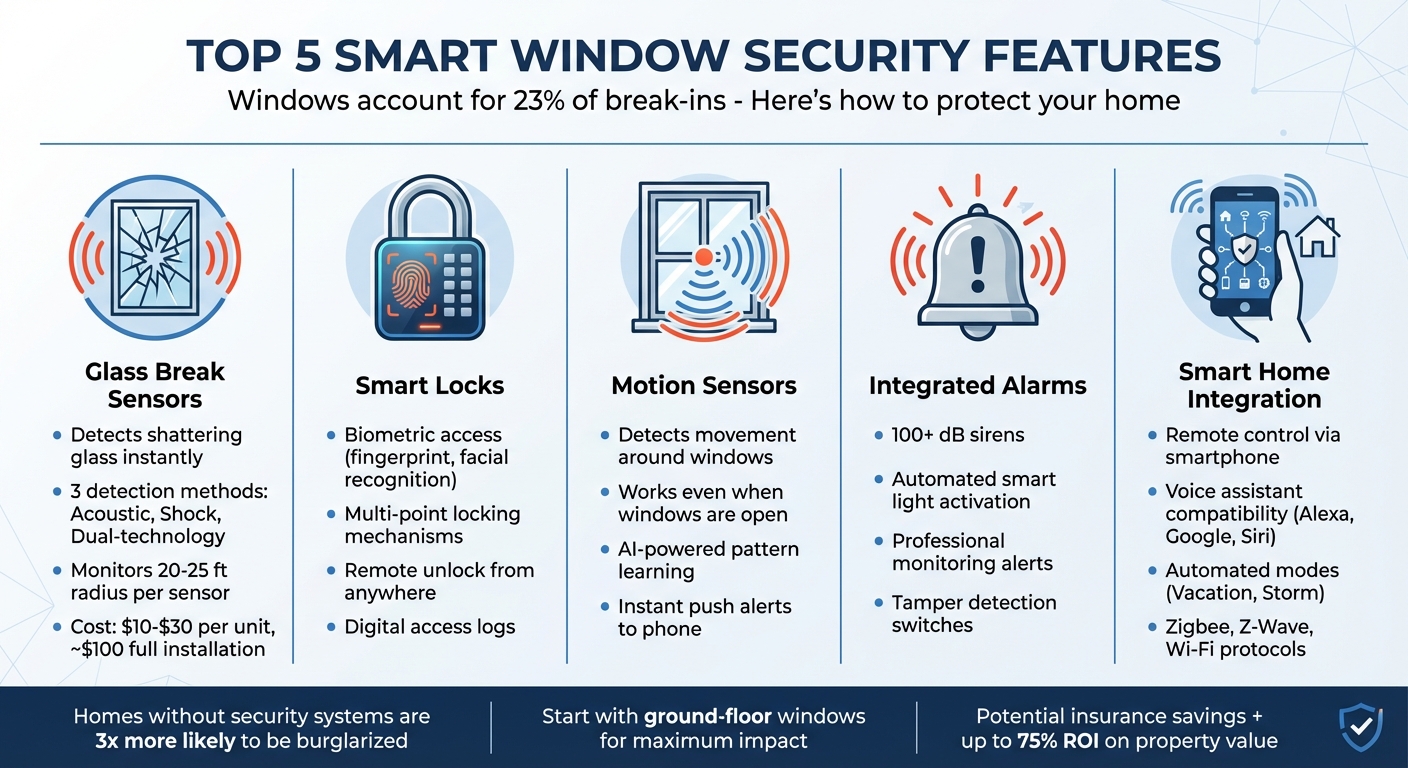
5 Smart Window Security Features That Protect Your Home
1. Glass Break Sensors
Glass break sensors are designed to detect the sound of breaking glass, filling a security gap left by standard contact sensors. While contact sensors activate only when a window is physically opened, glass break sensors respond immediately to the sound of glass shattering – often before an intruder has a chance to enter your home.
These sensors rely on three main detection methods. Acoustic sensors use microphones to pick up the high-frequency sound of breaking glass and can monitor multiple windows from a single location, typically within a 20–25 ft radius. Shock sensors attach directly to the glass and react to physical vibrations caused by an impact, requiring one sensor per window. Dual-technology sensors combine both sound and vibration detection, triggering only when both signals are detected. This combination helps reduce false alarms significantly. Together, these technologies ensure quick detection and a prompt security response.
Real-Time Notifications and Monitoring
When glass breaks, you’ll receive an instant alert on your mobile device. From there, you can check the situation using connected cameras or rely on professional monitoring services to notify authorities if necessary.
"Glass break sensors add an additional layer of security to your home, especially when used alongside other home security devices like window and door sensors, as well as motion sensors." – Tim Rader, Senior Director of Product Development, ADT
Integration with Home Security Systems
Glass break sensors are particularly effective when integrated into a broader home security system. After detecting a break, these sensors can trigger a coordinated response through your smart home setup. Unlike motion sensors, which are sometimes turned off to prevent false alarms, glass break sensors stay active 24/7, providing continuous protection. Some advanced models, like the DSC PowerG, even include tamper protection, notifying you if someone attempts to disable or remove the device.
For areas like first-floor windows, basements, or sliding glass doors, these sensors are both affordable and effective. Individual units typically cost between $10 and $30, with full-home installations averaging around $100. For the best performance, Tim Rader suggests placing sensors 5 to 20 feet from windows or doors.
sbb-itb-cdbcc3e
2. Smart Locks and Remote Locking Systems
Smart locks take window security to the next level by transforming windows from simple barriers into active security measures. Unlike traditional keyed locks, these advanced systems use biometric technology – like fingerprints, facial recognition, or iris scans – to control access. This eliminates the hassle of lost or duplicated keys entirely. Many smart locks also feature multi-point locking mechanisms, which secure the window sash at multiple points using hooks, bolts, and rollers. This makes it far more challenging for intruders to pry open a window without specialized tools. When paired with sensor-based systems, these locks create a seamless and robust security network.
Remote Access and Control
With smart window locks, your smartphone becomes a powerful security hub. You can check the lock status of your windows from anywhere, giving you peace of mind even when you’re away. These systems also maintain digital access logs, recording when and by whom each window was accessed. Need to let a service provider in while you’re out? You can unlock specific windows remotely, no matter where you are. This level of control pairs perfectly with on-site tamper alerts, ensuring constant vigilance.
Tamper Detection and Alerts
Smart locks are designed to alert you instantly if tampering or unexpected openings occur. For instance, if someone tries to force a lock or a window opens without authorization, you’ll receive a notification on your mobile device. These systems can also send reminders if windows are left unlocked, helping reduce human error. Since first-floor windows are often a target for intruders, this feature acts as an essential early warning system.
Integration with Home Security Systems
To maximize their effectiveness, smart window locks should be integrated into your overall home security setup. For example, if a window is opened unexpectedly at night, the system can trigger automatic responses, such as turning on lights inside and outside the house to deter intruders. Ensure your smart locks are compatible with protocols like Zigbee, Z-Wave, or Wi-Fi for seamless connectivity. Many systems now also support voice commands via assistants like Alexa, Google Assistant, or Siri, making hands-free monitoring and control more convenient than ever.
3. Motion Sensors and Activity Detection
Motion sensors take home security a step further by monitoring the areas around your windows, not just the windows themselves. Unlike glass break sensors or smart locks, which focus on specific points, motion sensors provide an additional layer of protection by detecting movement in the surrounding space. This means they can trigger alarms before an intruder even reaches the glass. It’s a proactive way to catch potential threats early.
One of the standout benefits of motion sensors is their ability to protect your home even when windows are open for ventilation. While contact sensors rely on a closed window to work, motion sensors cover the entire area. For instance, if you leave a ground-floor window open on a warm evening, motion sensors will still monitor for any unauthorized movement nearby, keeping you secure.
Real-Time Notifications and Monitoring
When motion sensors detect activity, they spring into action by activating alarms, lights, and notifications. These sensors can be programmed to send push alerts directly to your phone, whether you’re lounging upstairs or away at work. This instant response ensures you’re always in the loop when something unusual happens.
To make them even smarter, many motion sensors use AI to learn your household’s daily patterns. This helps them identify unusual activity while minimizing false alarms. Considering that ground-floor windows are among the most common entry points for burglars, placing motion sensors in these high-risk areas significantly boosts your home’s security.
Integration with Home Security Systems
Motion sensors work best when they’re part of a larger home security system. For example, if a sensor detects movement near a basement window at 2:00 AM, the system can immediately turn on exterior lights, sound a loud alarm, and notify a professional monitoring center – all within seconds.
Some advanced setups even include Security Sensor Screens. These screens have built-in wires and tamper switches, which can detect if the screen is cut or removed, offering an extra layer of protection. To avoid unnecessary alerts from pets or passing cars, look for pet-immune sensors or adjust the sensitivity settings through your mobile app. Remember to check and replace sensor batteries every six months to ensure everything runs smoothly.
4. Integrated Alarm Systems and Alerts
When a smart window detects a security breach, the alarm system springs into action with a coordinated response. This includes loud local sirens, instant smartphone alerts, and automated measures to protect your home. These features ensure that every potential threat, whether physical or digital, is addressed immediately.
Tamper Detection and Alerts
Smart windows are equipped with sensor wires and tamper switches designed to detect any interference. If someone tries to cut, remove, or disable the sensors, the system triggers an alarm right away.
Integration with Home Security Systems
Smart window alarms work seamlessly with your home’s security system, connecting through wireless protocols like Zigbee, Z-Wave, or Wi-Fi. Once a breach is detected, the window sensor communicates with the central hub to activate a series of protective actions. These include:
- Blasting a 100+ dB siren to deter intruders.
- Turning on smart lights to expose potential hiding spots.
- Alerting a professional monitoring service, which can contact emergency responders if needed.
"No home security system is complete without window alarm sensors – plain and simple." – Rob Gabriele, Managing Editor at SafeHome.org
Real-Time Notifications and Monitoring
Your smartphone acts as your personal security dashboard, delivering instant alerts for any unauthorized activity. Whether it’s an attempted break-in, a glass-break event, or even a window left unlocked, you’ll know about it immediately. Plus, modern systems include built-in diagnostics to monitor their own performance. Outfitting an average home with dependable window sensors typically costs about $100, with individual sensors priced between $15 and $35.
5. Smart Home Integration and Remote Monitoring
Smart home integration takes advanced sensor and locking features to the next level by adding remote control and automation into the mix.
Remote Access and Control
When smart windows are part of your home network, your smartphone becomes the ultimate control hub. Wondering if you left a window unlocked while heading out on vacation? No problem – you can lock it remotely with just a few taps.
But it doesn’t stop there. These systems offer more than basic status updates. For instance, Vacation Mode can make your home look lived-in by cycling automated blinds in random patterns, while Storm Mode closes all windows when severe weather alerts are triggered.
"Smart home integration for windows and doors – it’s like having a digital butler that never takes a coffee break." – Atlantic Home Improvements
Remote monitoring and control not only simplify your life but also add an extra layer of security and convenience.
Integration with Home Security Systems
Smart windows seamlessly connect to your broader home security system using protocols like Zigbee, Z-Wave, or Wi-Fi. If a window sensor detects unusual activity, it can trigger a chain reaction – security cameras start recording, outdoor lights turn on to ward off intruders, and other connected devices respond in unison. This kind of coordination strengthens your home’s defense.
Voice assistants like Alexa, Google Assistant, and Siri take convenience even further. With simple voice commands, you can check window statuses or activate automation routines. Imagine saying "Activate Away Mode" and having all windows lock, your alarm system arm itself, and your thermostat adjust – all at once. Paired with smart locks and sensor alerts, these windows become an integral part of a well-rounded security strategy.
Conclusion
These five features work together to create a solid home security system: glass break sensors to detect intrusions, smart locks to secure doors and windows, motion sensors for identifying unusual activity, alarms for instant alerts, and smart home integration for seamless remote control. This combination tackles a major vulnerability – windows, which account for nearly 25% of home break-ins.
Beyond deterring intruders, this setup reduces the risk of human error. Features like auto-locking mechanisms and smartphone notifications address common concerns, like forgetting to lock windows. Real-time alerts ensure you can take action immediately, making smart security solutions stand out by preventing break-ins instead of just responding to them. This proactive approach represents a significant improvement over traditional systems.
Statistics highlight the importance of robust security: homes without security systems are three times more likely to be burglarized, and only 13% of property crimes are solved. With up to 80% of burglaries happening during daylight hours when homes are often empty, remote monitoring becomes crucial. You can check the status of your windows, lock them from anywhere, and even activate coordinated responses through your security network.
If you’re considering upgrading your home security, start with ground-floor windows – they’re the most common entry points for intruders. Professional installation ensures optimal performance, and regular maintenance of locks and sensors can prevent issues like rust, wear, or low batteries. The benefits go beyond safety: homeowners can recoup up to 75% of window replacement costs when selling their property and may qualify for lower insurance premiums. By integrating these advanced features, you gain greater control over your home’s safety and the peace of mind that comes with it.
FAQs
Which smart window security features should I install first?
When upgrading your home security, start with auto-locking systems for your windows. These systems automatically lock when the window is closed, eliminating the chance of accidentally leaving them unsecured. Pair this with smart alarms and cameras to take your security up a notch. These devices not only send real-time alerts but also act as a strong deterrent to potential intruders. Focusing on these features first gives you a solid layer of protection and the convenience of monitoring your windows remotely.
Will these sensors still work if a window is left open?
Most sensors work by using a magnet or contact mechanism to determine if a window is open or closed. However, if a window is left open, these sensors usually won’t send an alert unless they are specifically built to monitor ongoing state changes or are integrated into a system that tracks open windows in real time.
Do smart window security systems need professional installation?
Professional installation is often the best choice for setting up smart window security systems. It ensures everything is installed correctly and integrates smoothly with other security features in your home. This approach helps all components function as they should, providing the highest level of protection.