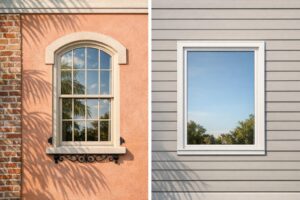
Replacing windows in Charleston involves costs influenced by materials, styles, labor, and local regulations. Here’s what you need to know:
- Cost Range: Expect to pay $400–$1,800 per window, with impact-rated options reaching $2,500+.
- Project Costs: Replacing 8–12 windows ranges from $8,000 to $25,000, depending on materials like vinyl, wood, or fiberglass.
- Labor: Installation adds $50–$200 per hour, with higher costs for multi-story homes or custom designs.
- Energy Savings: ENERGY STAR-certified windows can reduce utility bills and qualify for federal tax credits up to 30%.
- Local Factors: Coastal regulations and historic district requirements may increase costs.
Vinyl is the most affordable option ($400–$1,400 per window), while wood and composite materials are pricier but durable in Charleston’s humid, coastal climate. Impact-rated windows are essential for homes in wind-borne debris zones. For budget-friendly options, standard sizes and off-season installations can help reduce expenses.
Average Window Replacement Costs in Charleston
Per-Window and Project Cost Estimates
In 2026, the cost to replace a single window in Charleston can range from $400 to over $1,800, depending on factors like material, style, and impact rating. For instance, standard vinyl double-hung windows typically cost between $400 and $650 per unit, installed. Specific examples include an Atrium Vinyl Slider, which may cost around $650, and a Simonton StormBreaker Impact Double-Hung window, priced at approximately $1,250.
For larger projects, replacing 8–12 windows in a home can cost between $8,000 and $25,000. For a 2,000-square-foot home, the average costs are around $7,600–$9,500 for vinyl windows and $11,400–$17,100 for wood options. Labor adds another layer of expense, ranging from $50 to $200 per hour. As of February 2026, window service costs average between $383 and $441 per unit. Homeowners tackling multiple replacements often benefit from volume discounts, making full-home projects more affordable than replacing windows one at a time.
Local market conditions and regulatory requirements also play a significant role in shaping these costs.
Local Trends Impacting Pricing
Charleston’s unique coastal environment and regulations significantly influence window replacement prices. To meet wind-borne debris region requirements, many homeowners opt for impact-rated windows, which cost between $800 and $2,500+ per unit. The area’s high humidity and salty air also demand materials that resist corrosion, warping, and rot, further driving up prices.
“In our area we have to comply with coastal high wind zones and… windows and doors installed in wind-borne debris regions… shall be impact-resistant or protection provided with an impact-resistant covering.” – New Beginnings Construction
Historic district regulations add another layer of complexity. Homes in Charleston’s preservation areas often require custom wood frames and designs to meet architectural standards, which can double or even triple the cost of standard installations. Additionally, installing windows on second or third floors comes with higher labor costs due to the need for specialized equipment and safety measures. However, wholesale options can help offset some of these elevated expenses, making the process more manageable.
sbb-itb-cdbcc3e
Window Types and Their Installed Price Ranges
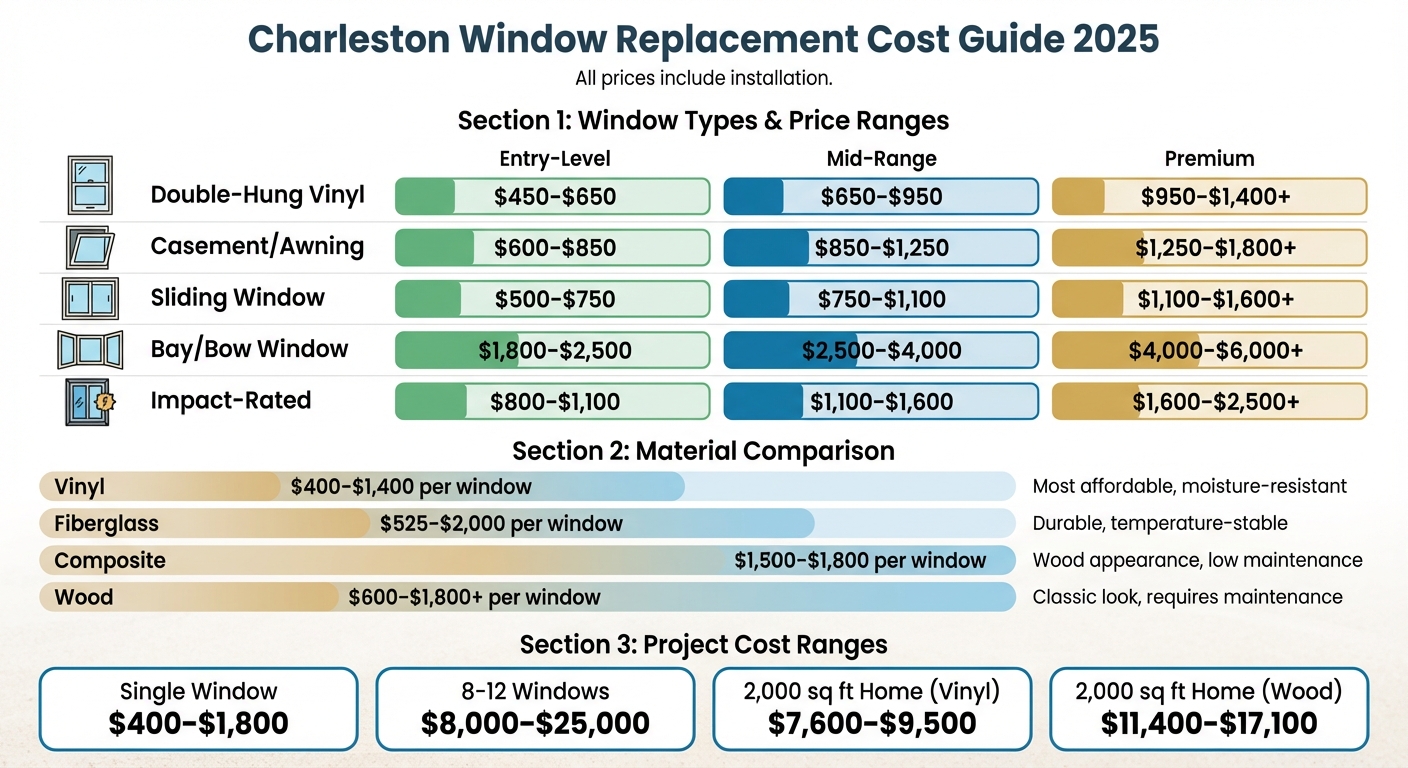
Charleston Window Replacement Costs by Type and Material 2025
Popular Window Styles in Charleston
When it comes to windows in Charleston, certain styles are especially popular due to their functionality and aesthetic appeal. Here’s a quick look at some of the top choices and what makes them stand out:
- Double-hung windows: A classic choice in Charleston, these windows feature two movable sashes that tilt inward, making cleaning a breeze. They complement traditional architecture and allow for excellent ventilation control.
- Casement windows: Hinged on the side and opening outward, these windows provide great airflow and offer clear, unobstructed views – perfect for enjoying Charleston’s coastal scenery.
- Sliding windows: Designed to open horizontally, these are ideal for wider spaces where height is limited. Their simple design makes them a practical choice for many homes.
- Awning windows: These hinge at the top and open outward, allowing ventilation even during light rain. This feature is especially handy during Charleston’s frequent afternoon showers.
- Bay and bow windows: These project outward, adding depth to your home’s exterior while flooding the interior with natural light. They’re also great for creating a cozy reading nook or additional seating area.
For those living in coastal areas, many of these styles are available with impact-rated glass, offering added protection against harsh weather conditions.
Comparison of Installed Cost Ranges
The cost of installing windows varies depending on the style, materials, and manufacturer. Below is a breakdown of typical price ranges based on the brand tier.
| Window Type | Entry-Level Options | Mid-Range Options | Premium Options |
|---|---|---|---|
| Double-Hung Vinyl | $450–$650 | $650–$950 | $950–$1,400+ |
| Casement/Awning | $600–$850 | $850–$1,250 | $1,250–$1,800+ |
| Sliding Window | $500–$750 | $750–$1,100 | $1,100–$1,600+ |
| Bay/Bow Window | $1,800–$2,500 | $2,500–$4,000 | $4,000–$6,000+ |
| Impact-Rated | $800–$1,100 | $1,100–$1,600 | $1,600–$2,500+ |
Note: These price ranges reflect typical installed costs in Charleston as of 2025.
For some real-world context, New Beginnings Construction shared specific project pricing in November 2025. For example, a Simonton StormBreaker Impact Double-Hung window installation in Mount Pleasant came in at $1,250 per unit. On the higher end, a Marvin Elevate Casement window set installed on the Charleston Peninsula cost $4,800. These examples highlight how factors like material quality and impact resistance can significantly affect the final price.
Key Factors That Affect Window Replacement Costs
Custom Features and Energy-Efficient Upgrades
Custom features can significantly impact the cost of materials, and your installation choices can further drive up the total expense. Opting for energy-efficient upgrades may increase your initial investment, but they often result in lower utility bills over time. For example, Low-E coatings can add $50–$100 per window, while argon gas fills typically cost an additional $25–$50 per window. If you’re considering krypton gas, expect an extra $40–$100 per unit. For those looking into triple-pane windows, these can cost $250–$400 more per window compared to standard double-pane options.
In areas like Charleston, where properties must meet high-wind zone requirements, impact-resistant glass or approved protective coverings are often necessary. According to New Beginnings Construction:
“In our area we have to comply with coastal high wind zones and, for windows and doors that means any window or door installed in wind‑borne debris regions… shall be impact‑resistant or protection provided with an impact‑resistant covering”.
These specialized windows typically range from $800 to over $2,500 per unit.
If you’re working with custom dimensions, expect higher costs due to the need for special fabrication. Sticking to standard sizes whenever possible can help you avoid unnecessary expenses.
Installation and Structural Considerations
The method of installation plays a big role in determining overall costs. Full-frame replacement, which involves removing the entire window and trim, is more expensive than pocket installation, where new windows are fitted into the existing frame. Full-frame installation is often necessary when the current frame is damaged or rotting, while pocket installations can save you 20%–30% on labor and materials.
Labor costs also climb for multi-story homes, as installing windows on the second or third floor requires additional equipment and safety measures. This can increase labor costs by 10%–25%. For historic properties, maintaining the architectural style often demands specific materials like wood and custom frames, which can add $1,000–$2,500 per unit.
Material Costs: Vinyl, Fiberglass, Composite, and Wood
Material-Specific Pricing Overview
Vinyl is the most budget-friendly window material in Charleston, with installation costs ranging from $400 to $1,400 per window. Its popularity stems from its resistance to moisture, making it a solid choice for humid environments where rot and corrosion are concerns. However, lower-quality vinyl can warp or discolor under extreme heat.
On the other hand, wood windows are prized for their classic look and excellent insulation. But they come at a higher price, typically $600 to $1,800+ per installed window. In Charleston’s humid climate, wood requires regular maintenance, including sealing and repainting, to prevent rot – a factor that adds to its upkeep.
Fiberglass windows, priced between $525 and $2,000 per window, offer a durable option that resists temperature-related expansion and contraction, making them well-suited for Charleston’s heat. Composite windows, which blend the appearance of wood with the low-maintenance benefits of synthetic materials, usually cost $1,500 to $1,800 per window. Both fiberglass and composite materials are highly resistant to salt air corrosion and warping caused by humidity, making them ideal for coastal homes.
For homes in Charleston’s wind-borne debris zones, impact-rated windows are a must. These windows significantly increase costs across all materials, ranging from $800 to over $2,500 per window. This price difference highlights the importance of choosing materials that can handle Charleston’s unique climate challenges.
Best Materials for Charleston’s Climate
Charleston’s climate – marked by high humidity, salty air, and frequent storms – demands careful material selection. According to New Beginnings Construction:
“Impact-rated vinyl or composite windows are optimal for areas with coastal humidity and storm threats. These windows are designed to withstand challenges like warping, rot, and corrosion from salt air”.
Fiberglass and composite materials stand out for their durability in the Lowcountry. Charleston Roofs and Windows emphasizes that fiberglass “is robust and requires very little maintenance… It expands and contracts very little with temperature changes, making it highly efficient”. While these options are more expensive than vinyl, they deliver better thermal stability and require less upkeep compared to wood in humid conditions.
For homeowners working within a tighter budget, high-quality vinyl offers a cost-effective solution with good resistance to moisture. However, wood remains a suitable choice for historic neighborhoods or premium projects where aesthetics are a top priority.
Icon Window & Door: Local Expertise and Value
Custom and Standard Window Solutions
With 50 years of combined experience, Icon Window & Door specializes in crafting windows that suit Charleston’s coastal climate. They offer both natural wood and vinyl options, available in budget-friendly and high-end varieties. Their standard designs, like casement and double-hung windows, are built for optimal airflow and easy maintenance.
For homeowners with unique layouts or historic properties, Icon provides custom window solutions. This service is especially important in Charleston’s historic districts, where standard-sized windows often don’t fit the architectural requirements. These custom designs pair well with the durable and cost-effective options already available.
Installation is quick and hassle-free, taking about 30 to 60 minutes per window. The process includes precise measurements, protective coverings to keep your home clean, and a final quality inspection to ensure everything is perfect. Not sure which material works best for your home? Icon offers free design consultations to help you choose windows that enhance your home’s look while meeting energy efficiency goals.
Energy Efficiency and Cost Savings
Icon’s windows aren’t just about style – they’re designed to save you money and make your home more comfortable. Energy Star-rated windows help reduce temperature fluctuations, block out ambient noise, and can save homeowners anywhere from $27 to $583 annually. In Charleston’s humid subtropical climate, these features are especially helpful for managing energy costs and keeping your home quiet.
To ensure peace of mind, Icon backs its work with a one-year workmanship warranty. For those prioritizing durability, vinyl windows are the go-to choice. They stand up to the region’s harsh weather, humidity, and heavy rainfall, all while eliminating the need for regular painting or refinishing. It’s a practical, long-term solution for Charleston’s challenging climate.
Conclusion: Budgeting for Window Replacement in 2026
Planning for window replacement in Charleston involves understanding the full range of expenses – from materials and labor to meeting local compliance standards. Materials account for about 55% of total installed costs, while labor, permits, and disposal make up the remaining 45%. Knowing this breakdown can help you identify areas to save money.
To manage costs effectively, consider replacing multiple windows at once to take advantage of volume discounts. Opting for standard sizes instead of custom dimensions can also help keep expenses down. If your budget is tight, scheduling installations during spring or fall, when demand is lower, might unlock seasonal promotions.
Your choice of materials plays a big role in long-term value. Vinyl windows, priced between $400 and $650, are affordable and stand up well to Charleston’s humidity and salty air. For those in hurricane-prone areas, impact-rated windows provide permanent storm protection but come at a higher cost, ranging from $800 to over $2,500 per window.
Federal incentives can also help ease the financial load. Tax credits can cover up to 30% of your window replacement costs, with caps of $600 per window and $1,200 annually. Additionally, Energy Star-certified windows can save you between $125 and $340 per year on energy bills.
Icon Window & Door offers a variety of options, including natural wood and vinyl, catering to both budget-conscious homeowners and those seeking premium or custom solutions for Charleston’s historic homes. Their free design consultations, quick installations, and one-year workmanship warranty ensure your investment is well-protected.
FAQs
Do I need impact-rated windows for my address?
If you live outside of hurricane or storm-prone areas, impact-rated windows usually aren’t a necessity. However, for homes in regions that frequently face severe weather, impact-resistant glass is a smart choice. It provides an extra layer of protection against strong winds and flying debris during storms.
Pocket install or full-frame replacement – which is right for me?
Pocket installation means placing a new window directly into the existing frame. This method is less disruptive and generally more budget-friendly. It works best if your current frames are in solid condition and no major structural adjustments are required.
On the other hand, full-frame replacement involves removing both the window and its frame entirely. This approach is ideal if your frames are damaged or if you’re looking to change the window’s style or size. Though it costs more, it provides better insulation and a cleaner, more refined look.
What documents are needed for historic district approval?
To get approval for a historic district project in Charleston, you’ll need to prepare and submit a comprehensive set of documents. This includes detailed plans, the materials you plan to use, and specific window designs. The Board of Architectural Review uses these submissions to assess and approve your window replacement project.