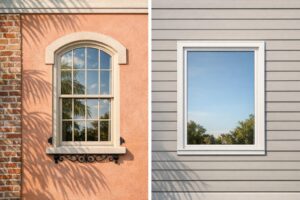
When comparing window and door replacement costs, the differences often come down to materials, customization, and labor. A standard vinyl window might cost $800–$1,600 installed, while a custom wood window can exceed $2,200 per unit. Labor, site conditions, and added features like energy-efficient coatings or custom designs also influence pricing. Here’s how these factors break down:
- Standard Options: Factory-made, fixed sizes; lower costs ($300–$1,200 per unit); faster installation; suitable for common openings.
- Custom Options: Tailored dimensions and designs; higher costs ($4,000–$8,000 per project); longer lead times; better fit and performance for unique needs.
- Labor Costs: Vary by installation type (e.g., pocket vs. full-frame); repairs for rot or mold add costs.
- Additional Costs: Permits, disposal fees, and weatherproofing can increase totals by $100–$500+.
Whether choosing standard or custom, clear communication about costs and expectations ensures smoother projects and satisfied clients.
1. Standard Windows and Doors
Standard windows and doors are factory-made in fixed sizes and configurations, which helps keep production costs steady. These are often the default choice for most residential projects.
Material and Product Grade
The cost of windows and doors is heavily influenced by the frame material. Vinyl is the most budget-friendly and requires minimal upkeep, making it a popular choice for standard replacements. Aluminum is similarly priced but has poor insulation properties. According to the U.S. Department of Energy, aluminum frames should include a thermal break – an insulating plastic strip between the interior and exterior portions of the frame – to meet modern energy efficiency standards.
On the higher end, wood frames typically cost between $650 and $1,900 per window. Fiberglass is more expensive than vinyl and most composite options but offers excellent stability and durability.
The type of glazing also impacts the overall cost. Adding a low-e coating increases the price by 10–15% but can cut energy loss by 30–50%. Similarly, using argon gas between panes is a standard, cost-effective option, while krypton gas – used in thinner air spaces – comes at a premium.
Size and Design Complexity
The size and design of a window or door significantly affect its price. Larger units require more materials and stronger components, which drives up costs. Operability also plays a role. For example, a fixed picture window (5′ × 4′) costs around $600 to $1,200, while a bay window (6′ × 4′) can range from $1,200 to $2,500 due to its structural complexity. As Andersen Windows explains:
"Fixed (non-operable) windows are generally less costly, so they can be a cost-saving option for harder-to-reach places."
| Window Type | Typical Size | Estimated Price (Per Unit) |
|---|---|---|
| Standard Single-Hung | 3′ × 5′ | $300 – $700 |
| Double-Hung | 4′ × 5′ | $400 – $900 |
| Picture (Fixed) | 5′ × 4′ | $600 – $1,200 |
| Bay Window | 6′ × 4′ | $1,200 – $2,500 |
Installation and Labor Costs
Labor costs depend on the type of installation and the condition of the site. A pocket (insert) replacement, where the new window fits into the existing frame, is quicker and less expensive than a full-frame replacement, which involves removing all trim and framing.
For doors, installing a standard interior door typically costs $100 to $300, while exterior entry doors range from $200 to $500 in labor per unit. If the installation site has issues like rot, mold, or uneven walls, additional repairs can cost between $150 and $400. Understanding these labor costs is key to grasping the overall expense of standard installations.
Project-Level Overhead
Several additional costs can catch clients off guard. Building permits for structural window or door work can range from $50 to $300, depending on the location. Disposal fees for old units are usually between $25 and $200. Weatherproofing materials and insulation upgrades may add another $100 to $500 to the total.
Encouraging clients to ask for a detailed breakdown of quotes – what’s included and what’s not – helps avoid unexpected expenses. These standard cost elements provide a clearer picture of the overall project budget for homeowners.
sbb-itb-cdbcc3e
2. Custom Windows and Doors
Custom windows and doors stand out for their tailored designs and higher performance standards. Unlike standard units, these are crafted to meet specific dimensions, shapes, or performance needs. This attention to detail, along with the materials and craftsmanship involved, explains why custom projects typically come with a higher price tag compared to standard installations.
Material and Product Grade
Material selection plays a pivotal role in custom projects. Wood remains a top-tier choice, offering unmatched design flexibility. However, it requires more upkeep compared to other materials. Fiberglass and composite options, such as Andersen’s Fibrex, provide a balance between performance and cost, offering a practical alternative to vinyl while maintaining durability and style.
Custom projects often include upgrades like triple-pane glazing, premium hardware from brands like Baldwin or Ashley Norton, and unique color finishes. These features contribute to higher material costs. As Andersen Windows explains:
"The difference between product lines is due to factors like the materials used, the level of performance a window or door can achieve, the customizations offered, and more."
One potential cost-saving opportunity for clients is choosing materials that meet ENERGY STAR‘s Most Efficient criteria. These may qualify for federal tax credits under the Inflation Reduction Act, helping to offset some of the initial investment.
Size and Design Complexity
Custom designs often go beyond standard rectangular shapes and sizes, incorporating unique forms or oversized dimensions. These added complexities naturally drive up costs. Andersen Windows notes:
"Custom colors, sizes, and shapes… can increase cost."
For example, a full custom window installation typically costs between $4,000 and $8,000, while bay windows as a complete project range from $3,500 to $7,000.
Clients looking to expand an existing window opening should be prepared for a full-frame replacement. This involves removing the original frame and modifying the wall structure, adding both time and expense to the project.
Installation and Labor Costs
Custom installations are inherently more labor-intensive. Specialty configurations like bay, bow, or multi-window assemblies require more time and expertise. Wood windows, in particular, demand precise finish work and architectural detailing, which increases labor costs. Vinyl installations remain the most cost-effective, ranging from $800 to $1,600 per window, while fiberglass and wood installations can climb to $1,100 to $2,200+ per window.
When reviewing estimates, it’s important to check for exclusions like finish work, structural repairs, or permit fees, which could add to the final cost.
Project-Level Overhead
Custom projects often involve higher permitting and compliance costs, especially in areas with strict building codes. For example, coastal regions, such as South Carolina, may require impact-resistant glass or reinforced frames to meet local regulations. These requirements can increase the base cost of materials before any customization is even considered. Additional fees for permits, disposal, and weatherproofing also grow with the complexity of the project.
Pros and Cons

Standard vs. Custom Windows & Doors: Cost Comparison Guide
Deciding between standard and custom windows and doors can affect your budget, timeline, and the overall value of your project. Each option comes with its own advantages and challenges, so understanding them upfront can help you make a more informed choice.
Here’s a quick comparison to highlight the key differences:
| Factor | Standard Windows & Doors | Custom Windows & Doors |
|---|---|---|
| Upfront Cost | Lower: $632–$967 per window installed; steel entry doors from $400–$1,000 | Higher: size and style changes add $200–$1,000+ per unit |
| Design Flexibility | Limited to common sizes and stock styles | High: any shape, finish, or architectural detail |
| Lead Time | Short: often available immediately | 6–12 weeks; up to 16+ weeks for bespoke designs |
| Installation Speed | Fast: typically 2–4 hours per unit | Slower: may require structural framing or header work ($300–$800) |
| Long-Term Value | Functional for standard replacements | Higher: better fit, energy performance, and curb appeal |
| Energy Efficiency | Standard dual-pane/Low-E options available | Higher potential with triple-pane glass and tailored glazing |
Standard Windows and Doors
Standard products are a great choice when working with typical-sized openings, such as doors that are 80 inches tall and 28–36 inches wide. They’re budget-friendly and readily available, making them ideal for projects with tight timelines. As Jonathan Rodriguez from ASP Windows & Doors explains:
"Standard doors are 80 inches tall and 28 to 36 inches wide. Manufacturers make millions of these, so they’re cheap. Going custom adds $200 to $1,000 or more."
For homeowners looking to save money without compromising too much on quality, insert windows or slab doors can be a smart option. These can cut costs by $200–$650 per opening.
Custom Windows and Doors
Custom options are the go-to for homes with non-standard openings or unique architectural styles, especially in older properties. While they require a larger upfront investment and longer lead times – sometimes up to 16 weeks – the payoff can be worth it. Custom designs often provide a better fit, enhanced energy efficiency, and a significant boost to curb appeal.
Research from Andersen Windows shows that 3 out of 4 real estate agents agree premium branded windows can add at least 10% to a home’s value. Additionally, replacing a front entry door alone can recoup about 75% of its cost in home value.
Whether you opt for standard or custom, understanding these trade-offs helps contractors provide transparent cost estimates and ensures homeowners can make decisions aligned with their needs and priorities.
Conclusion
Breaking down the costs of standard versus custom windows and doors sheds light on what drives their value. If the siding is intact, a retrofit installation is the way to go. On the other hand, for siding that’s being replaced, new construction windows make more sense. For most homeowners – about 98.3% – standard retrofits, which cost between $600 and $1,000 per opening, are sufficient. Custom new construction, however, can surpass $2,000 per opening, mainly due to the added labor and structural adjustments required.
When advising clients, it’s important to steer the conversation toward installation quality rather than focusing solely on upfront costs. Both standard and custom windows can provide similar energy-saving benefits. The key difference is that custom installations ensure a more secure fit and better waterproofing.
As Rela Catucod from MrRemodel aptly states:
"Buying a New Construction window when you don’t need one is the fastest way to double your renovation budget."
These considerations highlight the importance of having thorough budget discussions with clients. Offering a transparent and detailed quote – breaking down costs for materials, labor, permits, and disposal fees – can help manage expectations and build trust. It’s also crucial to prepare clients for potential surprises, like discovering rot or needing structural changes, which can impact the overall project scope.
For homeowners in South Carolina, local building requirements add another layer to the decision-making process. The state’s humid climate and exposure to storms make it essential to choose products that meet strict performance standards. In areas prone to high winds, discussing Design Pressure (DP) ratings and impact-resistant glass is especially critical. Companies like Icon Window & Door provide options that balance performance with budget, making them a valuable resource for projects in the region.
FAQs
How do I know if I need a pocket replacement or a full-frame replacement?
To determine whether you need a pocket (insert) or full-frame replacement, start by evaluating the condition of your current window frames.
- Pocket replacement is ideal if the frames are in good shape – solid, square, and free of damage like sagging or rot.
- Full-frame replacement is the better choice if the frames are damaged, outdated, or beyond repair. It’s also the way to go if you’re looking to change the size or shape of your windows.
If you’re unsure, a professional inspection can help you make the right call.
What hidden costs should I ask about in a window or door quote?
When planning your window or door replacement project, it’s smart to ask about any hidden costs that might not be immediately obvious. For example, will there be charges for removing and disposing of your old windows or doors? What about hardware upgrades, interior trim or casing work, or exterior wrapping or capping? Don’t forget to check if caulking and weatherproofing are included in the quoted price or if they come as an extra expense.
If you’re financing the project, dig into the details of associated fees. These could include interest rates, origination fees, or even prepayment penalties. Getting clear answers on these costs upfront can save you from unexpected surprises and help you budget more effectively.
Which upgrades actually lower energy bills enough to be worth it?
Upgrading to ENERGY STAR-certified windows can cut heating and cooling costs by as much as 31%, which means noticeable savings on your energy bills. Beyond the financial perks, these windows boost energy efficiency, making them a smart, long-term investment for your home.