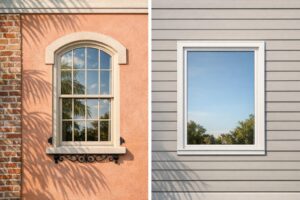
Window orientation impacts your home’s energy use. In South Carolina’s warm, humid climate (Climate Zone 3A), the direction windows face affects sunlight, heat, and cooling costs. Poorly placed windows can increase HVAC use by up to 30%, while strategic choices can cut it by 10–20%.
Here’s how each orientation performs:
- South-facing windows: Great for winter warmth but need shading in summer. Use Low-E glass and casement windows for better insulation.
- North-facing windows: Provide soft, consistent daylight but can lose heat in winter. Opt for high R-value double-pane windows.
- East-facing windows: Capture morning light with minimal heat. Low SHGC glass and blinds help regulate temperature.
- West-facing windows: Deal with intense afternoon sun. Use low SHGC glass, solar screens, and shading to reduce cooling demands.
Key tip: Proper installation and materials like vinyl or fiberglass frames enhance performance in humid conditions. Small changes, like selecting the right glass and frame, can lead to noticeable energy savings.
For tailored solutions in South Carolina, Icon Window & Door offers energy-efficient options designed for each window orientation.
Key Factors for South Carolina Window Orientation
South Carolina’s warm, humid subtropical climate, where summer temperatures often soar past 90°F, brings with it intense solar exposure. A single square foot of glass can absorb up to 1,000 BTU from the summer sun. This makes window orientation a critical factor in managing energy efficiency and comfort.
The sun’s movement throughout the day and across seasons directly influences the best window placements. During summer, the sun rises in the east, arcs high through the sky around midday, and sets in the west. As a result, south-, west-, and east-facing walls endure significant solar exposure. In winter, the sun’s lower position makes south-facing windows particularly effective for capturing passive heat. These patterns highlight the importance of thoughtful window placement to balance comfort and efficiency year-round.
Building design also plays a big role in controlling solar heat gain. For instance, properly designed roof overhangs on south-facing walls can shield windows from the harsh summer sun while still allowing the lower winter sun to warm interiors. This design strategy reduces reliance on heating and cooling systems, keeping energy bills in check.
The type of window installed further impacts energy performance. Casement windows are a strong choice for south- and west-facing walls. Their design ensures a tight seal when closed, minimizing air leakage even under intense heat. On the other hand, double-hung windows are ideal for north-facing walls, where they promote natural airflow by allowing warm air to escape through the top sash and cooler air to enter through the bottom. In coastal areas, awning windows are particularly useful, as they provide ventilation while keeping out rain and humidity.
"Casement windows… catch breezes well when open, helpful on still summer evenings. On south and west exposures where you want the best shutoff against heat and infiltration, casements often deliver." – Telegraph
To address these specific challenges, Icon Window & Door offers options like casement and double-hung windows. These products are tailored to South Carolina’s climate, with carefully selected materials and glass designed to enhance efficiency for different wall exposures.
1. South-Facing Windows for Balanced Solar Efficiency
South-facing windows bring both advantages and challenges in South Carolina’s climate. During winter, they allow natural sunlight to warm your home when curtains are open, cutting down on heating needs. But in the summer, that same exposure can lead to higher cooling demands.
Using Low-E glass coatings can make a big difference. These coatings block harmful UV rays and excess heat while still letting in natural light, which can lower cooling costs by up to 25% during the hottest months – a significant benefit in South Carolina’s heat. For even better performance, consider windows with argon-filled double panes, which enhance insulation and thermal efficiency.
"Low‑E (low emissivity) glass coatings… act as a selective filter, blocking harmful UV rays and solar heat while allowing visible light to pass through." – Your Exterior Pros
The choice of window frame also matters. Vinyl and fiberglass frames are excellent for managing heat and are resistant to warping and rot, which is important in South Carolina’s humid conditions. These materials typically last 15–25 years, far outperforming aluminum frames in both durability and energy efficiency.
For south-facing walls, casement windows are a smart option. Their tight seals help minimize heat gain during the hottest parts of the day, and they can be positioned to catch breezes for ventilation. In areas that tend to trap heat, double-hung windows are a great alternative, as they allow warm air to escape through the top sash while pulling in cooler air from below. Always look for models with an Energy Star certification tailored to the Southern Climate Zone for maximum energy savings. By carefully selecting and positioning south-facing windows, you can strike the right balance between comfort and efficiency.
2. North-Facing Windows for Diffuse Daylight
North-facing windows play a distinct role in home design. Unlike the sunlit warmth of south-facing windows, these windows are all about providing steady, consistent daylight without harsh glare or hot spots. They don’t receive direct sunlight, which makes them ideal for glare-free lighting but less effective for passive solar heating.
In the summer, this lack of direct sun helps keep your home cooler, reducing strain on your air conditioning. However, in winter, these windows can lead to significant heat loss if they aren’t optimized. As Ecohome explains:
"North windows will offer virtually no passive heat gain, so you want the highest R-value windows possible to reduce heat loss."
To minimize heat loss, consider double-pane windows filled with argon or krypton gas and coated with Low-E on surface #3. This setup reflects indoor heat back into the room, keeping it warmer. For brightness, look for windows with high visible transmittance (VT).
When choosing frame materials, fiberglass and vinyl are excellent options for South Carolina’s humid climate. They resist moisture, won’t warp, and outperform aluminum in thermal insulation. Adding warm-edge spacers made from non-metallic materials can also help by reducing condensation along the glass edges – especially important in coastal areas like Beaufort or Jasper.
Casement windows are a great choice for north-facing walls. Their compression seals provide superior airtightness, which is crucial on a side of the house that doesn’t benefit from solar warmth. If you prefer double-hung windows, opening both sashes can create a convection effect, allowing warm air to escape through the top and cooler air to flow in from below. These thoughtful design choices ensure efficient performance on the northern façade.
For tailored advice and professional installation of energy-efficient north-facing windows in South Carolina, Icon Window & Door offers reliable expertise.
3. East-Facing Windows for Morning Light and Comfort
East-facing windows are a great fit for South Carolina’s climate. They let in soft, morning sunlight, which can help reduce early morning lighting costs while being easier on your HVAC system than south- or west-facing windows. However, like other window orientations, east-facing windows need specific features to balance light and heat effectively. This is where tailored choices in glazing, framing, and sealing come into play.
Since these windows only get direct sunlight during the cooler morning hours, selecting the right glazing is essential. Look for windows with a Solar Heat Gain Coefficient (SHGC) of 0.40 or lower. Spectrally selective low-E coatings are a smart choice – they block heat-producing infrared rays while allowing natural light to pass through. These coatings also block 80–85% of ultraviolet rays, which helps protect interior furnishings and reduces heat gain. During summer, white shades or blinds can reflect morning heat away, and in winter, opening the shades lets the sunlight naturally warm the room.
The type of frame you choose also plays a role. Vinyl and fiberglass frames are better at resisting heat transfer compared to metal, which is especially important in South Carolina’s humid coastal areas. Operable window styles, such as casements or awnings, are another good option because they allow for natural ventilation to help manage any residual heat.
Proper air sealing is just as important. Be sure to caulk the window frames and weatherstrip any operable parts to prevent air leaks. If you have older single-pane windows, upgrading to ENERGY STAR-certified models can make a noticeable difference, potentially reducing your energy bills by up to 13%.
To find energy-efficient windows designed for South Carolina’s unique climate, you can explore options at Icon Window & Door.
sbb-itb-cdbcc3e
4. West-Facing Windows for Heat Control and Protection
West-facing windows require extra attention, especially in South Carolina’s warm, humid climate. The late-day sun poses a unique challenge, delivering intense, low-angle sunlight that can significantly heat up your home. Unlike south-facing windows – where high-angle sunlight can be managed with a roof overhang – west-facing windows face the brunt of the afternoon sun. According to the Building America Solution Center, "In the middle of the summer, unshaded east‐west windows receive as much as two times more solar heat per square foot than unshaded south‐facing windows."
In Climate Zone 3A, this intense afternoon sunlight not only raises cooling demands but also creates uncomfortable glare, even with air conditioning working overtime.
Start with the right glazing. For west-facing windows, opt for glazing with a Solar Heat Gain Coefficient (SHGC) of 0.25 or lower. This aligns with the 2024 IECC standards for Climate Zone 3, which South Carolina will adopt by 2026. Spectrally selective low-E coatings are ideal here – they block infrared heat while allowing visible light to pass through, keeping rooms bright without overheating.
Shading is your next line of defense. Vertical shading solutions are particularly effective for west-facing windows. As noted by Building America, "The closer to due east or west a window faces, the more valuable this type of vertical shading becomes." Exterior solar screens or high-performance interior roller blinds can block solar radiation before it heats the glass, reducing air conditioning use by up to 10% and lowering lighting energy needs. Planting deciduous trees on the west side also helps, as they provide shade in the summer while letting sunlight in during the winter when the leaves fall.
Deep architectural shading, like wide porch roofs, can also help but may block beneficial winter sunlight as well. Since the sun’s angle doesn’t vary much between seasons on the west face, operable shading – like motorized roller shades – offers a more adaptable solution. These shades can close during the hottest part of the day and open when the sun is less intense, providing year-round flexibility.
Lastly, for homes in coastal South Carolina, consider dual-certified windows that are both energy-efficient and hurricane impact-resistant. This ensures protection from both extreme weather and the relentless heat.
Together, these strategies for west-facing windows play a key role in improving energy efficiency and comfort in South Carolina homes.
Comparison Table

Window Orientation Energy Efficiency Guide for South Carolina Homes
Each orientation comes with its own set of advantages and challenges. The table below provides a quick snapshot of key performance metrics for windows in South Carolina’s climate.
| Orientation | Solar Heat Gain (Factor) | Daylighting Quality | Recommended SHGC | Best Strategy for SC |
|---|---|---|---|---|
| South | Highest (1.8–2.2) | Direct, intense; 8–10 hrs/day | 0.22–0.28 | Low SHGC with roof overhangs or awnings |
| West | High (1.5–1.8) | Harsh afternoon glare; peaks during hottest hours | 0.22–0.28 | Exterior solar screens to block 65–90% of heat |
| East | Moderate (1.2–1.4) | Bright morning light; cooler ambient air | 0.28–0.32 | Standard low-E glass is usually enough |
| North | Lowest (0.6–0.8) | Consistent, soft, diffuse light | 0.30–0.35 | Focus on daylight with low U-factor windows |
Key Insights
- North-facing windows gain 70–80% less heat compared to south-facing ones, while east-facing windows gain 30–50% less heat than west-facing options.
- The Solar Heat Gain Coefficient (SHGC) plays a critical role. For example, a window with a 0.25 SHGC blocks 75% of solar heat, while one rated at 0.85 blocks just 15%. Switching to windows with a 0.30 SHGC can cut cooling loads by 15–30%.
- Keep in mind, lower SHGC ratings often reduce visible transmittance (VT) due to low-E coatings. For north-facing windows, aim for a VT above 0.50 to let in more natural light without increasing cooling costs.
This breakdown underscores the importance of aligning window orientation with energy-saving strategies, ensuring smarter window placement tailored to South Carolina’s climate.
Conclusion
Window orientation is a smart and budget-friendly consideration for homeowners in South Carolina. With windows accounting for 25–30% of residential heating and cooling energy use, their placement and specifications directly influence energy efficiency, comfort, and utility costs.
Each orientation has its own benefits and challenges: South-facing windows provide an excellent balance of seasonal energy efficiency, north-facing windows bring steady natural light without significant heat gain, east-facing windows welcome soft morning light, and west-facing windows require careful attention to shading and low SHGC glass to manage the intense afternoon sun.
However, the key to maximizing these benefits lies in proper installation. As Energy Saver SC emphasizes:
"Even the most energy-efficient window must be properly installed to ensure energy efficiency. Therefore, it’s best to have a professional install your windows."
Icon Window & Door offers South Carolina homeowners a variety of high-performance window options, including casement, double-hung, and awning styles. These windows are tailored to the region’s climate and come with professional installation and replacement services backed by a one-year workmanship warranty.
FAQs
What’s the best window orientation for lowering AC costs in South Carolina?
North-facing windows are a smart choice for cutting down on AC costs in South Carolina. They limit the amount of direct sunlight entering your home, which helps reduce heat buildup during the state’s hot months. By keeping your home naturally cooler, this window orientation lowers the strain on your air conditioning system and helps save energy.
How do I choose the right SHGC and U-factor for each side of my home?
When selecting windows for your South Carolina home, it’s important to factor in the state’s climate and the direction your windows face. Here’s a quick guide:
- South- and West-Facing Windows: Opt for a lower Solar Heat Gain Coefficient (SHGC) between 0.22 and 0.28. This helps reduce heat from the intense afternoon sun. Pair it with a U-factor of 0.25 to 0.28 to improve insulation and cooling.
- North-Facing Windows: These can handle a slightly higher SHGC, around 0.30 to 0.35, as they receive less direct sunlight. Stick to the same U-factor range (0.25 to 0.28) to maintain energy efficiency.
By matching your window specifications to their orientation, you’ll strike a balance between comfort and energy savings.
What shading works best for west-facing windows in hot, humid climates?
For west-facing windows in hot, humid climates, shading strategies that work well include vertical solutions like trees, trellises, and shading screens. Additionally, exterior roll-down shades, shutters, and deep horizontal overhangs are great options for blocking the intense late afternoon sun. These approaches not only reduce heat buildup but also contribute to better energy efficiency.