Living in Charleston means your windows face constant challenges from humidity, salty air, and temperature swings. These factors cause energy loss, frame damage, and seal failure, leading to higher utility bills and potential structural issues. Here’s what you need to know:
- Energy Loss: Up to 30% of heating and cooling energy escapes through windows. Failed seals can increase this by 10–15%.
- Humidity Damage: Wood frames warp and rot; metal frames corrode. Moisture often leads to mold and water damage.
- Signs of Trouble: Look for condensation between panes, drafts, high energy bills, or visible frame damage.
- Replacement Costs: Insulated glass units cost $250–$450 per window. Full replacements range from $150 to $1,918, depending on materials and style.
Choosing durable materials like vinyl, fiberglass, or composite, combined with energy-efficient glass, can reduce energy costs by up to 25%. Professional installation is crucial to ensure long-lasting performance, especially in Charleston’s demanding climate.
How Humidity Damages Windows
Charleston’s humid climate takes a toll on windows in multiple ways. Knowing how these issues occur can help you catch problems early and avoid costly repairs. Each type of damage affects window performance and may signal the need for replacement.
Seal Failure and Insulation Loss
In Charleston’s Lowcountry, temperature fluctuations cause "thermal pumping", which creates tiny fractures in window seals over time. On top of that, intense UV exposure degrades sealants, especially on windows that get a lot of sun.
High humidity adds to the problem by saturating the desiccant inside double-pane windows. Once this happens, moisture sneaks between the panes, replacing insulating gases like argon or krypton with humid air. This significantly reduces the window’s ability to keep your home comfortable.
If your utility bills suddenly spike without explanation, failed seals could be the culprit. Conditioned air may be escaping, forcing your HVAC system to work harder. Replacing failed insulated glass units can lower heating and cooling costs by 10%–15%.
But seal failure isn’t the only concern – humidity also wreaks havoc on window frames.
Warping and Frame Damage
Wood frames are especially vulnerable to Charleston’s humid conditions. Since wood absorbs moisture when humidity rises and releases it when the air dries, this constant cycle of swelling and shrinking causes warping, cracking, and splitting. Stephanie Postell, Co-Owner and COO of Anchor Heating and Air, explains:
"Excess humidity can damage wood by encouraging fungal growth and causing stains and warping… This is due to wood absorbing moisture and swelling when humidity is high".
Metal frames face their own challenges. Salt air accelerates corrosion on frames, hinges, and locks, weakening the overall structure. UV rays also break down protective paints and coatings, making the frame more susceptible to moisture damage and rot. Poor drainage worsens these issues – clogged tracks or weep holes allow water to pool, speeding up deterioration.
To protect your window frames, maintain indoor humidity levels between 30% and 50%. Levels above 60% can lead to structural damage. Using dehumidifiers and ensuring proper ventilation can help safeguard your windows from moisture-related damage.
Condensation Formation
Not all condensation means your windows are failing. Surface condensation, which forms on the inside of the glass and can be wiped away, typically points to high indoor humidity rather than a window problem. This happens when warm, moist air inside your home meets the cooler glass surface.
On the other hand, condensation between the panes – persistent fog or moisture with mineral deposits – indicates seal failure. In this case, insulating gases have escaped, moisture has entered, and the desiccant inside the panes is saturated.
Given Charleston’s average morning relative humidity of 87%, far above the EPA‘s recommended indoor level of 30% to 50%, windows in the area are constantly battling moisture. Failed seals often lead to persistent condensation, which can cause mold, peeling paint, and wood rot when moisture levels in timber exceed 20%.
In the Charleston market, replacing just the insulated glass unit costs between $250 and $450 per window, which is 50% to 70% less expensive than replacing the entire window. Identifying the type of condensation can help you decide whether a simple glass unit replacement will solve the issue or if a full window replacement is necessary.
sbb-itb-cdbcc3e
Signs Your Windows Need Replacement
Charleston’s humid climate can take a toll on windows, making it essential to recognize when it’s time for a replacement. Here are the key indicators to watch for:
Condensation Between Window Panes
One of the clearest signs of window trouble is condensation trapped between panes. To test for this, try the "wipe test." If fog, haze, or moisture remains even after wiping, the seal has likely failed, allowing insulating gases to escape. You might notice persistent cloudiness, visible water droplets, or white mineral deposits – known as "etching" – on the inner glass. In some cases, the glass may even bow inward due to the pressure changes.
This issue is most noticeable during temperature fluctuations, such as cool mornings after warm days. Window seals typically last 10 to 20 years, depending on factors like sun exposure and installation quality. Broken seals not only lead to condensation but also increase energy costs and can damage the window frame over time.
Frame Damage or Mold Growth
Damaged frames are more than just an eyesore – they can weaken your home’s structure and harm indoor air quality. Wood rot, for example, often appears as discolored patches in shades of yellow, white, or purple. The affected wood may feel spongy or stringy, and in severe cases, it can break apart into cube-like pieces or crumble into a sawdust-like texture. Early signs include peeling paint or chipping wood stain, caused by swelling wood pushing the paint away.
To check for wood rot, press a screwdriver against suspicious areas. If it sinks in easily, the wood is compromised and needs professional attention. As Mr. Handyman of Charleston and Summerville points out:
"If you’ve got water leaking in through your window frame, that’s a big problem. It indicates that the seal inside the frame has deteriorated, and water is getting into the interior of the wall where it will compromise your insulation and cause serious problems."
Other warning signs include brown water stains on walls, softened drywall beneath windows, and warped frames that make windows difficult to open or close. Extensive rot or warping often attracts pests like termites and carpenter ants, making replacement the best long-term solution.
Additionally, damaged seals can create drafts, further driving up energy costs.
Drafts and High Energy Bills
Feeling a breeze near a closed window is a surefire sign of a draft. You can confirm this with the "candle test" – hold a lit candle near the window; if the flame flickers or smoke drifts, there’s an air leak. Alternatively, running a damp hand along the window’s edges can help you detect cool air more easily.
In Charleston’s climate, faulty windows can create cold or hot spots in rooms, especially near exterior walls. Doug Anderson from ENERGY STAR Certified Products explains:
"While windows only take up approximately 8% of the surface of your home’s exterior, they account for about 45% of the heat gain or loss – meaning window performance can have a big impact on the comfort and efficiency of your home."
Drafty windows force your HVAC system to work harder, which can increase energy bills by 10–25%. Upgrading to ENERGY STAR-certified windows can save homeowners between $101 and $583 annually. Visible issues like warped sills or shrinking weatherstripping often signal gaps that allow air to escape, further reducing energy efficiency.
Choosing Windows for Charleston’s Climate
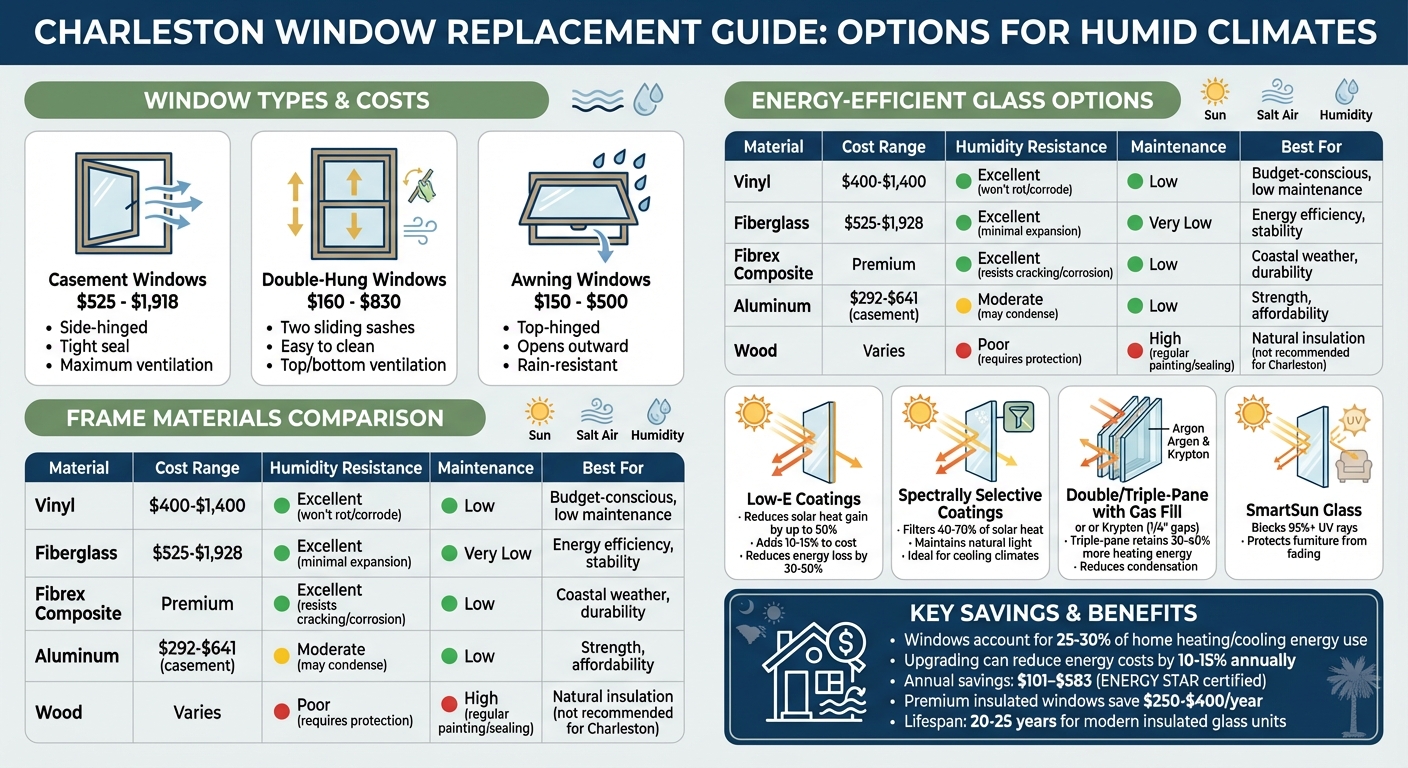
Charleston Window Replacement: Materials, Costs & Energy Savings Comparison
When it’s time to replace failing windows, it’s crucial to pick options that can handle Charleston’s unique weather conditions. With high humidity and salty air, you’ll need windows that resist moisture, corrosion, and help lower energy costs.
Casement, Double-Hung, and Awning Windows
Charleston’s historic charm calls for windows that not only perform well but also complement its classic architecture. Casement, double-hung, and awning windows are excellent choices that balance functionality, style, and cost.
Casement windows swing open like a door, thanks to side hinges, and seal tightly when closed. This design keeps out humid air while offering maximum ventilation when needed. Prices in Charleston range from $525 to $1,918.
Double-hung windows, with their two vertically sliding sashes, are easy to clean from inside – a huge plus in coastal areas where salt spray and pollen are common. They provide ventilation from both the top and bottom, making them practical and budget-friendly, with prices between $160 and $830. Their timeless look fits Charleston’s historic homes perfectly.
Awning windows hinge at the top and open outward, allowing them to stay open during light rain without letting water inside. This makes them ideal for managing moisture in rainy conditions. Expect to pay between $150 and $500 for these windows.
Materials That Resist Humidity
The material of your window frames plays a critical role in how well they withstand Charleston’s humid climate.
Vinyl windows are a popular choice due to their resistance to moisture. They don’t rot, corrode, or degrade like wood, and they’re affordable, costing between $400 and $1,400 for full-frame replacements. However, wood, while a natural insulator, requires regular maintenance. As Charleston Roofs & Windows explains, "they require regular painting and sealing to protect against the elements and prevent rot".
Fiberglass windows are known for their stability, as they don’t expand or contract much with temperature changes. This helps maintain tight seals, keeping energy bills in check. They cost between $525 and $1,928 and require little to no upkeep.
For a mix of durability and moisture resistance, Fibrex composite material is an excellent option. Combining the strength of wood with the low-maintenance nature of vinyl, this material is designed to resist cracking, pitting, and corrosion. Renewal by Andersen highlights it as ideal for coastal weather.
Aluminum windows are strong and more affordable, with casement styles ranging from $292 to $641. However, they conduct heat easily and may develop condensation in humid climates.
Energy-Efficient Glass Options
Modern advancements in glass technology can make a big difference in energy savings.
Low-E (low-emissivity) coatings are ultra-thin metallic layers that reflect heat while allowing natural light to pass through. In Charleston’s warm climate, these coatings can cut solar heat gain by up to 50% during summer, adding about 10% to 15% to window costs but reducing energy loss by 30% to 50%.
For even greater efficiency, spectrally selective coatings filter out 40% to 70% of solar heat while letting in plenty of daylight. The U.S. Department of Energy notes that in cooling-heavy climates, these coatings are ideal for blocking infrared radiation while maintaining views and natural light.
Double or triple-pane windows with gas fills provide excellent insulation. Argon gas works well for standard 1/2-inch gaps between panes, while krypton is better for narrower 1/4-inch spaces. Triple-pane windows can retain 30% to 40% more heating energy than double-pane versions and significantly cut down on condensation. High-performance options like SmartSun glass can also block over 95% of UV rays, protecting furniture and flooring from fading.
Since windows account for 25% to 30% of a home’s heating and cooling energy use, upgrading to energy-efficient models can lower annual energy costs by 10% to 15%. With a lifespan of 20 to 25 years for modern insulated glass units, these upgrades are a smart long-term investment for Charleston homeowners.
Once you’ve chosen the right windows, professional installation is key to ensuring they perform as expected for years to come.
Working with Professional Window Installers
Getting a Professional Assessment
Start by scheduling a professional inspection to identify any issues with your windows. Installers in Charleston are well-versed in the unique challenges of the Lowcountry, such as thermal pumping (caused by temperature swings) and the corrosive effects of salt air. These experts can uncover hidden problems like water damage around frames or early signs of seal failure – issues that may not be immediately visible.
For a more precise evaluation, consider working with installers who use thermal imaging cameras. These tools can pinpoint areas where humid air is seeping into your home, helping you prioritize which windows need attention first. If your home is located in Charleston’s Historic District, professional installers can also handle Board of Architectural Review (BAR) permit applications, ensuring your window replacements meet strict preservation guidelines.
Once the problems are identified, proper installation becomes the next crucial step.
The Importance of Proper Installation
Even the best windows can fail to perform if they’re not installed correctly. Professional installers in Charleston use materials like maritime-grade sealants and corrosion-resistant fasteners, which are specifically designed to withstand coastal conditions. These materials create a strong barrier against moisture, which is a leading cause of fogging and premature seal failure in humid climates.
Properly installed windows not only prevent drafts but can also lower energy bills by 15%-25% in Charleston’s hot weather. Homeowners often save between $250 and $400 annually by upgrading to premium insulated windows with professional sealing. On the other hand, poorly installed windows can result in persistent drafts, inflated energy costs, and even voided manufacturer warranties.
Beyond energy savings, professional installation ensures your windows perform well and remain covered by warranties.
Warranties and Maintenance
A solid warranty is essential for protecting your investment. Look for warranties that cover both materials and labor, as some manufacturer warranties only include the glass or frame, leaving you responsible for issues caused by installation. Some installers even provide lifetime labor warranties, covering seal failures caused by settling or improper fitting.
To extend the lifespan of your windows, regular inspections and proper ventilation are key. Modern insulated glass units are built to last 20 to 25 years under normal conditions. Routine cleaning and occasional check-ups can help catch minor problems early, preventing costly repairs down the line.
Conclusion
Charleston’s humidity can take a toll on windows, with thermal pumping and moisture leading to seal failure and frame rot. Catching early warning signs – like condensation between panes, drafts, or higher energy bills – can save you money and prevent more severe damage down the road.
The choice of materials plays a big role in window performance. Vinyl frames resist moisture and decay, while Low‑E glass with argon gas can block up to 75% of UV rays and boost insulation by 50–70% compared to single-pane windows. These upgrades not only improve comfort but can also cut heating and cooling costs by up to 25%. However, even the best materials need expert installation to perform as expected.
Proper installation ensures accurate measurements, secure sealing, code compliance, and full warranty coverage. Without it, even high-quality windows can fall short of their potential.
Since windows account for about 30% of your home’s energy use, replacing outdated ones is a smart long-term move. With professional installation and regular maintenance, modern insulated glass units can last 20–25 years, offering steady energy savings and protection against Charleston’s tough weather. Focusing on quality materials, timely replacement, and skilled installation ensures your home stays efficient and well-prepared for the local climate.
FAQs
Can I replace just the glass instead of the whole window?
Yes, replacing just the glass – like fogged or damaged panes – can be a smart and budget-friendly solution in Charleston’s humid climate. This approach works particularly well for problems like seal failure in insulated glass units, letting you fix the issue without the expense of replacing the entire window.
How can I tell if condensation is from humidity or a failed seal?
Condensation forming on the surface of a window is usually a result of humidity and can simply be wiped away. However, if you notice moisture trapped between the panes that cannot be removed, it’s a sign of a failed seal. While surface condensation is generally nothing to worry about, trapped moisture points to a problem with the window’s seal that may need attention.
Which window material holds up best to Charleston’s humidity and salt air?
Fiberglass and vinyl are top choices for windows in Charleston’s humid, salty climate. Fiberglass holds up well against the ever-changing coastal weather, while vinyl is resistant to warping, rotting, and corrosion. Both materials are built to last and perform well in the area’s demanding conditions.